Home -> Service -> Sheet Metal Finishing -> Painting
Metal Painting Services
With 15 years of experience in liquid painting (wet spray) for metal parts, SR MFG is equipped with large-scale paint lines and clean spraying capabilities to reliably deliver projects from prototypes through full production. For sheet metal parts, we provide color matching, controlled film build, and masking strategies for critical functional surfaces—balancing cosmetic appearance with corrosion protection. When required, we also supply in-process inspection records and testing support to reduce rework and minimize assembly risk.
What Is Metal Spray Painting?
Metal spray painting applies liquid coatings to a metal surface to form a protective film that shields the substrate from direct exposure to the environment. It’s an effective way to prevent oxidation and corrosion. For sheet metal parts, spray painting is commonly used to improve corrosion resistance, enhance appearance, and add wear protection.
Where Metal Spray Painting Is Used
Metal spray painting is widely used across many industries, including:
Manufacturing: Common in automotive and machinery applications to improve component durability and aesthetics.
Construction: Structural steel and aluminum doors/windows are often painted because outdoor exposure accelerates corrosion; paint or powder coating helps extend service life.
Aerospace: Aircraft and UAVs operate in harsh environments, so coatings must deliver strong oxidation resistance and high-temperature performance.
Electronics: Coatings can improve durability and, in some applications, help reduce electromagnetic interference (EMI).
Why It Works
One of the biggest advantages of spray painting is the ability to build multi-layer coating systems—think of it as putting multiple protective layers on the metal. Each layer contributes its own function, working together to resist corrosion and environmental attack.
Beyond protection, multi-coat systems also offer a wide range of colors and surface effects, helping products meet specific branding, cosmetic, or design requirements.
SR MFG Spray Painting Capabilities
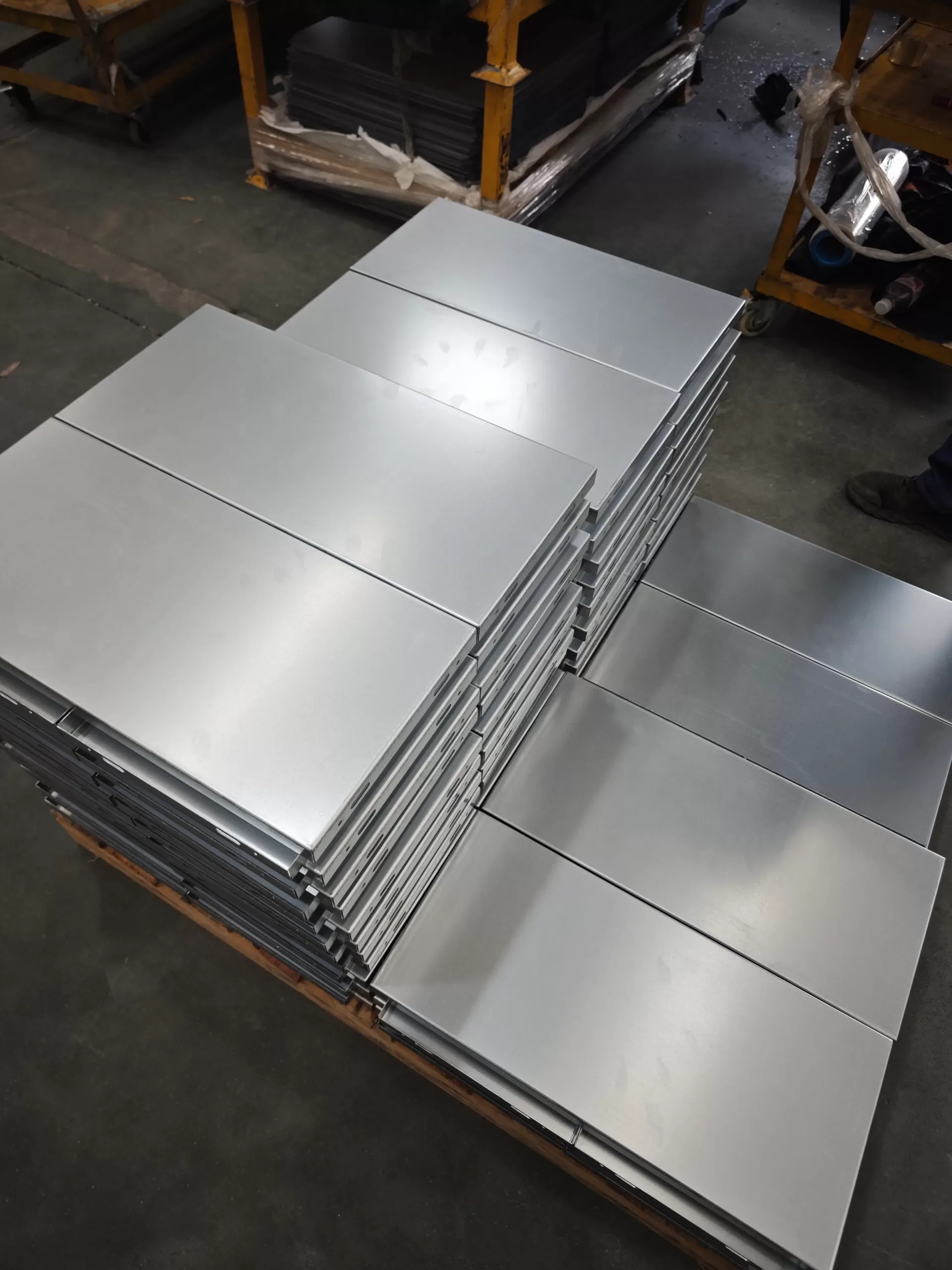
SR MFG provides spray painting (wet painting) services for sheet metal parts, supporting needs ranging from cosmetic components to industrial protective finishes. Whether you supply parts for coating or prefer a complete build delivered together with sheet metal fabrication, we develop a repeatable, production-ready painting process based on your required cosmetic grade, assembly requirements, color standard, and validation criteria.
Typical paintable parts include (customized to your drawings):
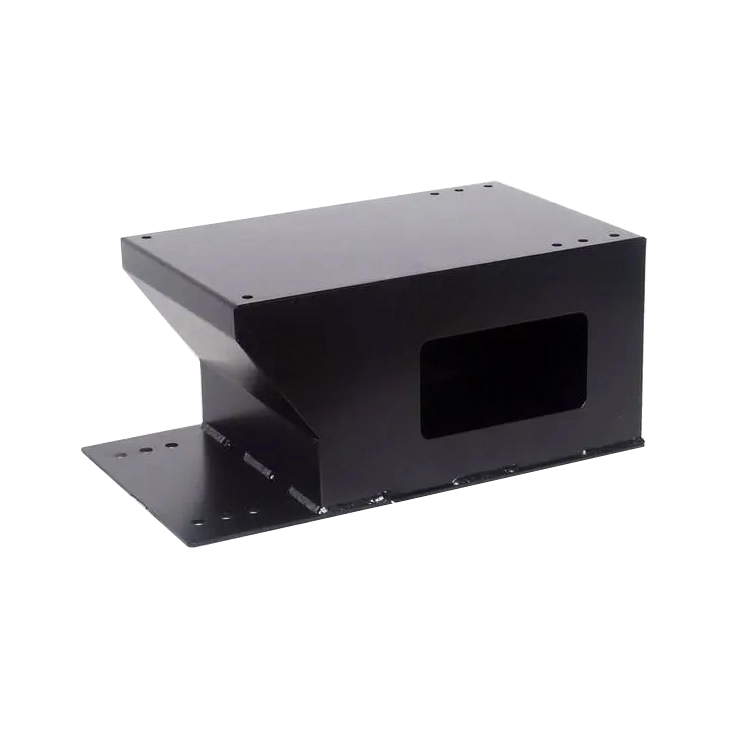
- Enclosures & housings: electrical cabinets, control boxes, telecom enclosures, server chassis, instrument housings
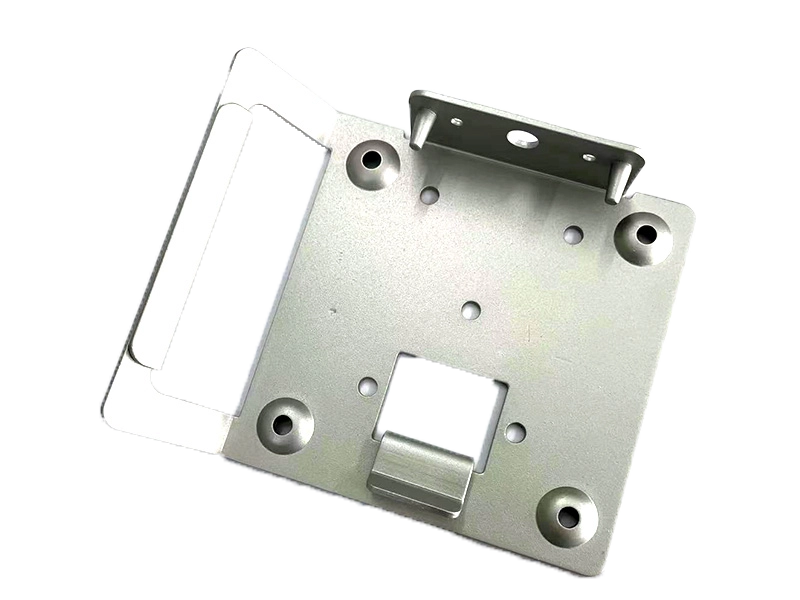
- Structural & support components: brackets, mounting plates, carriers, rail components, stiffeners
- Stamped & formed parts: panels, covers, trays, U-channels, box sections, shielding covers
- Welded assemblies: welded frames, welded enclosures, bracket assemblies (with weld seam/spatter cleanup as needed)
- Cosmetic parts (Class A surfaces): visible surfaces with defined appearance requirements (managed by Class A/B surface standards)
Coatable Materials & Surface Preparation
We commonly spray paint carbon steel/alloy steel/cast iron, aluminum and aluminum alloys, stainless steel, galvanized steel, and—upon request—copper and copper alloys. Because each substrate has its own surface condition and coating risks, the pretreatment approach must be matched accordingly.
Below are SR MFG’s practical, project-based recommendations for painting and surface preparation by material. If you have other materials or special requirements, contact us and we’ll evaluate the best process for your application.
Common challenges: High corrosion risk; mill scale and machining oils can reduce adhesion and compromise appearance.
SR MFG pretreatment approach:
-
Cleaning & degreasing: Removes rust-preventive oil, cutting fluids, and fingerprints to reduce fisheyes/cratering.
-
Rust removal & surface profiling: Blasting or mechanical prep to improve adhesion (surface profile controlled to match the coating system).
-
Conversion coating and/or primer: Phosphate, silane, or ceramic conversion options based on corrosion targets, paired with an anti-corrosion primer when required.
-
Key controls: Surface cleanliness, consistency, and the coating window time (to prevent flash rust).
Common challenges: A dense oxide layer and variable surface conditions can cause adhesion variation and inconsistent appearance.
SR MFG pretreatment approach:
-
Mild degreasing + deoxidizing/activation: Improves paintability and adhesion stability.
-
Chromate-free conversion (preferred) + primer compatibility: Balanced for adhesion and corrosion resistance.
-
Thorough rinsing and drying: Reduces blister risk caused by salt residue or trapped moisture.
-
Key controls: Consistent activation, complete drying, and sample approval (color/gloss/texture).
Common challenges: Lower surface energy makes coatings harder to anchor; edge areas are more prone to peeling.
SR MFG pretreatment approach:
-
Surface abrasion/activation: Blasting or sanding to increase mechanical keying (method selected based on cosmetic requirements).
-
Stainless-specific primer/adhesion promoter: Improves adhesion and edge reliability.
-
Weld-area prep (if applicable): Removes slag, spatter, and HAZ contamination to reduce defect risk.
-
Key controls: Uniform surface prep, primer compatibility, and defined edge-coverage/inspection criteria.
Common challenges: Passivation layers and inconsistent surface condition can lead to unstable adhesion; pinholes and blistering can occur.
SR MFG pretreatment approach:
-
Cleaning & degreasing: Removes surface films and contamination.
-
Light scuffing / activation (as needed): Improves adhesion without compromising functional performance.
-
Galvanized-compatible primer systems: Selected for more stable adhesion and corrosion resistance.
-
Optional pre-bake: Used for outgassing-prone parts to reduce pinholes/blistering.
-
Key controls: Surface condition identification, primer selection, pre-bake triggers, and batch-to-batch consistency.
Common challenges: Oxidizes and discolors easily; cosmetic standards and clear-protection requirements are more demanding.
SR MFG approach:
-
After cleaning and surface refinement, we match an appropriate primer and/or clear protective topcoat, depending on appearance and weathering requirements.
Note: For copper alloys, we recommend providing a physical sample or clear cosmetic acceptance criteria to confirm the best process.
SR MFG Spray Painting Process Flow
SR MFG Metal Part Spray Painting Process Flow
Requirement confirmation (to get it right the first time) → Incoming inspection → Surface prep/repair → Cleaning & degreasing → Surface activation & conversion treatment → Masking & fixturing → Pre-spray check → Primer application → Curing/baking → Pre-topcoat sanding/touch-up → Topcoat application → Final cure & cooling → Rework / re-spray (if needed) → Packaging & shipment



Are you ready to get started on your metal fabrication project?
Not sure which material is ideal for your project? Feel free to contact us.Our engineering team will recommend suitable material grades and sheet thicknesses based on strength, weight, corrosion resistance and overall cost.
Who We Serve
SR MFG | Custom Liquid Painting Solutions for Metal Parts
Different industries prioritize different outcomes in a paint process—some focus on cosmetic consistency, while others care most about corrosion resistance and long-term reliability.
If you’re not sure which paint system or pretreatment route is the best fit, SR MFG can recommend the right process and provide a quoting plan based on your material, service environment, appearance requirements, and test standards.
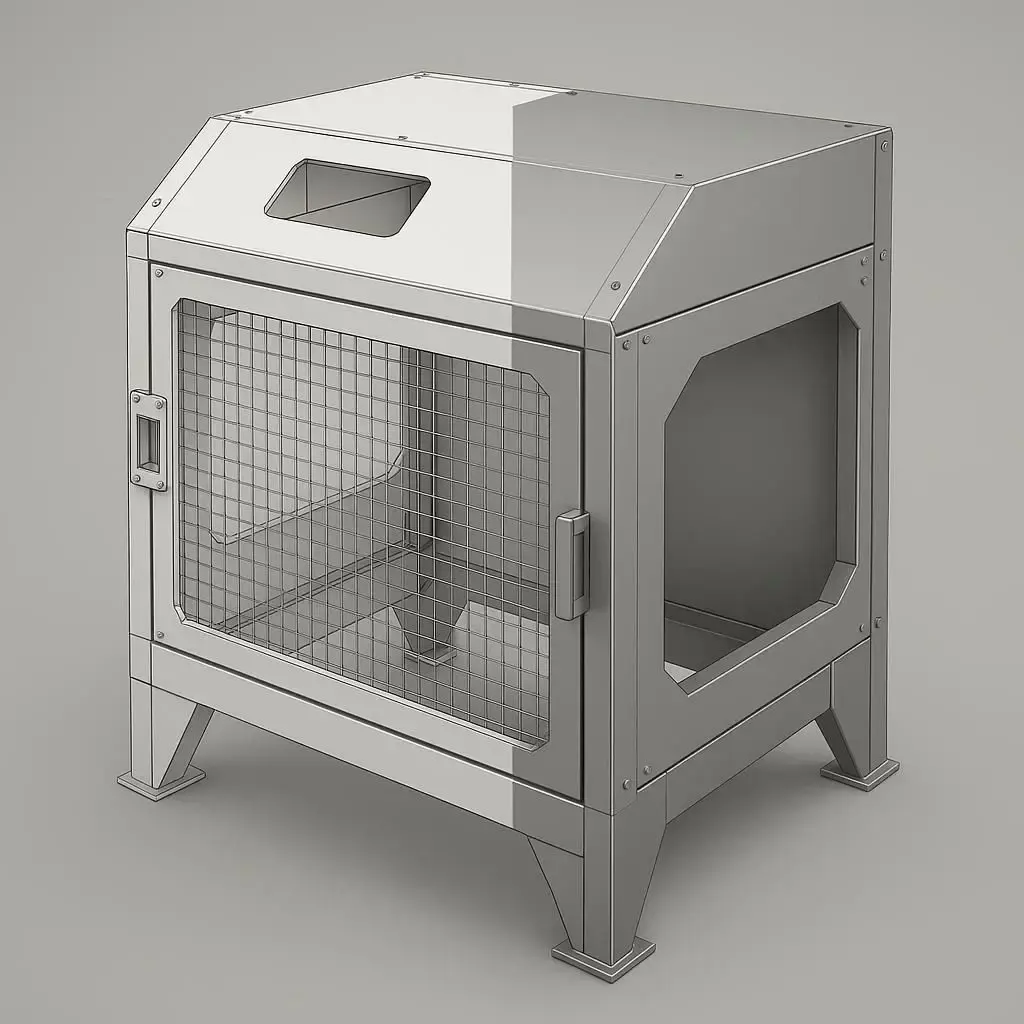
SR MFG Metal Spray Painting Product Showcase
Sheet Metal Spray Painting FAQs
Coating thickness is set based on your desired appearance and corrosion protection requirements. If needed, we can recommend a target thickness range and measurement locations during quoting.
When certain areas require tight thickness control or must remain uncoated, we typically use a combination of:
-
Masking for thickness control: High-temperature tape, masking film, or plugs to protect no-coat zones or limit build on critical areas.
-
DFM design recommendations: Adding small steps/ledges or masking features so masking lines don’t land on visible cosmetic surfaces.
-
Inspection and records: DFT is measured at agreed locations and recorded using ASTM D7091 (or an equivalent standard).
SR MFG matches color to RAL/Pantone standards or your supplied sample. We follow a defined process to ensure consistency: sample approval first, then we lock the standard and maintain color repeatability in production.
In practice:
-
Sample approval first: we confirm color, gloss, texture, and front/back appearance as applicable.
-
Controlled production: we run the same coating material and process to minimize batch-to-batch variation.
-
We support matte, satin, and gloss finishes. For complex geometries, we’ll flag areas where appearance variation is more likely (e.g., deep recesses or shadowed zones).
These functional surfaces must remain assembly-ready and electrically reliable:
-
Threaded holes: High-temperature plugs or thread protectors keep coating out so fasteners install properly.
-
Grounding / conductive contact areas: Either left uncoated through masking or thickness-limited to maintain conductivity.
-
Mating / locating surfaces: Masking is used to control build; we can also provide DFM input to reduce assembly risk.
For best results, please clearly mark on the drawing all areas that are no-coat, must remain conductive, or require thickness limits. We’ll propose the masking approach as part of the quotation.
Yes. If corrosion testing is required, SR MFG can support salt spray validation based on your specified standard, test duration, and acceptance criteria.
A typical report includes:
-
Sample details (material, coating/color, DFT, quantity)
-
Test standard and conditions (method used, duration, pass/fail criteria)
-
Test procedure and results (key photos and conclusions)
-
Lot/order traceability information (when requested)
Pinholes and blistering are often caused by outgassing (gas or volatiles released during curing), insufficient surface cleaning, or an unsuitable primer/system choice.
SR MFG countermeasures include:
-
Galvanized parts: Verify surface condition, ensure proper cleaning/activation, and select a compatible primer system.
-
Castings: Porosity can release gas during cure—when risk is high, we use more robust primers or sealing approaches.
A pre-bake/outgas bake is strongly recommended (and sometimes required) when:
-
The substrate is prone to outgassing (galvanized, cast, welded structures, enclosed cavities).
-
Similar parts have shown pinholes/blistering in past runs—pre-bake helps drive off volatiles and reduce recurrence.
Deep corners, narrow gaps, and hidden recesses are inherently harder to coat evenly. SR MFG typically addresses this by:
-
Optimizing racking and spray path: Adjusting hang orientation, gun angles, and spray sequence for more uniform coverage.
-
DFM recommendations: Suggesting small design changes when features are too deep or narrow to coat consistently.
-
Defining Class A surfaces up front: Aligning on which visible areas require the highest cosmetic control.
Rework is possible, but it follows clear standards. Minor defects may be repaired locally; for larger rework, we evaluate the risk of mismatched color/gloss and may re-confirm the approved sample if needed.
Our goal is that parts arrive ready to use out of the box. Common protections include:
-
Surface isolation: Protective film, individual bagging, or layer separators to prevent rubbing.
-
Shock protection: Corner guards, custom dividers, or locating trays to reduce movement in transit.
-
Packaging matched to cosmetic requirements: Higher cosmetic requirements typically need higher protection (and we’ll confirm the cost impact with you up front).
Pricing and lead time depend on factors such as number of colors, coating system, cosmetic standards, fixture/racking needs, and masking complexity.
In general:
-
MOQ: Depends on color count, fixture cost, and changeover requirements (multi-color programs may run in batches).
-
Color changeover: Depends on changeover frequency, cleaning requirements, and booth scheduling (rules can be defined per project).
-
Lead time: Different for prototyping vs. production; affected by pretreatment/masking complexity and inspection/testing needs (salt spray testing adds time).
For the most accurate quote, please provide drawings, color standard, quantities, and any required test standards—so we can clearly define MOQ, changeover rules, and lead time.
Metal Spray Painting Technical Resources
Stainless Steel Sheet Metal Fabrication Services for Automation and Energy Equipment
Tan161130.2025-11-05T07:25:22+00:00November 5, 2025|
Understanding Stainless Steel Sheet Metal Fabrication for Automation and Energy Equipment Stainless steel sheet metal fabrication integrates precision [...]
Hello world!
Tan161130.2025-10-16T02:19:56+00:00October 16, 2025|
Welcome to WordPress. This is your first post. Edit or delete it, then start writing!