Partner with Shuangrui to reduce manufacturing costs by 30% and boost efficiency.

Guangzhou Shuangrui Precision Manufacturing Co., Ltd.

Get An Instant Quote

Metal Grinding Services2026-01-15T07:50:50+00:00

Home -> Service -> Sheet Metal Finishing -> Grinding

Metal Grinding Services

SR MFG provides brushed and ground finishes for cosmetic sheet-metal surfaces (HL / #4 / non-directional textures), defect rework, and edge finishing (deburring and edge breaking), including complex contours and weld-transition blending. We control appearance consistency by defining the grain direction, an Ra roughness window, A/B surface zones, and an approved reference sample for production matching. Roughness and visual inspection records can be provided upon request to reduce rework and assembly risk. Share your 2D/3D files, material condition, target finish, and Ra requirement, and we will respond within the agreed timeline with process recommendations and a quotation.
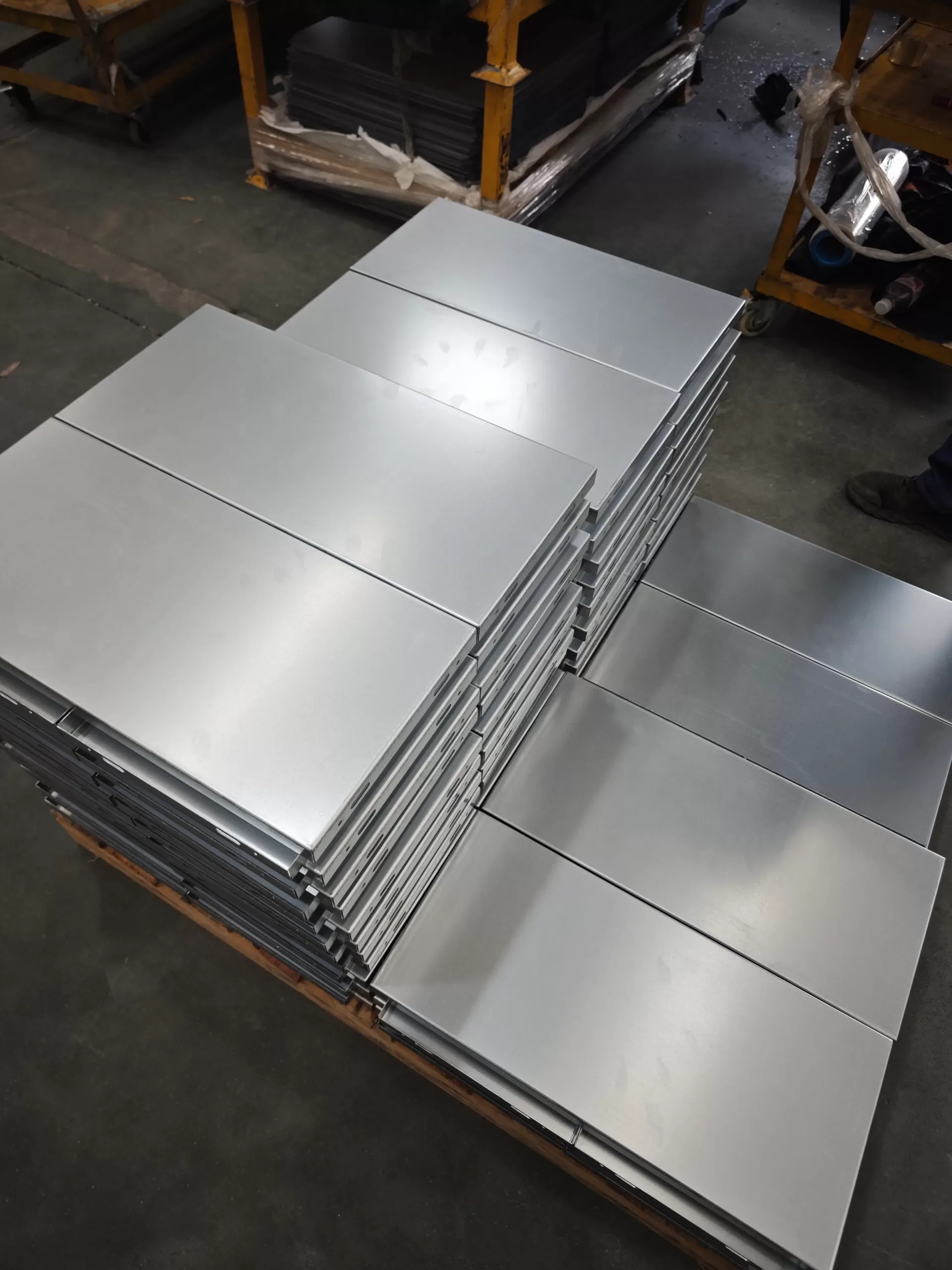
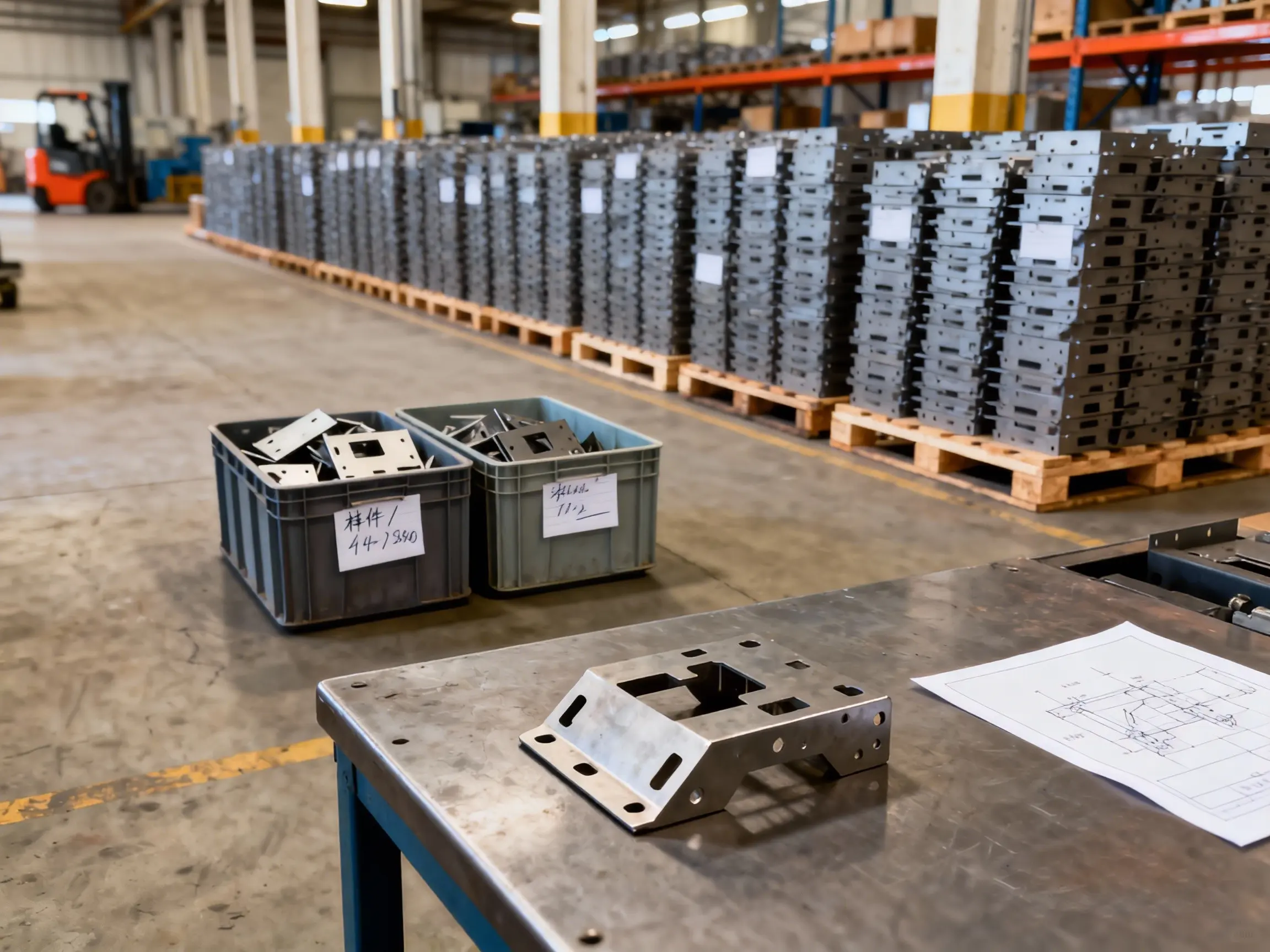
Blank Form (#4)

What Is Metal Grinding? How It Differs from Polishing and Deburring

You can think of metal grinding as “flattening a surface the way you’d smooth a stone with progressively finer sandpaper.” By creating controlled relative motion between an abrasive and the workpiece, grinding removes excess material in a predictable way to level out pronounced tool marks, weld steps, and deep scratches, producing a more uniform and consistent surface. In practice, grinding is typically done with belts, wheels, or abrasive brushes. If the goal is higher gloss—or even a mirror-like finish—grinding is usually followed by polishing or other finishing operations.

Grinding vs. Polishing vs. Deburring

What You Care About Grinding Polishing Deburring / Edge Break
What problem you’re solving Tool marks, weld steps, deep scratches, uneven surfaces A brighter, finer, more cosmetic finish Sharp edges, assembly binding, burrs at holes/edges that can damage seals or wire harnesses
What the result looks like Flatter and more uniform; high gloss is not the primary goal Higher gloss and a higher cosmetic grade Smoother, less sharp edges; reduced burrs
Dimensional impact Possible (material is removed), typically controllable May cause slight changes Usually minimal, but edge geometry changes; critical edges need clear limits and allowable removal
How to specify requirements with the least back-and-forth Define cosmetic surface area (A-surface) + grain/texture direction + Ra (or Ra max) + approved reference sample Define target gloss / mirror grade + Ra + approved reference sample Specify deburr/edge break + maximum allowable edge radius/chamfer (e.g., 0.2–0.5 mm)

Surface Texture Grinding Finishes Offered by SR MFG

SR MFG's production volume range for laser-cut parts 1 piece →100,000+ pieces

Linear Brushed / Directional Grain

Texture profile: A continuous, straight-line grain in a single direction—where consistent direction and clean, sharp lines matter most.

Typical method: Progressive belt-finishing to refine and “set” the grain (final grit and appearance are locked to the approved reference sample).

Best for: Stainless steel panels, cosmetic enclosure parts, decorative visible surfaces.

SR MFG's production volume range for laser-cut parts 1 piece →100,000+ pieces

No.4 Satin Finish

Texture profile: A directional brushed finish with a softer, more uniform grain—one of the most common satin/brushed appearances.

Typical method: Often achieved around 150–180 grit for a standard No.4 look (ranges vary by supplier; an approved reference sample is recommended to lock the finish).

Best for: 304/316 cosmetic parts, equipment housings, commercial kitchen and equipment panels.

SR MFG's production volume range for laser-cut parts 1 piece →100,000+ pieces

Random / Swirl / Non-Directional Texture

Texture profile: Randomized pattern with a swirl-like character and no fixed grain direction.

Typical method: Random-orbit sanding or dedicated tooling/processes.

Best for: Cosmetic surfaces where direction sensitivity is undesirable (and where on-site touch-up after assembly is easier).

SR MFG's production volume range for laser-cut parts 1 piece →100,000+ pieces

Blending / Matte Uniforming

Texture profile: More matte and even overall, minimizing individual scratch lines—commonly used to blend transitions and create a consistent appearance.

Typical method: Non-woven abrasive belts/wheels for surface blending and transition smoothing.

Best for: Pre-coating uniforming, light cosmetic parts, and overall blending after weld-transition work.

SR MFG's production volume range for laser-cut parts 1 piece →100,000+ pieces

Weld-Grain Restoration / Grain Matching

Texture profile: The weld transition matches the base material’s grain, reducing visible “shadowing” or broken grain lines.

Typical method: Remove weld steps and coarse marks first, then re-establish the final grain in the specified direction; directional finishes typically require grain reconstruction after welding.

Best for: Cosmetic stainless weldments, panels, and covers where grain matching requirements are strict.

What Metals Can Be Ground?

Grinding can be applied to virtually any metal, but material hardness and the required finish determine the abrasive system and process route:

  • Steel / stainless steel / cast iron (typical hardness): Aluminum-oxide abrasives are commonly used, including more wear-resistant alumina systems, to achieve stable stock removal and consistent surface texture.

  • Hardened steels, bearing steels, heat-resistant alloys (high hardness / heat-sensitive): Cubic boron nitride (CBN) abrasives are often preferred for controlled grinding of hardened materials while maintaining surface quality.

  • Non-ferrous metals such as aluminum and copper (softer, prone to loading): Silicon carbide (SiC) or anti-loading abrasive systems are typically used to reduce chip adhesion, smearing, and drag marks (including darkening).

  • Hard, brittle materials such as carbides or ceramics (when applicable): Diamond abrasive systems are more common to provide effective cutting action and improved surface condition.

For production programs, we can scale the process with automated takt times and in-process controls. Whether the job runs wet (coolant with recirculation) or dry (dust extraction) depends on the material, geometry, and cosmetic requirements.

SR MFG's production volume range for laser-cut parts 1 piece →100,000+ pieces

Standardized Metal Grinding Process

Metal Grinding Process (Video Demonstration)

Drawing/specification review → Incoming substrate verification → Fixturing and surface protection → Pre-cleaning → Defect leveling (coarse grind, as needed) → Stepwise finer grinding (build a uniform base texture) → Final brushing/graining (lock grain direction and finish) → First-article approval and reference sample sign-off → Cleaning and drying → Visual inspection → Roughness measurement and records (as required) → Scratch-protective packaging and shipment

Are you ready to get started on your metal fabrication project?

Not sure which material is ideal for your project? Feel free to contact us.Our engineering team will recommend suitable material grades and sheet thicknesses based on strength, weight, corrosion resistance and overall cost.

Who We Serve

SR MFG | Metal Parts Grinding Solution

Built on precision manufacturing experience and standardized workflows, SR MFG provides a one-stop grinding and finishing service for applications such as medical equipment, industrial machinery, automotive components, and fluid-handling parts—covering cosmetic texture grinding (brushed, matte/uniformed, and non-directional finishes), weld-transition blending, and edge deburring. We focus on the three outcomes buyers care about most: whether appearance consistency is controllable, whether rework risk can be reduced, and whether deliveries are traceable. For projects in regulated industries such as aerospace, automotive, or medical devices, we can support applicable system requirements and documentation upon request (subject to actual certifications held and project applicability).

Metal Grinding FAQs​​​​

It depends on your goal and where the part will be used. Choose grinding when you need controlled material removal to eliminate cutting marks, weld steps, dents, deep scratches, or to build a consistent “base texture” for brushing or coating. Grinding is primarily about shaping, defect removal, and creating a stable surface foundation. Choose polishing when your main objective is to further reduce roughness and increase gloss/reflectivity while minimizing changes to part geometry—polishing is more about surface refinement. A common route is grind (coarse → fine) to remove defects and heavy lines, then polish to reach a higher cosmetic grade (bright or mirror-like).

Yes. Grinding removes material and can change thickness, edge geometry, or local features. The best way to control risk is to define measurable acceptance criteria up front: specify allowable stock removal (e.g., “cosmetic surface treatment only—must not affect critical dimensions/fit surfaces,” or state a maximum removal). Use masking/protection for critical areas such as threads, sealing faces, grounding points, and mating surfaces. Lock the process window (abrasive grit sequence, pressure, speed, pass pattern) and sign off a first-article reference sample. Close the loop with inspection: perform FAI plus in-process sampling and final inspection on CTQs, tied to cosmetic acceptance.

A practical spec is: Ra + grain direction + A/B surface scope + approved reference sample. Ra is an acceptance metric; abrasive “grit” is only a process reference because the outcome also depends on pressure, speed, consumable wear, lubrication, and material. The same grit does not guarantee the same finish. If a grit must be included, you can attach a rough grit-to-Ra reference table (e.g., 180 grit ≈ 0.76 µm Ra; 240 grit ≈ 0.38 µm Ra), but acceptance should still be based on Ra (or Ra max). Make grain direction visual in the drawing (arrows or lay symbols; ISO 1302 supports this). Also define the measurement rule—where to measure, how many locations, and whether you accept by max value or average. ISO 4288 provides a framework for measurement and evaluation, and common practice is to measure at the location expected to be roughest and apply a defined decision rule (often a max-limit rule).

Example callout format:
A-surface: HL/#4 brushed; grain direction →; Ra ≤ X µm (or Ra X–Y µm); accept per approved sample.
B-surface: Ra ≤ X µm; direction not specified (or non-directional).

Yes—and for A-surfaces and critical mating areas, it is strongly recommended (standard or on request). Roughness is typically measured with a stylus profilometer for Ra (and Rz when required), and reports can include measurement locations, values, instrument details, and conditions. For geometry/dimensions, we can provide inspection records for key dimensions and GD&T features (flatness, parallelism, etc.) per drawing requirements, creating a complete delivery package together with the approved cosmetic sample.

Rust prevention depends on the material. Carbon steel/cold-rolled steel can flash-rust within minutes to hours after grinding and cleaning, so the sequence should be “clean → fully dry → protect immediately,” using rust-preventive oil/inhibitors or VCI packaging for enclosed protection. For stainless steel, avoid cross-contamination from carbon-steel tooling or shared abrasives—free-iron contamination can lead to rust spots; passivation can be used when needed to remove free iron and restore corrosion resistance. For scratch prevention on cosmetic parts, use temporary protective film on A-surfaces, layer separation and cushioning (PE foam/EPE sheets, corner guards), and treat cleaning and drying + isolated packaging as standard—residual abrasive or metal fines can act like sandpaper during transit.

Metal Grinding Technical Resources

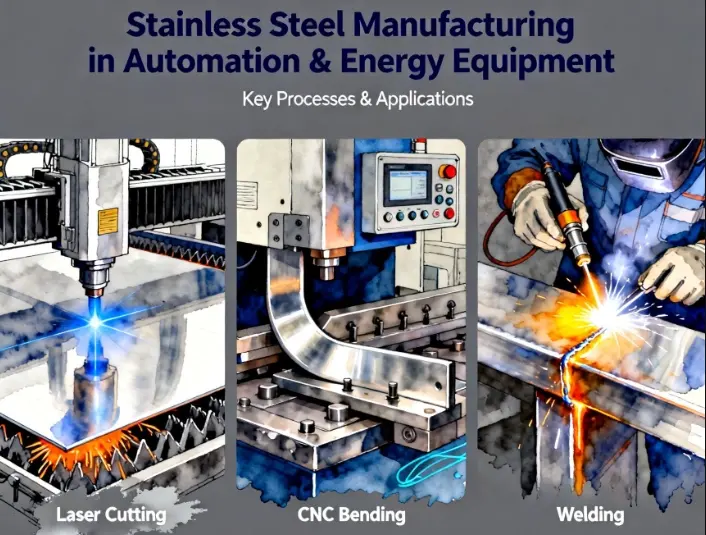
Stainless Steel Sheet Metal Fabrication Services for Automation and Energy Equipment

November 5, 2025|

Understanding Stainless Steel Sheet Metal Fabrication for Automation and Energy Equipment Stainless steel sheet metal fabrication integrates precision [...]

Hello world!

October 16, 2025|

Welcome to WordPress. This is your first post. Edit or delete it, then start writing!

Go to Top