Home ->
Secondary Metal Fabrication Services
A lot of rework, complaints, and schedule slips don’t actually come from stamping, bending, or welding—they come from the last few steps: burrs that weren’t fully removed, edges that are still too sharp, oil or debris trapped in holes and slots, or inconsistent packaging and labeling that leads to mixed parts or shipping damage. For customers, that’s a costly and frustrating outcome.
SR MFG’s secondary operations are designed to do one thing: upgrade your metal project from “made” to ready for acceptance and delivery—without you having to coordinate and argue back and forth with multiple suppliers.
What Is Secondary Metal Fabrication?
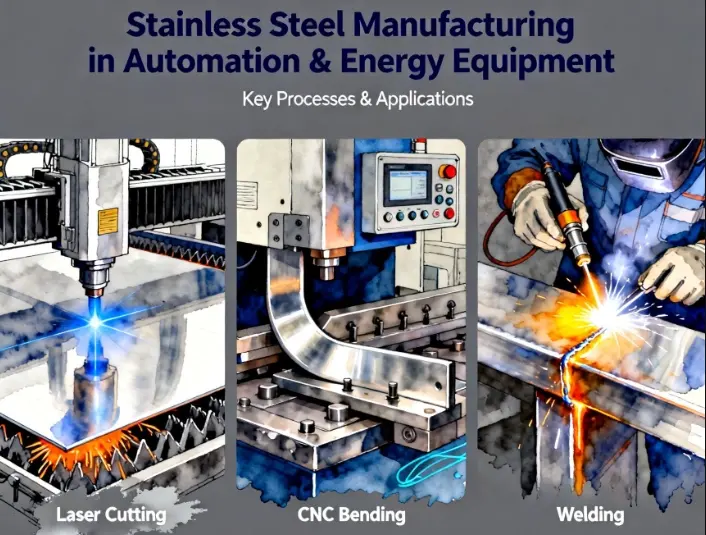
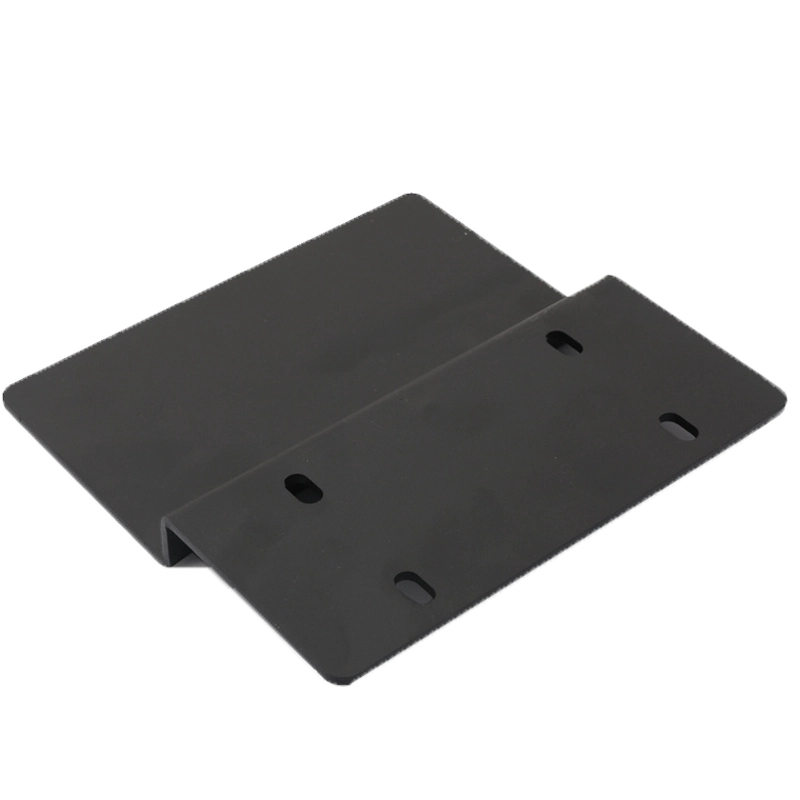
In sheet metal manufacturing, secondary operations refer to the additional processing performed after the primary steps—such as laser cutting, stamping, bending, and welding—once the part has become a semi-finished or finished component. These follow-on processes are used to meet specific requirements for dimensional accuracy, surface quality, performance, or functional features. At their core, secondary operations are carried out to ensure the part is assembly-ready and meets the final acceptance criteria.
Surface Finishing Processes
Process
What it does
Our service
Compatible materials
What we need from you
Standardizes surface texture and appearance (grain direction, gloss, roughness). Ideal for cosmetic and visible surfaces; can reduce light scratches/oxidation marks.
Brushing/polishing to your required finish level; appearance approval and sampling/inspection records available upon request.
Stainless steel, aluminum alloys, copper alloys, etc. (project-specific).
Grain direction (if required); finish/roughness target or reference sample (Ra or comparator); appearance grade (allowable scratches/dents); critical cosmetic areas; whether downstream coating/anodizing is required; protective film and packaging requirements.
Removes burrs and sharp edges from laser cutting/stamping/machining to improve safety and assembly reliability; prevents fit-up issues and gauge interference.
Deburring per requirement; focused treatment on critical edges/holes; post-process edge condition verification; photos/records available upon request.
Carbon steel, stainless steel, aluminum alloys, copper alloys, etc.
Edge requirement (burr-free / edge break / chamfer / radius); maximum allowable burr height (if specified); edges/holes requiring 100% treatment; surfaces to protect (functional/cosmetic); downstream processes (powder coat/paint/e-coat, etc.).
Applies controlled radii/chamfers/grinding to remove sharp edges; helps reduce thin-film risk at sharp corners for coated parts.
Execute to target radius/chamfer or “break-edge” rule; control removal amount and consistency; recommendations for downstream finishing available upon request.
Carbon steel, stainless steel, aluminum alloys, etc.
Target radius/chamfer (R/C value or break-edge rule); scope (which edges/holes/weld seams); maximum allowable material removal; downstream finish type and appearance/critical-area protection requirements.
Uses cavitation to improve cleaning performance—especially effective for oils/particles trapped in holes, slots, and internal cavities.
Ultrasonic clean + rinse + dry; optional anti-recontamination packaging; cleanliness verification/records available upon request.
Most metal parts; some plastics/rubber depend on chemistry compatibility.
Main contaminants (oil/coolant/wax/particles, etc.); restricted chemicals/environmental constraints; cleanliness acceptance method/target (if any); drying requirements (water spots/residual liquid allowed or not); post-clean packaging requirements (clean bag, separation, contamination control).
Delivers parts as line-ready subassemblies/kits to reduce your internal assembly time and mis-assembly risk.
Assemble per BOM/work instructions; torque/adhesive/threadlocker requirements (if any); functional and cosmetic checks; kitting supported (by workstation, by set quantity).
Metal parts + standard fasteners/hardware (per BOM).
BOM; assembly drawings/work instructions; torque and locking requirements; adhesive/cure requirements (if any); functional test method (if any); kitting rules (by station/by set/by lot).
Why Secondary Operations Determine Whether a Part Is Truly “Assembly-Ready”
In sheet metal fabrication, successful assembly isn’t just about making the part—it’s about whether it will locate correctly, fit smoothly, fasten properly, and assemble without damage or rework. Primary processes (laser cutting, stamping, bending, welding) define the part’s form, but secondary operations determine whether a sheet metal structure is ready to assemble and acceptable for delivery—without hang-ups from burrs, sharp edges, contamination, or functional surface issues.

Secondary-Operation Precision Determines Datum Reliability
Secondary operations aren’t simply “extra shaping.” They establish qualified datums and locating features for assembly. If the datum system is unreliable, assembly becomes trial-and-error—or impossible—no matter how well the part was formed.
Welding Distortion Is the Biggest “Assembly-Ready” Killer
Uncontrolled welding distortion can fundamentally change geometry and directly cause assembly failure. Secondary operations must include distortion prediction, control, and correction. For example, when SR MFG assembles automotive chassis subframes, welding distortion can shift mounting-point locations, preventing proper installation of the engine or suspension system—and in severe cases, affecting vehicle safety performance.
Joining Process Selection Defines Assembly “Compatibility”
Secondary operations are not just about “connecting parts”—they are the execution of process design. Poor selection or weak execution of joining methods can lead to misalignment, inconsistent fit-up, and ultimately assembly failure.
Tolerance Control Is the Bridge Between Secondary Operations and Assembly
Tolerances are the “work order” for secondary operations and the “entry ticket” for assembly. When tolerances drift out of control, assembly control is lost as well.
Secondary Metal Fabrication FAQs
Secondary Metal Fabrication Technical Resources