
Partner with Shuangrui to reduce manufacturing costs by 30% and boost efficiency.

Guangzhou Shuangrui Precision Manufacturing Co., Ltd.

Get An Instant Quote

Metal Bending Services2025-12-15T06:46:48+00:00

Home -> Service -> Sheet Metal Fabrication-> Metal Bending

Metal Bending Services for Precision Sheet Metal & Fabricated Parts

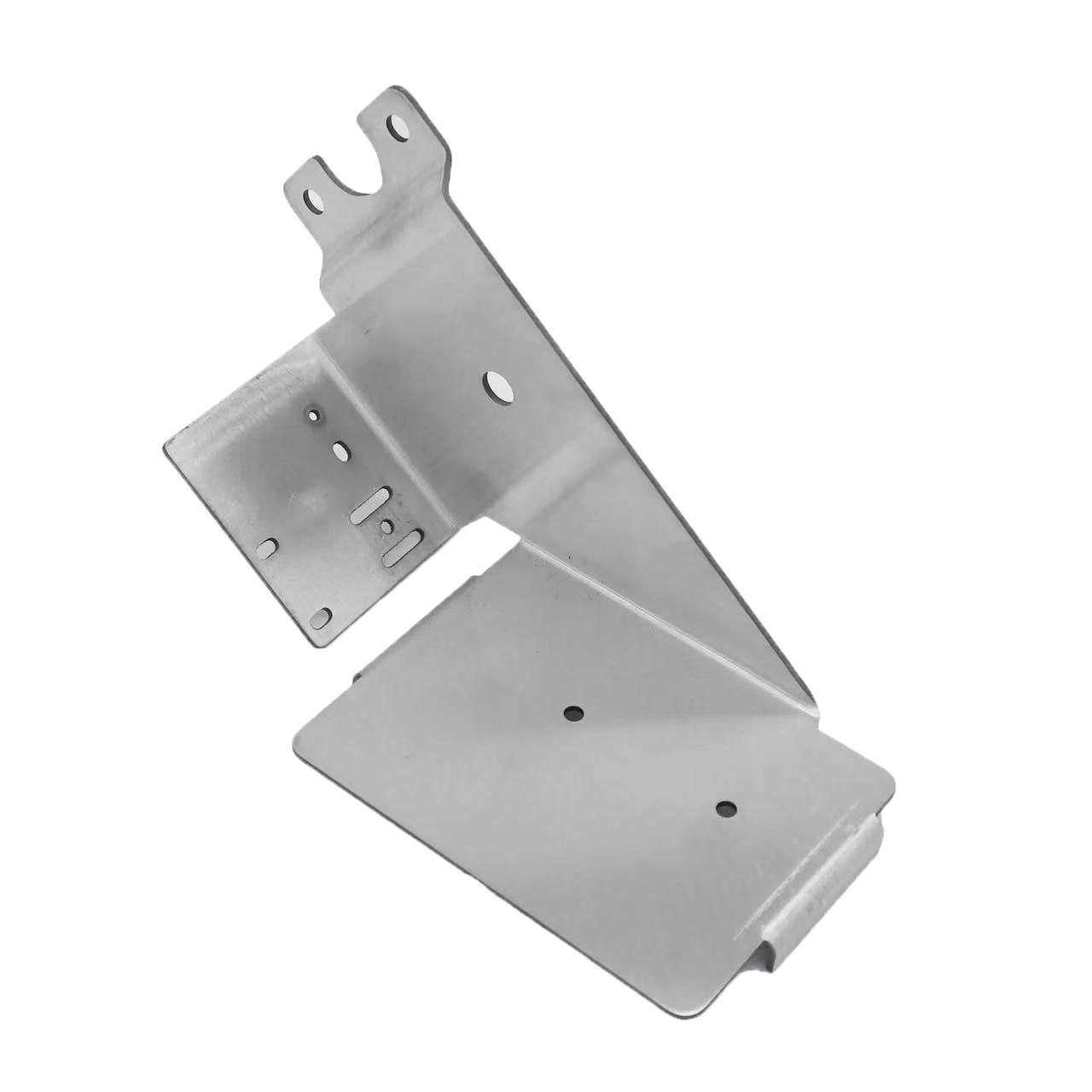
SR MFG provides OEM sheet metal bending services, delivering custom-formed parts with precise, repeatable bend angles for both prototypes and mass production. Backed by high-volume bending lines and controlled tolerances, we supply metal components for data center cabinets, energy storage systems, HVAC equipment, EV battery structures, and other industrial assemblies with stable, consistent quality. You can get a free sheet metal quote with DFM review within 1 working day, and prototype lead times as fast as 3–5 days.
Blank Form (#4)

Why Choose SR MFG for Metal Bending

More stable mass production of metal bent parts, with full control from process to delivery.

Ensure consistent mass production through traceable manufacturing processes and a structured quality control system.

Through engineering-led DFM collaboration, we optimize metal bending processes and manufacturing costs at the design stage.

metal bent parts

We provide one-stop sheet metal manufacturing services from metal bending through to final shipment.

Through engineering-led DFM collaboration, we optimize metal bending processes and manufacturing costs at the design stage.

Your Concern (Metal Bending) Typical Supplier SR MFG
Dimensional / bend angle stability

sheet metal bending consistency

Bend angle varies from batch to batch, so assemblies need rework during installation. Standardized press brake metal bending process and 100% inspection, delivering consistent bent parts so assemblies fit right the first time.
Part size & thickness range

metal bending capacity

Can only handle small parts and thin sheet metal; complex or large bending jobs must be outsourced. Two plants with multiple high-tonnage CNC press brakes; we complete sheet metal bending in-house from small precision parts to large frames and welded fabrications.
Post-weld distortion

bent & welded assemblies

Only focuses on single-part bending and does not consider weld shrinkage or distortion of formed components. Bending and welding are evaluated together; shrinkage is allowed for in the design and bending process so finished metal structures stay straight and square without twist.
Prototype OK, mass production fails

metal bending repeatability

Prototype bending is done by an expert operator; mass production is run on different machines or by different operators, leading to inconsistent results. The same sheet metal bending parameters, tooling setup and inspection standards are applied from prototyping through to mass production, ensuring stable batch quality.
High communication cost

DFM for metal bending

Sales staff do not fully understand the bending and forming process, and drawing details are often misinterpreted. Engineering team interfaces directly with you, confirming key details such as bend direction, visible surfaces, datum references and critical bend radii for sheet metal bending parts.
Fiber Laser Cutting Machines
Capabilities

SR MFG’s Precision Laser Cutting Capabilities

SR MFG’s metal bending services and sheet metal bending / forming capabilities are built around CNC press brakes, automated material handling and integrated in-line inspection, ensuring consistent critical dimensions even in high-volume production.

This allows purchasing and engineering teams not only to verify that initial prototype samples pass inspection, but also to quickly evaluate whether flat and curved sheet metal enclosures, metal bracket bending parts, metal frame bending components and metal chassis bending parts meet mass production requirements for length, thickness, material and bending tolerances.

metal bending services
sheet metal bending / forming

Machines and Production Capacity

Our factory is equipped with multiple metal bending machines and sheet metal bending equipment, including two automatic bending centers and several CNC press brakes for CNC press brake bending. These machines handle metal bending for carbon steel, stainless steel and aluminum, and offer capabilities such as offline programming, angle measurement and bending compensation.

Based on press tonnage, effective bending length and tooling configuration, we plan bending production capacity to improve per-shift throughput while maintaining bending accuracy and tolerance control in mass production.

Medical Equipment

Key Highlights:

  • 2× fully automatic bending centers for high-repeatability mass production
  • 22× CNC press brakes covering small to large tonnage bending
  • Supports carbon steel, stainless steel, aluminum
  • Offline programming, angle measurement & bending compensation
  • Planned production by tonnage & effective bending length
Processing capacity: stainless steel 1.2 mm, cold-rolled steel 1.5 mm, aluminum 2.0 mm

Bending length: 1,500 mm
Minimum formed size: 350 × 150 mm (four sides), 150 mm (two sides)
Operating efficiency: 0.5 s/stroke (maximum continuous bending speed)
CNC system: STAR300-LGX


Processing capacity: stainless steel 6 mm / cold-rolled steel 8 mm / aluminum 10 mm
Bending length: 4,000 mm
Minimum formed size: 200 × 150 mm
Operating efficiency: 5 mm/s (4+1 axes)
CNC system: DELEM DA58T


Processing capacity: stainless steel 2 mm / cold-rolled steel 3 mm / aluminum 4 mm
Bending length: 2,000 mm
Minimum formed size: 100 × 80 mm
Operating efficiency: 10 mm/s (4 axes)
CNC system: CYBELEC CT12


Processing capacity: stainless steel 3 mm / cold-rolled steel 4 mm / aluminum 5 mm
Bending length: 3,200 mm
Minimum formed size: 120 mm (two sides)
Operating efficiency: 8 mm/s (3+1 axes)
CNC system: ESA S540


Processing capacity: stainless steel 2 mm / cold-rolled steel 3 mm / aluminum 4 mm
Bending length: 3,200 mm
Minimum formed size: 200 × 150 mm
Operating efficiency: 6 mm/s (6 axes)
CNC system: STAR300-LGX

Currently, SR MFG’s metal bending lines provide a daily bending capacity of approximately 10,860 parts under standard production planning. The setup includes 2 automatic bending centers (3,072 pcs/day)5 servo-driven press brakes (4,800 pcs/day)4 large hydraulic press brakes (1,536 pcs/day) and 11 medium–small press brakes (1,452 pcs/day), enabling us to support everything from small pilot runs to stable mass production for OEM projects.

Equipment type Qty (units) Daily capacity / unit (pcs) Total daily output (pcs)
Automatic bending centers 2 1,536 3,072
Servo CNC press brakes 5 960 4,800
Large hydraulic press brakes 4 384 1,536
Medium & small press brakes 11 132 1,452
Total metal bending capacity 22 10,860 pcs/day

SR MFG Laser Cutting Machine Types

In many sheet metal projects, metal bending is the key process that turns a laser-cut flat blank into a functional bracket, cover or tray-like structural part. If bending is not performed consistently, problems such as gaps, distortion and misaligned holes will quickly appear during assembly.
At SR MFG, metal bending is not a secondary operation. It is a tightly controlled quality-critical step within our integrated sheet metal production line.
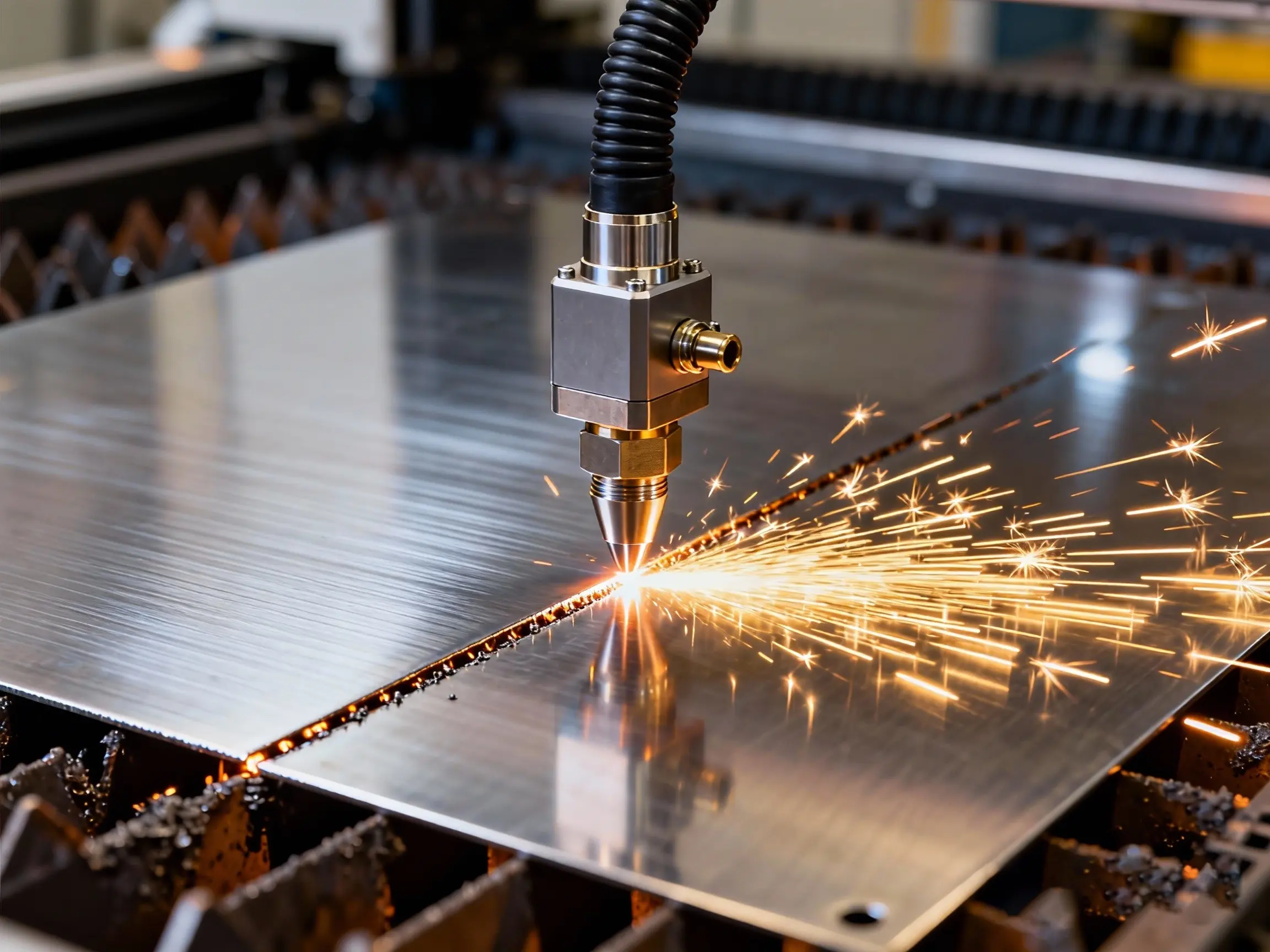
Fiber Laser Cutting Machines

V-bending

V-bending uses a V-shaped punch and die to form straight bends and is the most widely used method in sheet metal fabrication. It covers 90° bends as well as typical acute and obtuse angles, so most straight-edge bends on enclosures, trays, and brackets fall into this category—making V-bending a core process capability in any sheet metal shop.

CO₂ Laser Cutting Machines

Z-bending

Z-bending is formed by two opposite-direction V-bends with a step in between, creating a Z-shaped cross-section. It is widely used for stiffeners and mounting flanges in electrical enclosures and similar sheet-metal assemblies. Because Z-bends define critical offsets and clearances, the bending sequence and positioning accuracy have a direct impact on final dimensions and assembly quality.

CO₂ Laser Cutting Machines

Roll bending (curving)

Roll bending uses a set of rotating rolls to gradually form the sheet over multiple passes, producing large-radius curves, rings, or cylinders. It is ideal for continuous curved shapes such as pipe covers, curved roofing panels, guard rails, and shells, where smooth forming and evenly distributed deformation help achieve consistent radii and better fit-up in assembly.

Advanced Metal Bending Methods

When a simple single-stage bend cannot meet the structural or accuracy requirements, more refined process control methods are used:

Air bending

In air bending, the punch does not drive the sheet all the way to the bottom of the die. The target angle is achieved by precisely controlling the punch stroke, so the sheet does not fully contact the bottom of the V-die. This provides high tool versatility and flexible angle adjustment, with lower risk of heavy surface marks—making air bending especially suitable for visible parts and multi-angle, small-batch orders.

Bottoming

In bottoming, the punch drives the sheet firmly into the die so that the inside angle closely matches the die angle. This provides better angle repeatability and smaller angle deviation, but requires higher press tonnage and precise die matching. It is best suited for features with higher accuracy requirements and repeated production runs.

Incremental / multi-stage bending

Incremental bending approaches the final shape through multiple operations, using several small-angle bends to approximate complex curves or multi-angle geometries. Similar to segmental origami, it can form multiple flanges, complex cross-sections, and three-dimensional shapes, and is used when parts cannot be formed in a single bending operation.

Simple Guidelines for Choosing a Bending Method
Selecting the right bending method helps balance cost, efficiency, and quality. In general:

  • For thin sheets (around 3 mm and below), air bending is usually preferred for its flexibility and high efficiency.
  • For thicker materials or areas requiring very consistent angles, bottoming is often used to improve repeatability.
  • Parts that require continuous curved shapes are good candidates for roll bending, while parts with many bends or complex 3D geometry tend to use incremental or multi-stage bending schemes.
  • For parts with high surface appearance requirements, dies with nylon protection or full nylon tooling can be used; for standard structural parts, steel dies are more economical and durable.

Bending Tolerance Capability

Under typical sheet metal conditions, SR MFG generally holds key linear dimensions within ±0.10–0.15 mm and bend angles within ±0.3–0.5° for thin sheets. For thicker and longer parts (up to about 10 mm thick and 4,000 mm long), typical dimensional tolerance is around ±0.20 mm and angle tolerance around ±1°, with exact values confirmed case by case during DFM and FAI.

Standard Tolerances for Laser-Cut Metal

<

Machine Model Material Thickness Linear Dimensional Tolerance Angular Tolerance (per 100 mm) Hole Position Tolerance (Hole Diameter ≤ 50 mm) Surface Roughness Ra (μm) Tolerance Grade
TRUMPF 5030
(Fiber laser)
≤ 3 mm ±0.05 ±0.1° ±0.05 1.6–3.2 IT8
3–6 mm ±0.10 ±0.1° ±0.10 1.6–3.2 IT9
6–12 mm ±0.15 ±0.1° ±0.10 3.2–6.3 IT9
12–20 mm ±0.20 ±0.2° ±0.15 3.2–6.3 IT10
> 20 mm ±0.30 ±0.2° ±0.15 6.3–12.5 IT10
TRUMPF 4030
(CO2 laser)
≤ 3 mm ±0.08 ±0.1° ±0.08 3.2–6.3 IT8
3–6 mm ±0.15 ±0.1° ±0.12 3.2–6.3 IT9
6–12 mm ±0.20 ±0.2° ±0.15 6.3–12.5 IT9
12–20 mm ±0.25 ±0.2° ±0.20 6.3–12.5 IT10
> 20 mm ±0.35 ±0.3° ±0.20 12.5–25 IT10
Hymson HF3015B
(Fiber laser)
≤ 3 mm ±0.06 ±0.1° ±0.06 1.6–3.2 IT8
3–6 mm ±0.12 ±0.1° ±0.10 1.6–3.2 IT9
6–12 mm ±0.18 ±0.2° ±0.12

For conventional steel and aluminum thin-sheet parts, we can consistently maintain a mass-production tolerance of ±0.1 mm. For structural components requiring higher precision, we adjust toolpath compensation based on material thickness and contour complexity.

Our precise mass-production tolerance of ±0.1 mm ensures that even complex parts like automotive chassis components or electronic enclosures meet strict assembly standards without the need for rework.

At SR MFG, we commonly apply a “functional-surface–defined” tolerance strategy. This means assembly datum holes, thermal-dissipation features, and similar critical areas are assigned strict tolerance ranges, while non-critical surfaces receive appropriately relaxed tolerances. This approach ensures a smooth balance between cost and quality.

In discussions with our customers and peers, there is a shared understanding:

“Making a complex sheet-metal part is not the hard part—the real challenge is making it suitable for mass production.”

To manage complex features such as small holes (typically hole diameter < sheet thickness), sharp corners, long narrow slots, and other intricate geometries, we implement the following strategies to maintain precise laser cutting results:

  • Adjust initial piercing strategy and beam mode

  • Optimize heat input and apply step-cutting

  • Add micro-joints at critical points to improve stability (to be uniformly removed later)

For complex geometries, including small holes and sharp corners, SR MFG employs advanced piercing strategies and heat optimization techniques to ensure stable production and high-quality edges, even in large batch runs.

Our process ensures that even parts with intricate designs, like electronic housings or battery trays, maintain high precision and reliability in mass production.

These strategies ensure that prototype performance remains consistent with mass-production performance.

For applications such as battery housings, cabinet doors, and electrical-industry components, edge quality is essential. It affects later bending crack rates and coating adhesion.

Our approach includes:

  • Low-heat-input path optimization

  • Assist-gas pressure control (nitrogen/oxygen)

  • Segmenting toolpaths to avoid localized overheating

The result is improved edge flatness, smoothness, and HAZ control—bringing parts closer to a “ready for the next process” condition rather than requiring heavy rework, ensuring consistent laser cutting quality.

For batch production (from thousands to tens of thousands of pieces), the critical factors are:
  • Path trajectory consistency

  • Consistent sheet clamping method

  • Unified toolpath offset parameters

  • Nozzle/head wear monitoring across batches

We use a centralized process-parameter library, allowing different shifts and machines to operate under the same standard. This ensures that “the 3,000 parts produced today” and “the 3,000 replenishment parts produced next week” remain dimensionally aligned.

Common Materials for Metal Bending

SR MFG’s metal bending services cover the most common industrial metals and support production from small batches to high-volume runs.

Common Materials for Metal Bending

  • Carbon steel (SPCC, DC01, SPHC)
  • Galvanized materials (SGCC, SECC, GL)
  • Aluminum alloys (5052-H32, 6061-T6)
  • Stainless steels (SUS304, SUS201)
  • Specialty coated steels for outdoor use

Carbon steel


Recommended bending thickness range: 0.5–3.0 mm

Typical applications: equipment enclosures, cabinets, brackets, automotive components
Bending recommendation / minimum R reference: standard: 1.0t; precision: 0.8t
Process notes: for thicker material or small-radius bends, preheating or step bending can be considered as needed.
Cost level: Low
Compatible surface finishes: galvanizing, powder coating, baking paint, electrophoresis
Corrosion resistance: Fair

Recommended bending thickness range: 1.5–6.0 mm

Typical applications: heavy machinery structural parts, construction beams, containers
Bending recommendation / minimum R reference: 1.5t (to avoid cracking due to work hardening)
Process notes: mill scale on the surface should be pre-treated (shot blasting / pickling); apply rust prevention immediately after bending.
Cost level: Low
Compatible surface finishes: painting, anti-rust oil
Corrosion resistance: Fair

Galvanized materials

Recommended bending thickness range: 0.5–2.5 mm

Typical applications: outdoor equipment covers, outdoor AC units, electrical control cabinets
Bending recommendation / minimum R reference: 1.2t (to protect the zinc layer and reduce flaking)
Process notes: use rubber pads or soft pads on the bending tools; avoid chlorine-containing lubricants to prevent corrosion of the zinc layer.
Cost level: Medium
Compatible surface finishes: as-galvanized (zinc layer), powder coating
Corrosion resistance: Good

Recommended bending thickness range: 0.5–2.0 mm

Typical applications: computer chassis, electronic device housings, small home appliance enclosures
Bending recommendation / minimum R reference: 1.0t
Process notes: remove surface oil after bending; avoid repeated bending in the same area to prevent coating cracking or peeling.
Cost level: Medium
Compatible surface finishes: as-plated use + powder coating / painting / electrophoresis / phosphating + painting
Corrosion resistance: Good

Recommended bending thickness range: 0.8–2.0 mm

Typical applications: building roofs, appliance back panels, outdoor signboards
Bending recommendation / minimum R reference: 1.2t
Process notes: protect the aluminum-zinc coating during bending; avoid using very hard tooling that may damage the coated surface.
Cost level: Medium
Compatible surface finishes: as-coated (metallic), color-coated
Corrosion resistance: Good

Aluminum alloys

Recommended bending thickness range: 0.8–4.0 mm

Typical applications: aerospace components, marine fittings, decorative parts
Bending recommendation / minimum R reference: soft temper: 0.5t; hard temper: 1.0t
Process notes: use dedicated aluminum bending tooling; for thick material or small-radius bends, preheating or step bending can be considered based on actual conditions.
Cost level: Medium
Compatible surface finishes: anodizing, powder coating, electrophoretic coating
Corrosion resistance: Excellent


Recommended bending thickness range: 1.0–3.0 mm
Typical applications: mechanical structural parts, rail transit components, heat sinks
Bending recommendation / minimum R reference: 1.5t (to avoid brittle fracture)
Process notes: where post-bend strength is critical, heat treatment or stress relief can be arranged according to project requirements.
Cost level: Medium–high
Compatible surface finishes: anodizing, fluorocarbon coating
Corrosion resistance: Excellent

Stainless steels


Recommended bending thickness range: 0.5–2.0 mm
Typical applications: food-processing equipment, kitchen equipment, general outdoor equipment
Bending recommendation / minimum R reference: 1.5t (cold-rolled); 2.0t (hot-rolled)
Process notes: bending force is typically about 1.5 times that of carbon steel; for brushed finishes, the bending direction should preferably follow the grain to reduce surface defects.
Cost level: High
Compatible surface finishes: brushing, mirror polishing, passivation
Corrosion resistance: Excellent


Recommended bending thickness range: 0.5–1.5 mm
Typical applications: decorative parts, cost-sensitive stainless steel products
Bending recommendation / minimum R reference: 2.0t
Process notes: higher manganese content and relatively lower ductility; not recommended for coastal or high salt-spray environments. Burrs must be removed after bending and edge protection should be considered.
Cost level: Medium–high
Compatible surface finishes: brushing, powder coating
Corrosion resistance: Good

Are you ready to get started on your metal fabrication project?

Not sure which material is ideal for your project? Feel free to contact us.Our engineering team will recommend suitable material grades and sheet thicknesses based on strength, weight, corrosion resistance and overall cost.

Industries & Typical Applications

SR MFG’s metal bending services are designed around specific industries and end-use applications, rather than generic part fabrication.We have built stable mass-production and long-term OEM experience across multiple sectors, supporting customers from sample validation and pilot runs through to full product lifecycle supply.
Industrial Equipment
Phosphating Treatment

Data Centers & IT Equipment

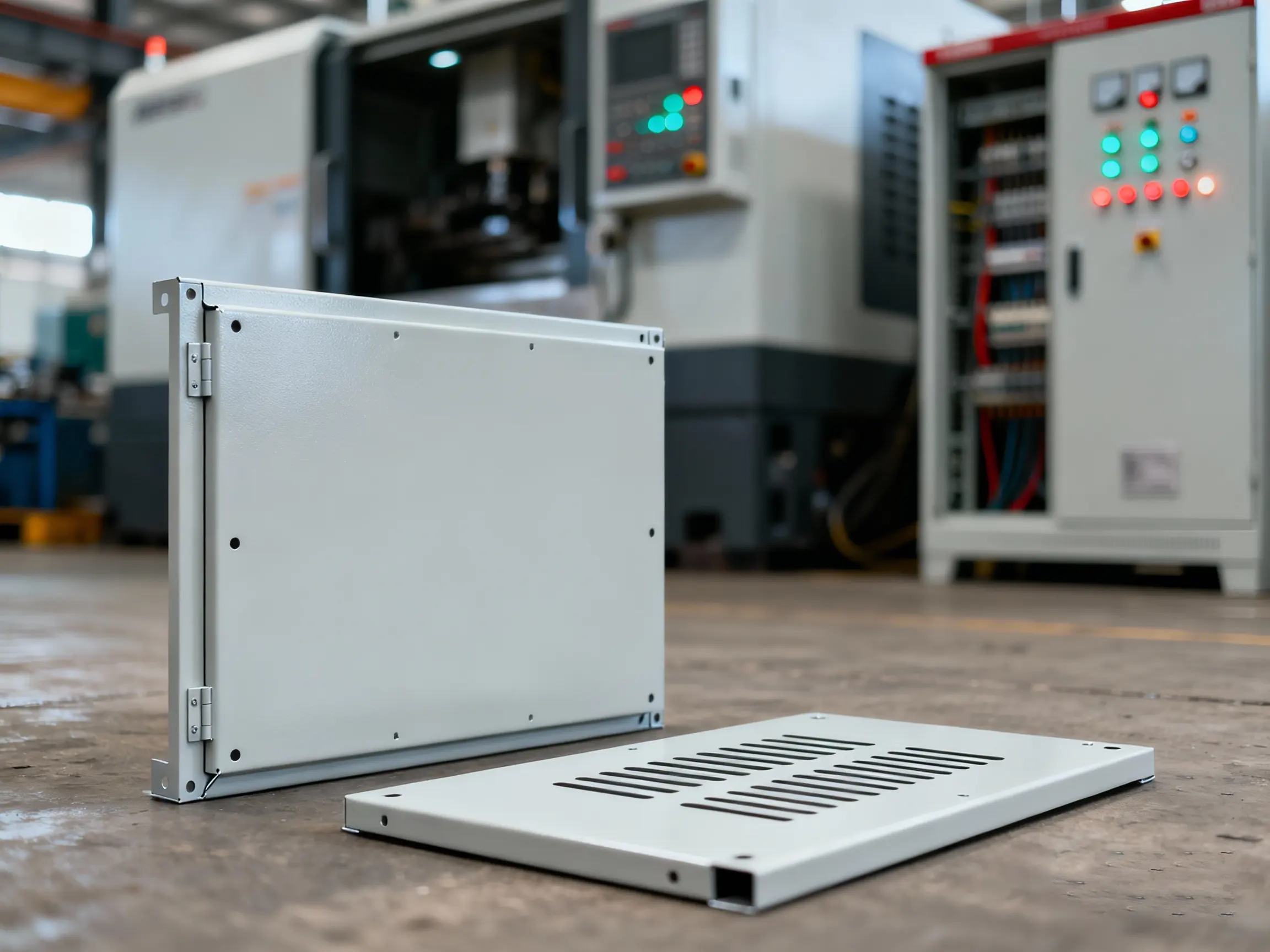
Sheet metal components such as server rack frames, network cabinets, cable-management trays, and power-distribution enclosures, used for equipment installation, cable routing, and structural reinforcement in data centers.

Phosphating Treatment

Energy Storage & Power Systems

Battery enclosures, energy-storage cabinets, power-conversion housing structures, thermal-management ducts, and supporting brackets used in ESS units and electrical power equipment.

Phosphating Treatment

HVAC & Building Equipment

Sheet metal parts for HVAC units and building systems, including outer housings, mounting brackets, air-duct components, inspection doors, and other building MEP metal structures.

Phosphating Treatment

New Energy Vehicles & Charging Equipment

Metal bending parts for NEV applications—battery trays, protective underbody plates, module housings—as well as charging-station enclosures, mounting brackets, and related infrastructure components.

Phosphating Treatment

Industrial Automation & Machinery

Sheet metal components for industrial machines, including automation frames, conveyor-system brackets, machine covers, guards, and structural support parts.

Phosphating Treatment

Electrical & Electronic Equipment

Precision sheet-metal bending parts such as equipment housings, mounting plates, terminal brackets, heat-dissipation plates, and module carriers used in electrical and electronic devices.

Phosphating Treatment

Architectural & Structural Fixtures

Metal parts used in architectural and building applications, including curtain-wall sub-frames, structural brackets, decorative trim pieces, mounting supports, and column-cladding components.

Phosphating Treatment

Outdoor Equipment & BBQ Grills

Outdoor-grade sheet metal parts such as grill housings, lids, grates, side-shelf brackets, outdoor storage cabinets, and protective covers for electrical or gas components.

Our Workflow:From Drawing to Finished Bent Parts

With a clear and defined workflow, we work with customers from early planning through to mass production to achieve stable bending quality and controlled project delivery.
  • 1

    Provide Drawings or Samples:Please send your 2D/3D files (STEP, DXF, DWG, PDF, etc.) together with basic requirements such as quantity, material, surface finish, and target delivery date.

  • 2

    Engineering Review & DFM Recommendations:Our engineers check bend radii, hole-to-bend distances, forming feasibility of the part geometry, material selection, and potential risks.If we see risks such as cracking, distortion, or unstable tolerances, we will propose improvements before production starts.

  • 3

    Quotation & Lead Time Confirmation:We provide a detailed quotation including unit price, tooling cost (if any), estimated production lead time, and the recommended shipping method.

  • 4

    Prototyping & Validation:For new projects, we typically produce samples or prototype parts first to verify dimensions, function, and assembly before moving into mass production.

  • 5

    Mass Production & Quality Management:During production, we monitor bend angles, key dimensions, compensation settings, and surface quality according to the agreed inspection standards.

  • 6

    Finishing, Packaging & Shipment:Optional finishing services include deburring, powder coating, painting, electroplating, and sub-assembly.Finished parts are securely packed and shipped according to customer requirements.

How Metal Bending​ Affects Your Design

Metal bending directly affects structural strength, assembly accuracy and manufacturability. Rather than “just bending to the print”, SR MFG helps optimize bend radii, flange lengths and bend sequences so parts form reliably and assemble consistently.Practical design tips for bent parts

Metal Bending

DFM

Metal Bending Design Guide

The goal of this bending design guide is to ensure that sheet metal parts are not only “cuttable”, but also can be bent, welded, and assembled in a stable and repeatable way before they enter production. A small adjustment in bend radius, flange length, or hole position at the design stage often prevents cracking, distortion, or tolerance stack-up across multiple downstream processes.

The guidelines summarized here are based on real mass-production cases across cabinets, electrical enclosures, battery structures, trays, brackets, and frame-type parts. They can be directly applied to optimize bend radii, flange geometry, hole-to-bend distances, stiffening features, and bend sequences—helping designs move smoothly from prototype to stable OEM production.

Pricing for Metal Bending: What Determines the Cost?

In metal bending projects, the price is not only determined by the cost of each bend, but also by several practical factors such as material, sheet thickness, part size, bending complexity and production volume.

CO₂ Laser Cutting Machines

Our pricing model reflects real manufacturing drivers, not just a “per-bend” number—so cost and quality stay predictable for OEM customers.

Material & Thickness

Harder or thicker materials—such as stainless steel, high-strength steel, and 6061-T6—require higher-tonnage presses, special tooling, and longer bending time than standard mild steel.

Part Geometry & Bending Complexity

Costs rise when parts have many bends, multiple bend directions, very small bend radii, short flanges, or holes/notches close to the bend line, because set-up, trial bends, and scrap risk all increase.

Tolerance & Appearance Requirements

Tight dimensional/angle tolerances, flatness requirements, and “no-scratch / visible surface” specifications demand stricter process control and extra handling, which adds cost.

Batch Size & Repeat Orders

From 5 pieces to 5,000 pieces, programming, set-up, and first-article inspection are almost the same. As a result, stable repeat orders usually have a lower unit cost than one-time prototypes or very small batches.
FAQs Common Problems Regarding Metal Bending

An accurate quote depends on complete technical data, including:

  • 3D models and 2D drawings with tolerances

  • Material grade and thickness

  • Expected surface finish and coating

  • Yearly or batch quantities

  • Any special tests, certifications, or compliance needs

With this package, we can define the bending/fabrication route, estimate cycle times, and give a realistic cost and lead-time window.

Capacity is defined by press brake tonnage, maximum bend length, and open height. In practice, this covers:

  • Thin-gauge doors and covers for cabinets

  • Medium-gauge structural members for frames

  • Thicker brackets and bases

all handled on the same platform, as long as each design stays within the validated material–thickness–length window (confirmed during RFQ and DFM review for each project).

Bending tolerances are first validated on prototypes using agreed measurement points for angles, flatness, and critical interfaces.
Once approved, these checkpoints are built into in-process inspection at the press brake and periodic dimensional audits, with FAI/PPAP-style documentation and SPC where volumes justify it—so the same tolerance scheme stays in place as production scales up.

Yes. In many OEM projects, bending is one step in a chain including laser cutting, welding, surface finishing, and assembly. We define a single integrated route so bent parts move through predefined workcentres and fixtures with common datums and reference edges, reducing handling, shortening lead times, and improving consistency at enclosure or frame level.

Yes. Our laser cutting services integrate downstream finishing to support OEM-level consistency:
  • Mechanical deburring

  • Edge rounding

  • Surface brushing / polishing

  • Powder coating, electrophoresis, galvanizing and other protective coatings
    This prevents variation caused by external subcontracting and ensures that laser-cut components enter bending, welding or assembly without additional preparation.

Bending creates a local plastic deformation zone where hardness and yield strength increase slightly, while ductility decreases; away from the bend, properties remain close to the base material.
For static housings and light brackets this is usually beneficial. For dynamic or safety-critical structures, bend radii, material grades, and load paths are defined more conservatively—sometimes supported by testing or simulation—to avoid fatigue or cracking issues.

Metal Forming & Bending Resources

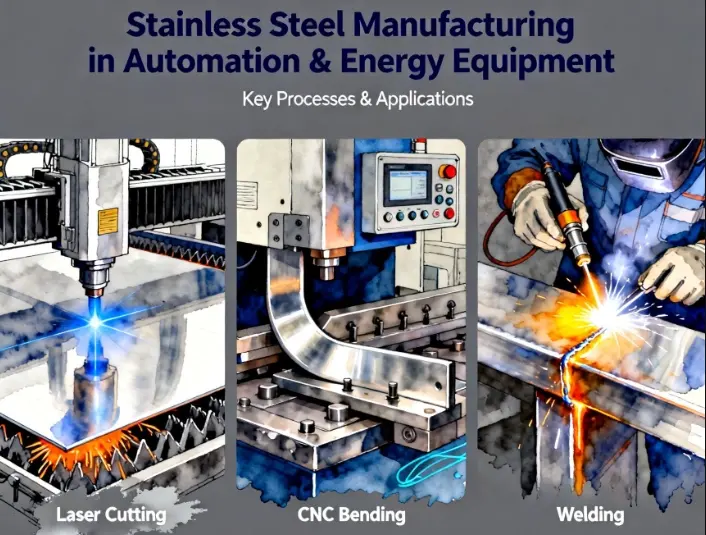
Stainless Steel Sheet Metal Fabrication Services for Automation and Energy Equipment

November 5, 2025|

Understanding Stainless Steel Sheet Metal Fabrication for Automation and Energy Equipment Stainless steel sheet metal fabrication integrates precision [...]

Hello world!

October 16, 2025|

Welcome to WordPress. This is your first post. Edit or delete it, then start writing!

Go to Top