Partner with Shuangrui to reduce manufacturing costs by 30% and boost efficiency.

Guangzhou Shuangrui Precision Manufacturing Co., Ltd.

Get An Instant Quote

Laser Cutting Services OEM2025-12-12T07:21:58+00:00

Home -> Service -> Sheet Metal Fabrication-> Laser Cutting services

Precision Laser Cutting Services for OEM Manufacturing

Looking for higher precision and lower-cost laser cutting solutions? Leveraging a megawatt-level laser equipment cluster and the high-precision TRUMPF 5030 cutting system, SR MFG delivers ±0.03 mm precision machining and provides customized metal laser cutting services that can improve material utilization by up to 18%.
Blank Form (#4)

Why choose SR MFG for Custom Laser Cutting?

Trusted partner for OEM sheet metal programs.

High-power servo control and beam monitoring ensure a stable HAZ and prevent bend-line deviation, providing high-precision laser cutting even for complex geometries.

Dedicated high-reflective cutting mode keeps aluminium laser cutting clean—no dross, no overburn, no damage to the laser source.

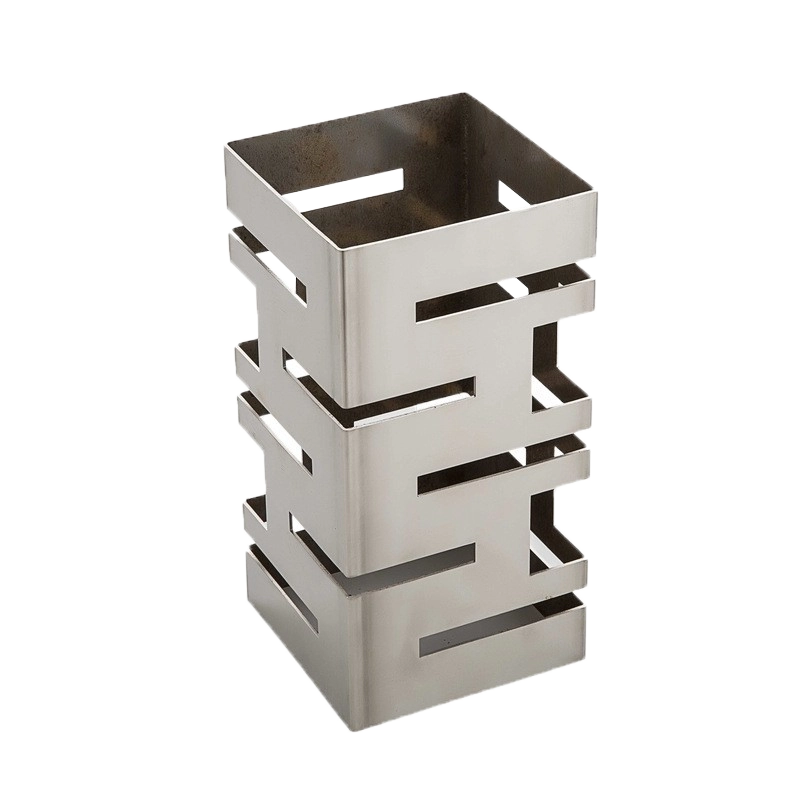
Stainless steel laser cutting parts

Large-format capability and an anti-vibration bed maintain consistent geometry on both thin sheets and oversized panels.

Micro-feature enhancement mode delivers clean contours even on small holes as tight as Φ1–2 mm, ideal for applications such as precision electronics, automotive components, and medical devices.

SR MFG = stronger equipment + higher accuracy + faster delivery + full-process manufacturing + stable ISO-certified quality, including custom cut metal.

The following table compares the advantages of SR MFG’s laser cutting capabilities with typical competitors in key performance areas such as cutting capability, precision, and production capacity.

Dimension SRMFG Advantage Typical Competitors
Cutting Capability Multi-material (steel, stainless, aluminum, copper) & wide thickness range. High-power machines deliver superior results. Limited materials; thickness constraints; weak for reflective metals.
Precision & Quality High accuracy, clean edges, stable quality using top-tier TRUMPF & HF equipment. Precision varies; quality depends on operator; more burrs/instability.
Production Capacity Multiple machines running in parallel; automated loading; fast throughput; high reliability. Usually 1 machine; manual loading; slow for large orders; unstable capacity.
Lead Time Fast samples → seamless scaling to mass production; stable delivery due to multi-machine redundancy. Longer lead time; capacity bottlenecks; no backup machines.
One-Stop Manufacturing Laser cutting + bending + welding + machining + finishing + assembly in one place. Only laser cutting; customers must manage multiple suppliers.
Quality Assurance ISO-certified; strict inspection; experience in automotive & industrial OEM projects. Fewer certifications; less structured QC; limited high-end industry experience.
Cost & Efficiency Strong cost-performance for both prototypes and mass production; lower risk & simpler supply chain. Higher cost for complex jobs; fragmented supply chain; higher failure risk.
Fiber Laser Cutting Machines
Capabilities

SR MFG’s Precision Laser Cutting Capabilities

In an OEM sheet-metal environment, the true value of laser cutting has never been simply “what materials can be cut.”

Its real value lies in consistent, scalable, long-term production that reliably supports the entire supply chain.

So SR MFG is more focused on

industrial-grade consistency

automation, and repeatable processes.

Our Equipment

We operate 3kW–5kW automated fiber and CO₂ laser cutting technology, capable of delivering stable cutting speeds, fast piercing, and clean edge quality across a wide range of metals.
With automated loading and unloading, our lines support 24/7 continuous production, significantly reducing labor dependency and increasing overall throughput and schedule reliability.

Medical Equipment

Best for: High-speed mass production, thick-plate cutting, and high-precision structural parts. It is the core machine powering our industrial laser-cutting capacity.

  • Laser Type / Power: Fiber Laser / 5 kW

  • Worktable: 3000 × 1500 mm

  • Max Cutting Thickness: 25 mm Carbon Steel / 20 mm Stainless Steel

  • Positioning Accuracy: ±0.03 mm/m

  • Repeatability: ±0.02 mm

  • Max Traverse Speed: 265 m/min (X / simultaneous)

  • Auto Loading/Unloading: Supported

  • Source: Trumpf Official Site (TruLaser 5030)

Best for: Components requiring exceptional edge quality, mixed-material structures, and non-metal sandwich materials sensitive to heat-affected zones.

  • Laser Type / Power: CO₂ Laser / 4 kW

  • Worktable: 3000 × 1500 mm

  • Max Cutting Thickness: 20 mm Carbon Steel

  • Positioning Accuracy: ±0.03 mm/m

  • Repeatability: ±0.02 mm

  • Max Traverse Speed: 140 m/min (X / simultaneous)

  • Auto Loading/Unloading: Supported

  • Source: Trumpf Official Site (TruLaser 4030)

Best for: High-speed thin-sheet processing, electronic/mechatronic sheet-metal components, and lightweight structural parts. Offers excellent performance-to-cost efficiency and fast response.

  • Laser Type / Power: Fiber Laser / 3 kW

  • Worktable: 3000 × 1500 mm

  • Max Cutting Thickness: 20 mm Carbon Steel

  • Positioning Accuracy: ±0.03 mm/m

  • Repeatability: ±0.02 mm

  • Max Traverse Speed: 140 m/min (X / simultaneous)

  • Auto Loading/Unloading: Supported

  • Source: Hymson Official Site (HF3015B)

With these three machines, SR MFG can support the full spectrum of laser-cutting needs—from ultrathin sheets to heavy plates, from high-reflective metals to hybrid-material components.

Whether you require rapid prototypes or stable, large-volume supply, we deliver consistent, high-precision, manufacturing-grade laser cutting you can rely on.

Production Capacity Benchmark (Internal Measurements)

Material: 6 mm carbon steel · Production: continuous 24-hour, 3-shift operation

Equipment Model Cutting Speed Utilization Rate Daily Output (Theoretical Cutting Length) Typical Part Qty (per day, based on 1m×1m sheet parts)
TruLaser 5030 30 m/min 85% 36,720 m ~3,600 parts
TruLaser 4030 15 m/min 85% 18,360 m ~1,800 parts
HF3015B 25 m/min 85% 30,600 m ~3,000 parts

Total daily capacity: over 9,000 thin-sheet parts/day, enabling stable, high-frequency, large-volume manufacturing and delivery.

Note: Actual production will be affected by the following factors:

  1. Part complexity (small holes or sharp-angle designs in metal parts may reduce production speed by 30%–50%);

  2. Material changeover frequency (automatic loading and unloading can reduce auxiliary time by 20%);

  3. Machine warm-up and maintenance, such as nitrogen refilling (reserve 10% of the time).

These are real production-line variables in factories, and SR MFG has minimized fluctuations as much as possible through standardized process management.

SR MFG Laser Cutting Machine Types
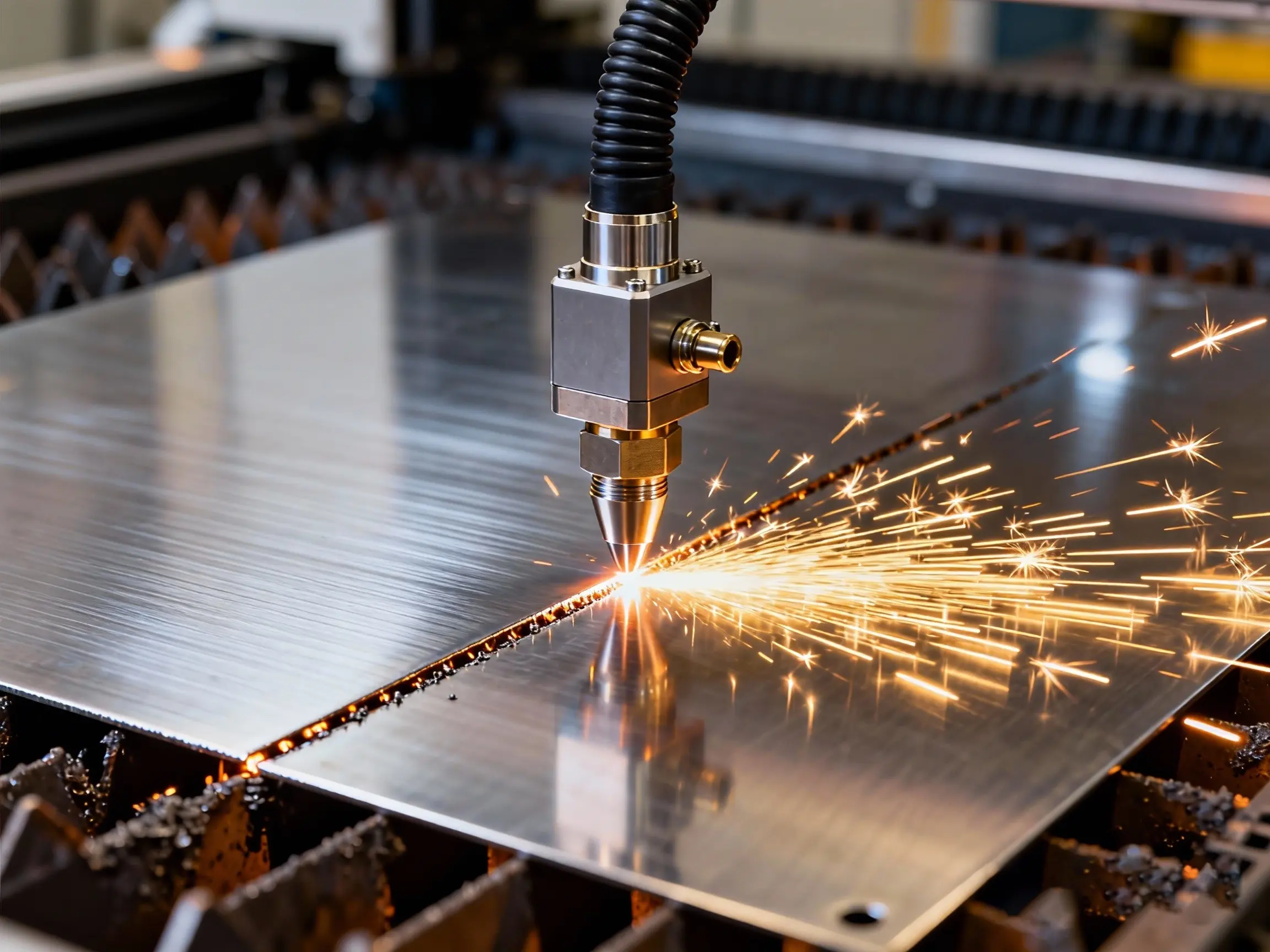
Fiber Laser Cutting Machines

Fiber Laser Cutting Machines

Fiber laser cutters at RapidDirect and SR MFG deliver efficient, high-speed cutting for both high-volume and custom metal parts, including reflective materials. With 3–5 kW power and automated loading/unloading and racking, our lines maintain stable speed, repeatable accuracy, and consistent beam quality—even in lights-out or low-personnel operation, where true productivity comes from stability, not power alone.

CO₂ Laser Cutting Machines

CO₂ Laser Cutting Machines

Although most of the sheet-metal industry has moved to fiber laser cutting, CO₂ systems still play a key role in specific cases—such as parts with large thickness variation, non-metallic sandwich structures, or mixed-material prototypes. Our CO₂ laser cutters handle metals, plastics, and woods on the same platform, delivering smooth edge transitions and fine detailing without forcing you to redesign around special material characteristics.

Accuracy, Tolerances, and Repeatability

During discussions with customers, we’ve found that what most customers care about is not the nominal accuracy of the equipment, but rather the ability to produce stable, consistent quality in mass production.

Standard Tolerances for Laser-Cut Metal

<


Machine Model Material Thickness Linear Dimensional Tolerance Angular Tolerance (per 100 mm) Hole Position Tolerance (Hole Diameter ≤ 50 mm) Surface Roughness Ra (μm) Tolerance Grade
TRUMPF 5030
(Fiber laser)
≤ 3 mm ±0.05 ±0.1° ±0.05 1.6–3.2 IT8
3–6 mm ±0.10 ±0.1° ±0.10 1.6–3.2 IT9
6–12 mm ±0.15 ±0.1° ±0.10 3.2–6.3 IT9
12–20 mm ±0.20 ±0.2° ±0.15 3.2–6.3 IT10
> 20 mm ±0.30 ±0.2° ±0.15 6.3–12.5 IT10
TRUMPF 4030
(CO2 laser)
≤ 3 mm ±0.08 ±0.1° ±0.08 3.2–6.3 IT8
3–6 mm ±0.15 ±0.1° ±0.12 3.2–6.3 IT9
6–12 mm ±0.20 ±0.2° ±0.15 6.3–12.5 IT9
12–20 mm ±0.25 ±0.2° ±0.20 6.3–12.5 IT10
> 20 mm ±0.35 ±0.3° ±0.20 12.5–25 IT10
Hymson HF3015B
(Fiber laser)
≤ 3 mm ±0.06 ±0.1° ±0.06 1.6–3.2 IT8
3–6 mm ±0.12 ±0.1° ±0.10 1.6–3.2 IT9
6–12 mm ±0.18 ±0.2° ±0.12

For conventional steel and aluminum thin-sheet parts, we can consistently maintain a mass-production tolerance of ±0.1 mm. For structural components requiring higher precision, we adjust toolpath compensation based on material thickness and contour complexity.

Our precise mass-production tolerance of ±0.1 mm ensures that even complex parts like automotive chassis components or electronic enclosures meet strict assembly standards without the need for rework.

At SR MFG, we commonly apply a “functional-surface–defined” tolerance strategy. This means assembly datum holes, thermal-dissipation features, and similar critical areas are assigned strict tolerance ranges, while non-critical surfaces receive appropriately relaxed tolerances. This approach ensures a smooth balance between cost and quality.

In discussions with our customers and peers, there is a shared understanding:

“Making a complex sheet-metal part is not the hard part—the real challenge is making it suitable for mass production.”

To manage complex features such as small holes (typically hole diameter < sheet thickness), sharp corners, long narrow slots, and other intricate geometries, we implement the following strategies to maintain precise laser cutting results:

  • Adjust initial piercing strategy and beam mode

  • Optimize heat input and apply step-cutting

  • Add micro-joints at critical points to improve stability (to be uniformly removed later)

For complex geometries, including small holes and sharp corners, SR MFG employs advanced piercing strategies and heat optimization techniques to ensure stable production and high-quality edges, even in large batch runs.

Our process ensures that even parts with intricate designs, like electronic housings or battery trays, maintain high precision and reliability in mass production.

These strategies ensure that prototype performance remains consistent with mass-production performance.

For applications such as battery housings, cabinet doors, and electrical-industry components, edge quality is essential. It affects later bending crack rates and coating adhesion.

Our approach includes:

  • Low-heat-input path optimization

  • Assist-gas pressure control (nitrogen/oxygen)

  • Segmenting toolpaths to avoid localized overheating

The result is improved edge flatness, smoothness, and HAZ control—bringing parts closer to a “ready for the next process” condition rather than requiring heavy rework, ensuring consistent laser cutting quality.

For batch production (from thousands to tens of thousands of pieces), the critical factors are:
  • Path trajectory consistency

  • Consistent sheet clamping method

  • Unified toolpath offset parameters

  • Nozzle/head wear monitoring across batches

We use a centralized process-parameter library, allowing different shifts and machines to operate under the same standard. This ensures that “the 3,000 parts produced today” and “the 3,000 replenishment parts produced next week” remain dimensionally aligned.

Production Scalability (Prototype → Mass Production)

From our experience, customers care most about “prototype speed + mass-production stability.” These two factors best represent a factory’s capability as a laser-cutting OEM.
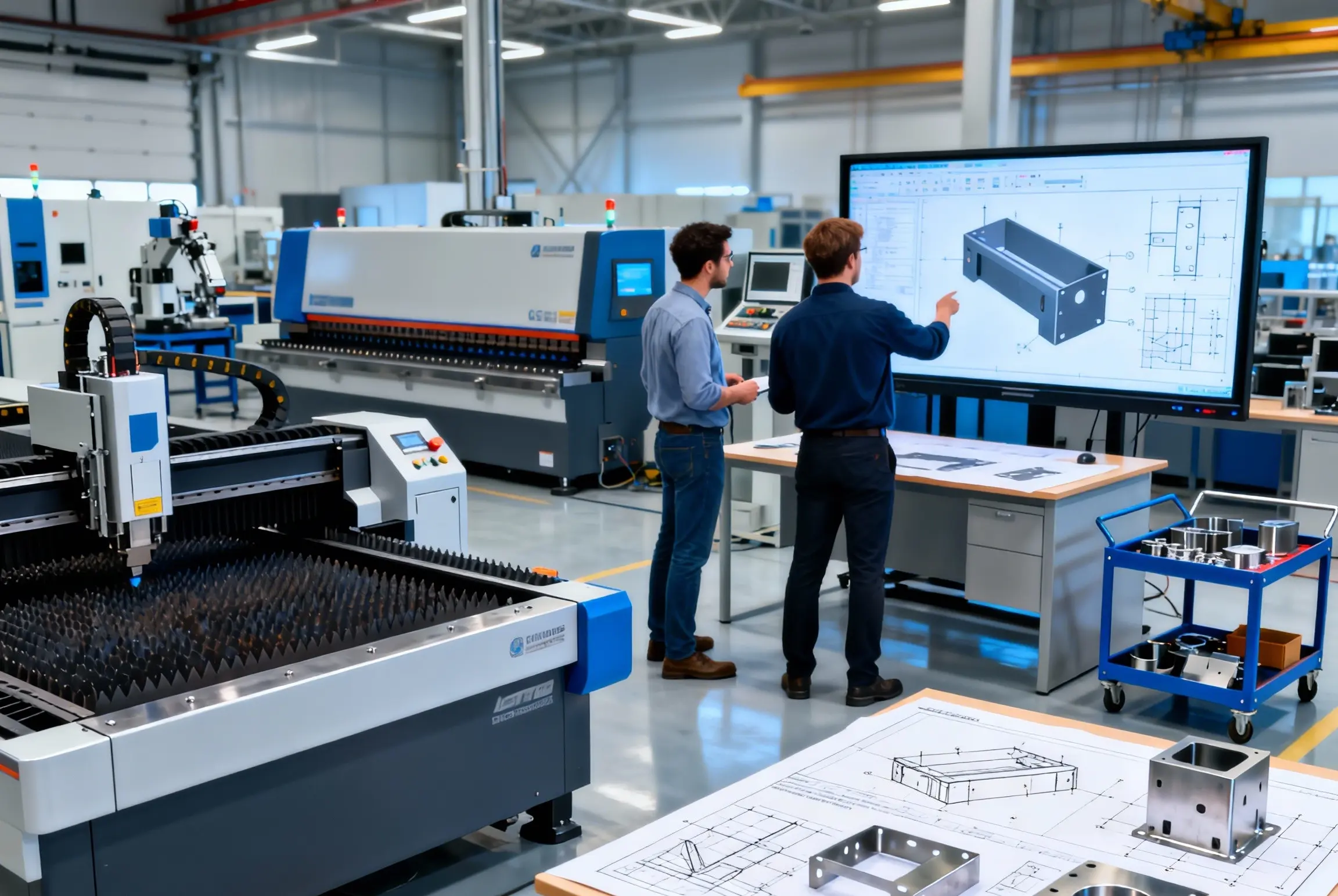
Prototype Rapid Sample Lead Time

Prototype: Rapid Sample Lead Time

For prototypes of automation-equipment enclosures, electrical cabinets, charging-pile housings, battery structures, and similar products, SR MFG delivers 3–7 day lead times after drawing approval and material receipt, depending on complexity.

Rapid turnaround is enabled by a dedicated prototype line, quick toolhead/program changeover, and process engineers directly involved in DFM reviews. The goal of prototyping is not just to cut parts, but to quickly verify structural feasibility and define a stable mass-production process window.
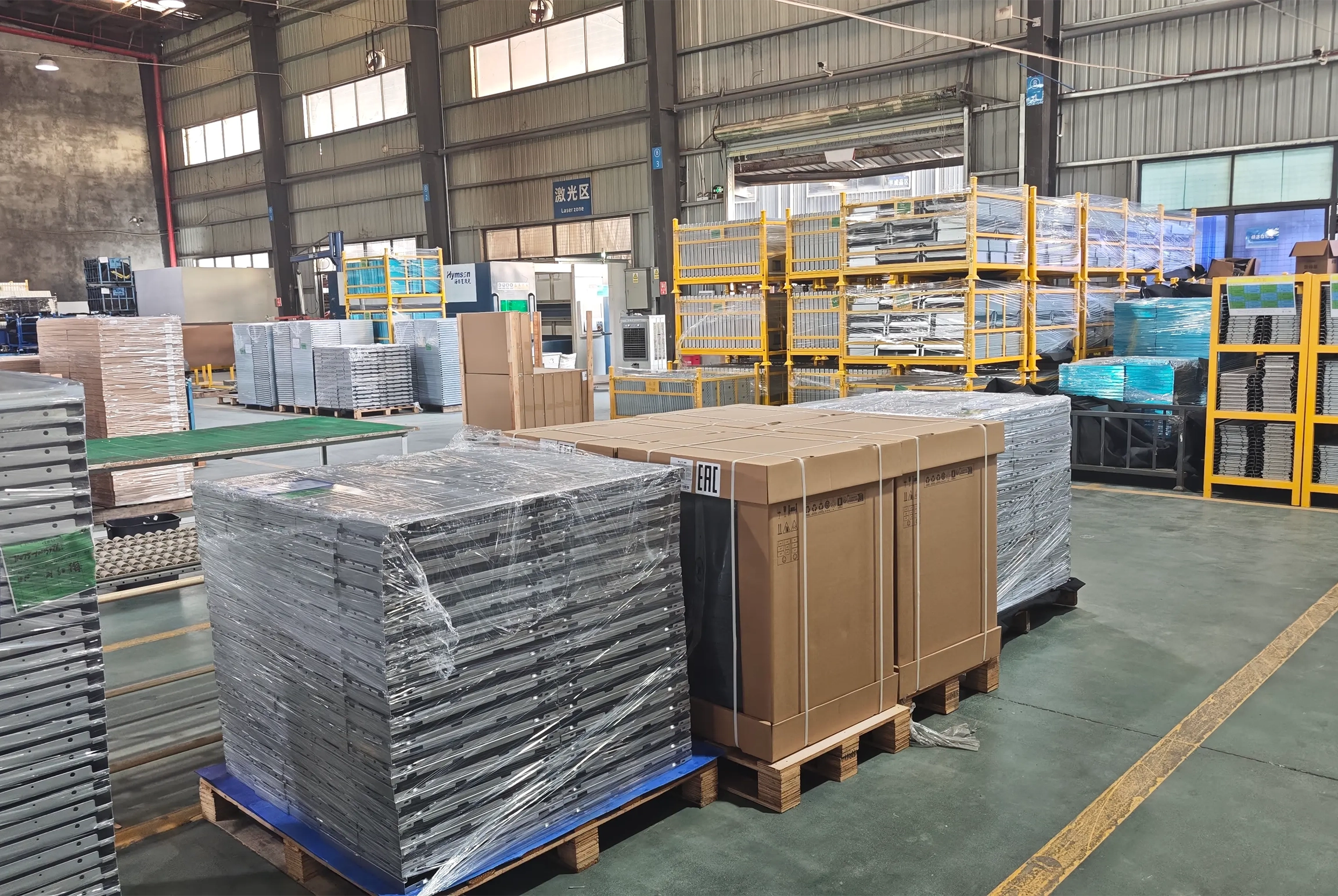
Mass-Production Capability

Mass-Production Capability

Mass production relies on a stable, repeatable changeover workflow:

  • Program parameter library enables 2–5 minute job switching
  • Automated loading/unloading reduces manual dependence
  • Standard welding fixtures and bending dies share a unified cutting-data set

Fast, controlled changeovers cut cost and protect delivery dates. Our principle is:
“Change the batch, not the process window,” ensuring consistent quality across runs.

SR MFG's production volume range for laser-cut parts 1 piece →100,000+ pieces

Production Volume Range

SR MFG’s laser-cut production range: 1 piece → 100,000+ pieces.
More than just taking large orders, we maintain continuity from a single prototype through 10,000 or even 100,000 mass-production units.

  • Small batch (1–100 pcs): prototypes, structural validation, low-frequency orders
  • Medium batch (100–5,000 pcs): typical for charging-pile housings, server-cabinet parts, electrical enclosures
  • Large batch (5,000–100,000+ pcs): standardized trays, brackets, modular sheet-metal components

This range lets customers complete the full journey—from concept → prototype → mass production—within one unified supply chain.

Mainstream metal cutting materials and models

SR MFG can provide stable, mass-production-ready laser cutting processes for all mainstream metal materials. If you are not sure whether a material is suitable, feel free to communicate with our factory team, and we will provide the best recommendation for your product.

Carbon Steel and Low Alloy Steel

Batch cutting thickness: 3–20 mm

Maximum cutting thickness: 22 mm
Assist gas: Oxygen
Typical applications: Building structural parts, equipment bases

Batch cutting thickness: 3–18 mm

Maximum cutting thickness: 20 mm
Assist gas: Oxygen
Typical applications: Bridge brackets, factory machinery components

Batch cutting thickness: 2–15 mm

Maximum cutting thickness: 18 mm
Assist gas: Oxygen
Typical applications: Drive shafts, gear blanks

Batch cutting thickness: 0.5–12 mm

Maximum cutting thickness: 15 mm
Assist gas: Oxygen
Typical applications: Precision electronic housings, automotive parts

Stainless Steel

Batch cutting thickness: 1–15 mm

Maximum cutting thickness: 18 mm
Assist gas: Nitrogen
Typical applications: Medical equipment, food machinery

Batch cutting thickness: 1–12 mm

Maximum cutting thickness: 15 mm
Assist gas: Nitrogen
Typical applications: Marine engineering, chemical containers

Batch cutting thickness: 1–18 mm

Maximum cutting thickness: 20 mm
Assist gas: Air
Typical applications: Decorative parts, home appliance panels

Batch cutting thickness: 1–10 mm

Maximum cutting thickness: 12 mm
Assist gas: Nitrogen
Typical applications: Blades, valve cores

Aluminum and Aluminum Alloys

Batch cutting thickness: 1–8 mm

Maximum cutting thickness: 10 mm
Assist gas: Nitrogen
Typical applications: Fuel tanks, marine accessories

Batch cutting thickness: 1–6 mm

Maximum cutting thickness: 8 mm
Assist gas: Nitrogen
Typical applications: Mechanical frames, electronic heat dissipation parts

Batch cutting thickness: 0.5–5 mm

Maximum cutting thickness: 6 mm
Assist gas: Nitrogen
Typical applications: Appearance parts, electrical components, conductive parts

Batch cutting thickness: 1–4 mm

Maximum cutting thickness: 5 mm
Assist gas: Nitrogen
Typical applications: Aerospace structural parts, drone structural components, high-strength supports

Other Special Materials

Batch cutting thickness: 1–5 mm

Maximum cutting thickness: 6 mm
Assist gas: Nitrogen
Typical applications: Electrical connectors, bathroom hardware

Batch cutting thickness: 1–4 mm

Maximum cutting thickness: 5 mm
Assist gas: Nitrogen
Typical applications: Busbars, heat sinks

Batch cutting thickness: 1–8 mm

Maximum cutting thickness: 10 mm
Assist gas: Argon
Typical applications: Structural components, connectors, frames, aircraft load-bearing parts, medical implants

Batch cutting thickness: 0.5–10 mm

Maximum cutting thickness: 12 mm
Assist gas: Air
Typical applications: Precision electronic housings, cabinets, home appliance casings

Material Compatibility Notes

To ensure consistent cutting quality and stable mass production, we use a simple compatibility guide based on tested thickness ranges for each material on our 3–5 kW fiber and CO₂ laser systems.

  • For best results, keep designs within the recommended batch-production thickness range; performance may decrease near the maximum thickness limit.
  • If your parts include small holes, sharp corners, long narrow slots or other high-difficulty features, please let us know in advance.
  • Different materials and any post-processing (bending, welding, painting, etc.) require specific process windows—share complete drawings so we can run a DFM review and set up the right workflow.

How Do We Ensure the Accuracy of Our Laser Cutting Process?

At SR MFG, “accuracy” is a complete system of parameters, actions, and inspections—not just a nice-looking part in a single run. Our goal is to keep cutting quality stable across different times and batches.

Automatic Adjustment of Laser Power, Speed, and Focus

We define a controlled “process window” for each material and thickness, allowing the laser to automatically adjust power, speed, and focus within safe limits.

Role of Assist Gas (N₂ / O₂) in Different Materials

Different assist gases (N₂ / O₂) are selected according to material and surface requirements to balance edge quality and efficiency.

Control of Kerf Width and Edge Flatness

By stabilizing kerf width (typically 0.08–0.15 mm, depending on material), we support accurate bending, consistent weld alignment, and predictable assembly gaps.

Laser Cutting Quality Assurance Workflow

To ensure each batch meets the same high standard, SR MFG breaks laser cutting quality control into multiple stages, with traceable data points at each phase, ensuring consistent laser cutting precision and repeatable quality. This ensures that every laser-cut part, from the first to the last, remains consistent.

Fiber Laser Cutting Machines

DFM

Laser Cutting Design Guide

The goal of this design guide is to ensure that structural parts possess a complete logical chain of “cuttable, bendable, weldable, and assemblable” before entering actual production. The core concept is: a small 1 mm adjustment during the design stage can often prevent costly rework in five subsequent manufacturing processes, saving both time and costs in mass production.

The following guidelines are summarized based on multiple material types and mass-production scenarios and can be directly applied to design optimization for industrial equipment, cabinets, electrical structural components, battery trays, and bracket-type parts.

DFM-Driven Laser Cutting Process

We don’t just “cut to print.” SR MFG works with you from CAD data to mass production, using DFM and engineering support to reduce redesigns, stabilize quality, and keep costs under control.

CO₂ Laser Cutting Machines

Upfront DFM Review
We review every CAD file for manufacturability, catching issues in holes, slots, ribs, and bend areas before the first sheet is cut.

Design Review

We check CAD files for manufacturability: material, thickness, holes, slots, and bend areas.

Prototype Validation

Prototypes act as process reference parts to lock in parameters for batch production.

Risk Control

We identify risks like warping and tolerance stack-up early and adjust the process before mass production.
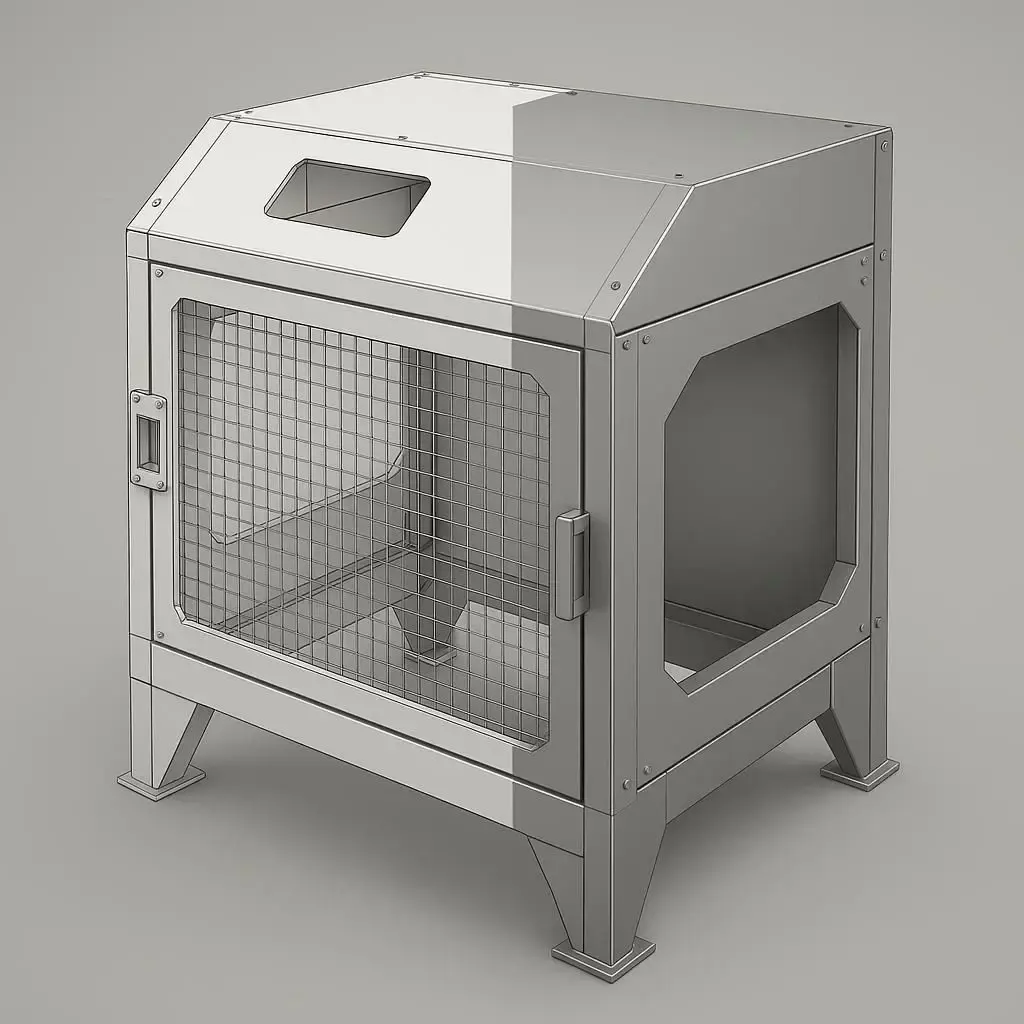
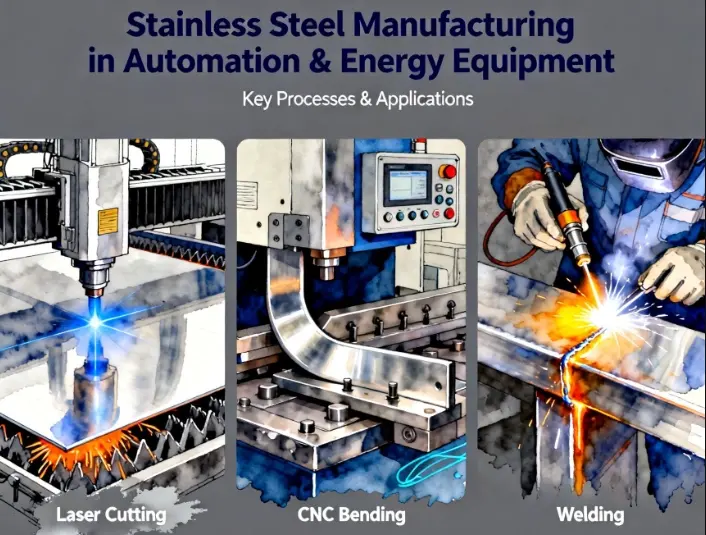
Traceability

Traceability, Certification & Compliance

Laser-cut parts not only need to meet dimensional requirements but must also form a closed-loop system in terms of material origin, process records, and export compliance. This capability is often not shown directly, but it determines the stability of the supply chain—especially in highly consistency-driven industries such as new energy, data centers, electrical control cabinets, industrial computers, medical equipment, and telecommunications.

The following sections describe our structured approach to traceability and compliance systems.

FAQs About Sheet Metal Fabrication

Our sheet-metal laser cutting process typically maintains ±0.1 mm dimensional accuracy on carbon steel, stainless steel and aluminum parts.

Critical features—such as mounting holes, alignment slots and bending-related edges—are controlled within a tighter internal tolerance window based on material thickness and part geometry.
Batch consistency is supported by a controlled process window, FAI + in-process inspection + SPC, ensuring repeatability for long-term OEM production.

  • Prototype laser-cut parts: usually 3–7 working days, depending on part complexity and downstream operations (bending or welding).
  • Mass production orders: standard batch runs ship within 10–20 working days; multi-stage OEM assemblies typically follow a 3–4 week cycle.
    Our workflow is built around predictable lead times, rapid DFM feedback and stable scheduling—important for automation equipment, industrial cabinets and EV component manufacturers.
Laser cutting supports most metals used in OEM fabrication, including steel, stainless steel, aluminum and coated steel.

However, several materials require caution or alternative methods:

  • Highly reflective metals (e.g., copper, pure brass, mirror-finish aluminum) may require special parameters.

  • Composite or sandwich panels have inconsistent heat reactions and may not deliver clean edges.

  • PVC or chlorine-containing materials are unsuitable due to hazardous fumes.
    If material behavior is uncertain, we provide parameter testing before prototype approval.

To ensure accurate and fast processing:
  • DXF / DWG files should have closed profiles, no overlapping lines, and use millimeters as the base unit.

  • STEP (3D) files are recommended when bending, welding or enclosure assembly is required—this allows a complete DFM review and unfolding verification.

  • For bent sheet-metal parts, please include flat-pattern drawings with bend directions and compensation notes to avoid rework.

Yes. Our laser cutting services integrate downstream finishing to support OEM-level consistency:
  • Mechanical deburring

  • Edge rounding

  • Surface brushing / polishing

  • Powder coating, electrophoresis, galvanizing and other protective coatings
    This prevents variation caused by external subcontracting and ensures that laser-cut components enter bending, welding or assembly without additional preparation.

Yes. Our factory is structured for stable, repeatable OEM production:
  • Material batch traceability + MTC + CoC

  • ISO 9001 production control

  • Process parameter library for consistent cutting quality

  • Scalable capacity from 1 pc to high-volume production

  • Repeatability ensured by controlled workflows (FAI, inspection, SPC)
    We support annual demand forecasting, customized packaging for global shipping, and long-term supply programs for automation machinery, electrical cabinets, industrial laser cutting parts, and industrial enclosures.

Laser cutting technology resources

Stainless Steel Sheet Metal Fabrication Services for Automation and Energy Equipment

November 5, 2025|

Understanding Stainless Steel Sheet Metal Fabrication for Automation and Energy Equipment Stainless steel sheet metal fabrication integrates precision [...]

Hello world!

October 16, 2025|

Welcome to WordPress. This is your first post. Edit or delete it, then start writing!

Go to Top