Partner with Shuangrui to reduce manufacturing costs by 30% and boost efficiency.

Guangzhou Shuangrui Precision Manufacturing Co., Ltd.

Get An Instant Quote

Metal Plating Services2026-01-07T08:23:51+00:00

Home -> Service -> Sheet Metal Finishing -> Plating

Metal Plating Services

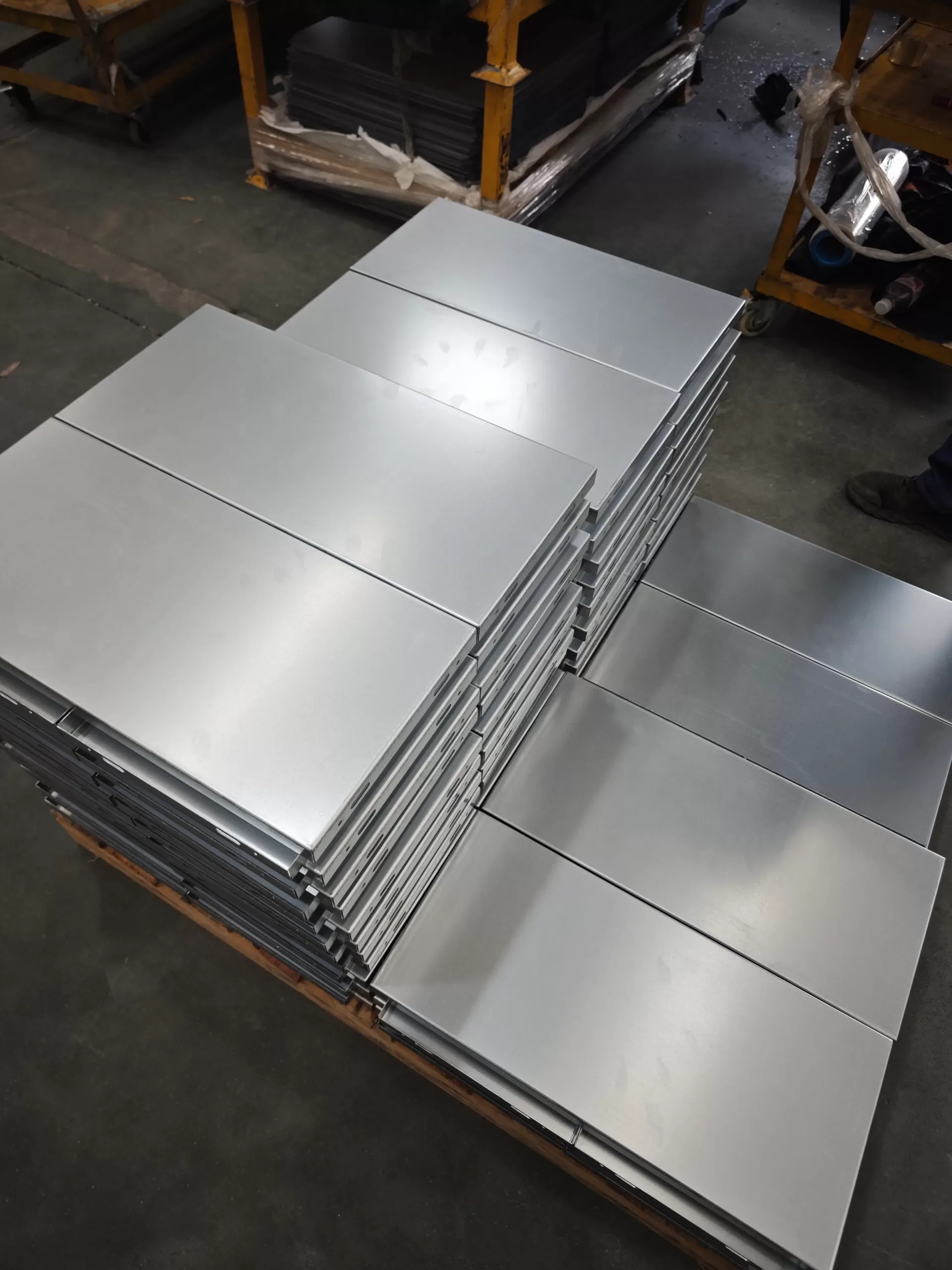
SR MFG delivers a one-stop electroplating service for metal parts—from sheet metal or machined prototypes through production plated parts. Based on your application requirements, we select the appropriate plating system and inspection plan, and provide traceable inspection records and supporting documentation. We routinely plate carbon steel, alloy steel, stainless steel, and similar materials; aluminum plating is evaluated case by case based on part geometry and the pretreatment route before execution. Quality verification can be aligned to your project requirements, including coating thickness per ISO 2178 (for magnetic substrates), adhesion per ASTM B571, and corrosion performance per ASTM B117 / ISO 9227, with test duration and acceptance criteria defined by your drawing or specification.
Blank Form (#4)

What Is Metal Plating?

Metal plating is an electrochemical deposition process. Parts are immersed in an electrolyte containing metal ions, and a DC current is applied so the ions are reduced and deposited onto the surface, forming a thin metal or alloy coating. Plating is commonly used to improve corrosion resistance, wear resistance, electrical conductivity, reflectivity, and cosmetic consistency.The plated layer forms a metallic coating that can:

  • help prevent oxidation and rust
  • improve wear resistance
  • enhance electrical conductivity
  • increase reflectivity
  • boost corrosion resistance (depending on the plating system)
  • improve appearance and decorative finish

Pros and Cons of Metal Plating

Advantages

  • Strong metallic appearance and high gloss, ideal for parts with strict cosmetic consistency requirements.

  • Can be tailored to deliver functional benefits such as corrosion protection, conductivity, and wear resistance, with different performance profiles achieved through post-treatments.

  • Common substrates include carbon steel, alloy steel, stainless steel, and copper alloys. Materials like aluminum and magnesium typically require feasibility evaluation based on pretreatment and the selected plating system.

  • For high-volume parts, overall cost is often favorable compared with some vacuum deposition processes.

Limitations

  • Plating relies on chemical systems involving acids/alkalis and metal ions, generating wastewater, spent solutions, and sludge that must be treated in compliance with regulations—so it requires robust environmental controls and process management.

Applications of Metal Plating

  • Automotive components: engine parts, chassis systems, body trim and exterior panels, wheels, interior hardware, battery connection terminals, motor shafts, charging interfaces, and more.

  • Electronics & telecom equipment: connectors, switches, relays, printed circuit boards (PCBs), antennas, base-station components, RF connectors, etc.

  • Aerospace parts, satellites, and spacecraft: turbine/engine blades, landing gear, fasteners, solar panel brackets, antennas, sensors, and related components.

  • Medical devices: surgical blades, tweezers, forceps, and similar instruments.

  • Construction: door and window hardware, curtain wall accessories, railings, handrails, and more.

What Problems Does Metal Plating Solve?

Metal parts are often exposed to harsh environments—humidity, UV exposure, and corrosive chemicals such as acids and alkalis. These conditions accelerate corrosion, leading to rust, degradation, and premature failure.

Metal plating adds a protective metallic layer to the surface, improving properties such as corrosion resistance and wear resistance, especially for outdoor or demanding service conditions.

For parts with specific functional requirements—such as electronic components and circuit-related hardware that require electrical conductivity or thermal conductivity—plating can deposit highly conductive metals to enhance current flow and heat transfer.

In practice, plating is not limited to corrosion protection and conductivity. With the right coating selection and process control, it can also deliver features such as self-lubricating behavior, fingerprint resistance, and UV resistance. As surface engineering continues to evolve, new plating and finishing technologies will keep expanding what metal parts can do.

Medical Equipment

Common Metal Plating Types

Plating includes many processes—such as copper, gold, silver, nickel, chrome, and zinc plating. In manufacturing, the most widely used are zinc plating, nickel plating, and chrome plating. Below is an overview of these three and how they differ.

Metal Bending

Zinc Plating

Definition: Zinc plating deposits a thin zinc layer on the surface of a metal, alloy, or other substrate to improve appearance and provide basic rust protection.
Characteristics: Low cost; moderate corrosion protection; typically a silver/whitish finish.
Typical applications: Screws and fasteners, circuit breakers, and general industrial hardware.

Metal Bending

Nickel Plating

Definition: Nickel plating forms a nickel layer on a metal (and certain non-metals with proper preparation) by electrolytic plating or electroless plating.
Characteristics: Attractive finish with decorative potential; higher cost; process is relatively more complex; appearance is usually silvery with a slight warm/yellow tone.
Typical applications: Lamp caps, coins, and a wide range of hardware components.

Metal Bending

Chrome Plating

Definition: Chrome plating deposits a chromium layer via electroplating or chemical methods. Chromium is a bright, slightly bluish-white metal.
Characteristics: Two common purposes:

  • Decorative chrome—bright appearance, good wear resistance; rust protection is generally not as strong as zinc plating but better than simple oxidation finishes.
  • Functional (hard) chrome—used to increase surface hardness and wear resistance for performance-critical parts.

Typical applications: Bright decorative trims on appliances and electronics, tools, faucets, and sanitary hardware.

Key Differences at a Glance

Item Chrome Plating Nickel Plating Zinc Plating
Primary purpose High hardness, mirror-like finish, long-term protection Wear resistance, corrosion protection, rust prevention Basic rust protection + low-cost appearance
Process type Electroplating Electroplating / Electroless plating Electroplating
Relative cost Highest Medium Lowest
Corrosion resistance Excellent (good chemical stability) Good Moderate (poor acid resistance)
Typical uses Automotive trim, molds, sanitary hardware Electronics parts, medical devices, hardware Steel structures, general-purpose hardware

Note: Visual color alone can be misleading. As a rough reference, chrome tends to look brighter/“colder” white, nickel may look slightly warmer, and zinc often appears silver-white—but actual appearance varies by process, passivation, and specification.


What Metals Can Be Plated?

Plating is compatible with a wide range of metals. With the right pretreatment and process selection, most metal materials can be electroplated.

The most widely plated substrates. Common finishes include zinc, nickel, and chrome plating for automotive parts and structural steel components.

Typically requires activation before plating. Common finishes include nickel and chrome for medical instruments and kitchenware.

Requires hydrogen embrittlement control (e.g., baking where applicable). Often zinc plated; cadmium plating may be specified in certain aerospace applications.

Excellent conductivity. Commonly plated with nickel, gold, or silver for electronic components and terminals.

More prone to certain corrosion mechanisms and usually needs proper pretreatment. Often plated with nickel or chrome for hardware and decorative parts.

Good wear performance. Often plated with hard chrome for bearings and gears.

Plating is possible but requires specialized pretreatment (often including surface conversion steps). May be plated with nickel or chrome for architectural trim and automotive parts.

Typically require activation and specialty pretreatment before plating. Used in aerospace parts and electronic housings where plating is specified.

Usually need thorough surface preparation. Often plated with nickel or chrome for automotive interior parts and consumer products.

Corrosion-prone and typically need passivation/conditioning before plating. May be plated with zinc or nickel for hardware and decorative items.

  • Highly chemically stable; used for electronics and jewelry.
  • Silver: Excellent conductivity; used for electrical contacts and some optical applications.

Strong corrosion resistance; used in medical devices, catalytic applications, and specialized components.

Metal Plating Process Flow

Metal Plating Process Flow (Video Demonstration)

Grinding → Polishing → Racking → Degreasing / Oil removal → Rinse → (optional: electrolytic polishing or chemical polishing) → Acid pickling & activation → (optional: strike / pre-plate) → Plating → Rinse → (optional: post-treatment) → Rinse → Drying → Unracking → Inspection & packaging

Common Plating Colors

White

White

Yellow

Yellow

Black

Black

Blue

Blue

Brown

White

Gray

Yellow

Green

Black

Red

Blue

SR MFG Managed Outsourcing Delivery

If you don’t want to coordinate across pretreatment, plating, post-treatment, inspection, and logistics, SR MFG can manage the entire outsourced plating delivery as your single point of contact. We lock the process and acceptance criteria during NPI, then run incoming/outgoing inspections and deliver the required documentation in production—helping reduce rework and batch-to-batch variation.

Managed Delivery Workflow

Material and heat-treat condition, target plating system/post-treatment, thickness class, Class A cosmetic requirements, critical mating features/masking areas, corrosion requirements, and document list

  • Masking Map: defines threads, conductive contact points, sealing surfaces, and other critical areas
  • Racking Spec: rack contact points, grounding/clamping requirements, and Class A surface protection
  • Inspection Plan: thickness measurement locations, sampling frequency, tolerances, acceptance criteria, and report templates

Confirm appearance, thickness, and assembly-critical dimensions; approved samples/FAI become the baseline for production acceptance

SR MFG performs incoming verification, in-process sampling, and outgoing inspection; lot numbers and key records are fully traceable

Containment, root-cause analysis, and corrective/preventive actions (CAPA/8D). Rework or re-plating as needed, with process documentation updated accordingly

Responsibility Boundaries (Who Owns What)

  • Engineering review and risk identification, requirement flow-down, change control, and lead-time coordination
  • Incoming/outgoing inspection, nonconformance closure, document package delivery, and lot traceability
  • For customers with requirements similar to AS9100 external provider controls, we can follow the same logic for requirement flow-down, change notification, and nonconformance disposition

Execute pretreatment/plating/post-treatment per the agreed process sheet, perform internal checks, and provide required process data per project needs

  • Drawings and acceptance criteria (thickness, cosmetics, corrosion duration, failure criteria, etc.)
  • Sample approval and change confirmation (the approved sample becomes the production acceptance baseline)

Are you ready to get started on your metal fabrication project?

Not sure which material is ideal for your project? Feel free to contact us.Our engineering team will recommend suitable material grades and sheet thicknesses based on strength, weight, corrosion resistance and overall cost.

Who We Serve

SR MFG | Custom Electroplating Process Solutions for Metal Parts

SR MFG provides overseas customers with an electroplating solution built around application-driven selection, standards-based acceptance, and fully documented delivery, covering end-to-end management from prototypes through mass production. Based on your corrosion protection, appearance, electrical/contact performance, and assembly tolerance requirements, we specify the right plating system and post-treatments, and translate thickness targets, test methods, and acceptance criteria into an executable inspection plan—reducing rework and minimizing lot-to-lot variation.

Metal Plating FAQs​​​​​

Common systems we deliver include zinc/zinc-alloy plating (e.g., Zn-Ni) for corrosion protection, decorative nickel and nickel-chrome, and electroless nickel (EN) for functional performance—selected based on your corrosion, appearance, conductivity/contact, and wear targets.

For the clearest specification, we recommend writing it in this order:
Base material & heat-treat condition → Plating system / governing standard → Thickness (incl. critical surfaces) → Post-treatment (passivation/sealer/topcoat/lubricant) → Salt spray method & duration → Masking requirements → Required deliverables.
This structure minimizes interpretation risk and speeds up acceptance.

We plate to the thickness class defined in your drawing/specification, and during NPI we align on critical measurement locations and sampling frequency.

For production, thickness is typically verified using ISO 2178 non-destructive measurement (for non-magnetic coatings on magnetic substrates). For dispute resolution or validation, a cross-section microscopic method can be used for confirmation.

If your spec calls for ASTM B117, note that it mainly defines chamber conditions and operating method—it does not define what “pass” means or the required hours. The acceptance threshold must come from your drawing/spec or a mutually agreed inspection standard.

If your spec calls for ISO 9227, we can run NSS/AASS/CASS as required by the project. Reports typically include the test method and conditions, duration, acceptance criteria, photos, and conclusion.

For high-strength steel fasteners or load-bearing parts, we identify hydrogen embrittlement risk during RFQ and capture process constraints, de-embrittlement/baking requirements (where applicable), and traceability records in the engineering and inspection documents. ISO 4042 also includes guidance aimed at reducing hydrogen embrittlement risk.

If baking is required, we can provide time/temperature records linked to the lot/batch with the shipment.

Threads and tolerance-sensitive mating surfaces are typically managed via plugs/masking or by defining allowed plating zones to prevent buildup that could cause assembly interference.

For conductive contact surfaces/grounding points, we typically use localized masking or specify post-treatments that won’t compromise conductivity. We document rack contact points and masking scope clearly in a Masking Map / Racking Spec to make verification straightforward.

We first determine the root cause (thickness, appearance, adhesion, corrosion performance), then decide between localized rework or strip-and-replate. Critical dimensions and cosmetic surfaces are re-measured and re-inspected after rework.

Re-plating can lead to thickness buildup, while stripping may affect the base surface condition. For Class A cosmetic parts, slight shifts in gloss or tone can occur—so we rely on approved samples and lot controls to minimize variation.

Metal Plating Technical Resources
Stainless Steel Sheet Metal Fabrication Services for Automation and Energy Equipment

November 5, 2025|

Understanding Stainless Steel Sheet Metal Fabrication for Automation and Energy Equipment Stainless steel sheet metal fabrication integrates precision [...]

Hello world!

October 16, 2025|

Welcome to WordPress. This is your first post. Edit or delete it, then start writing!

Go to Top