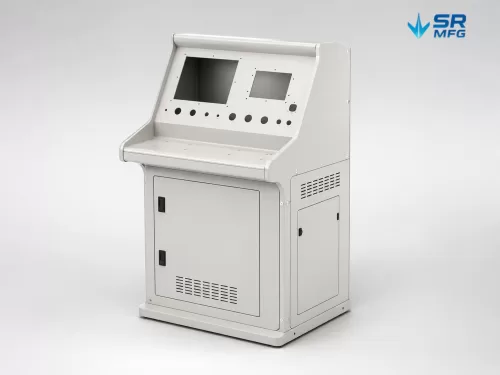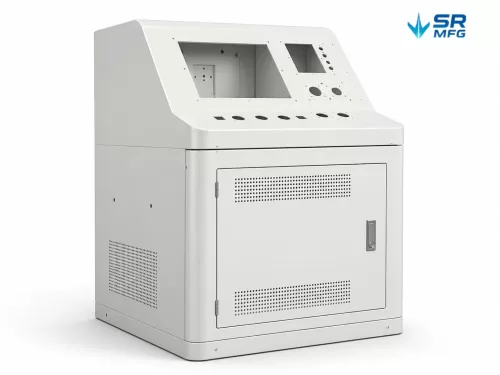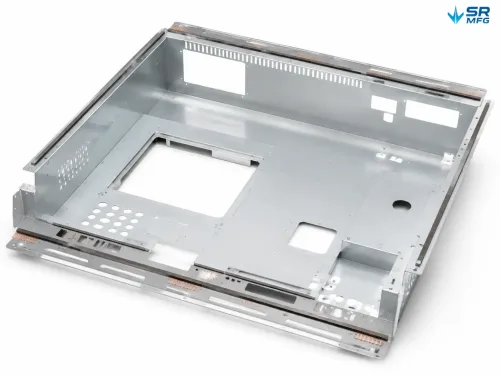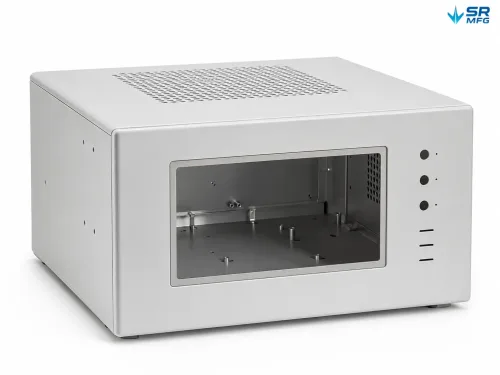
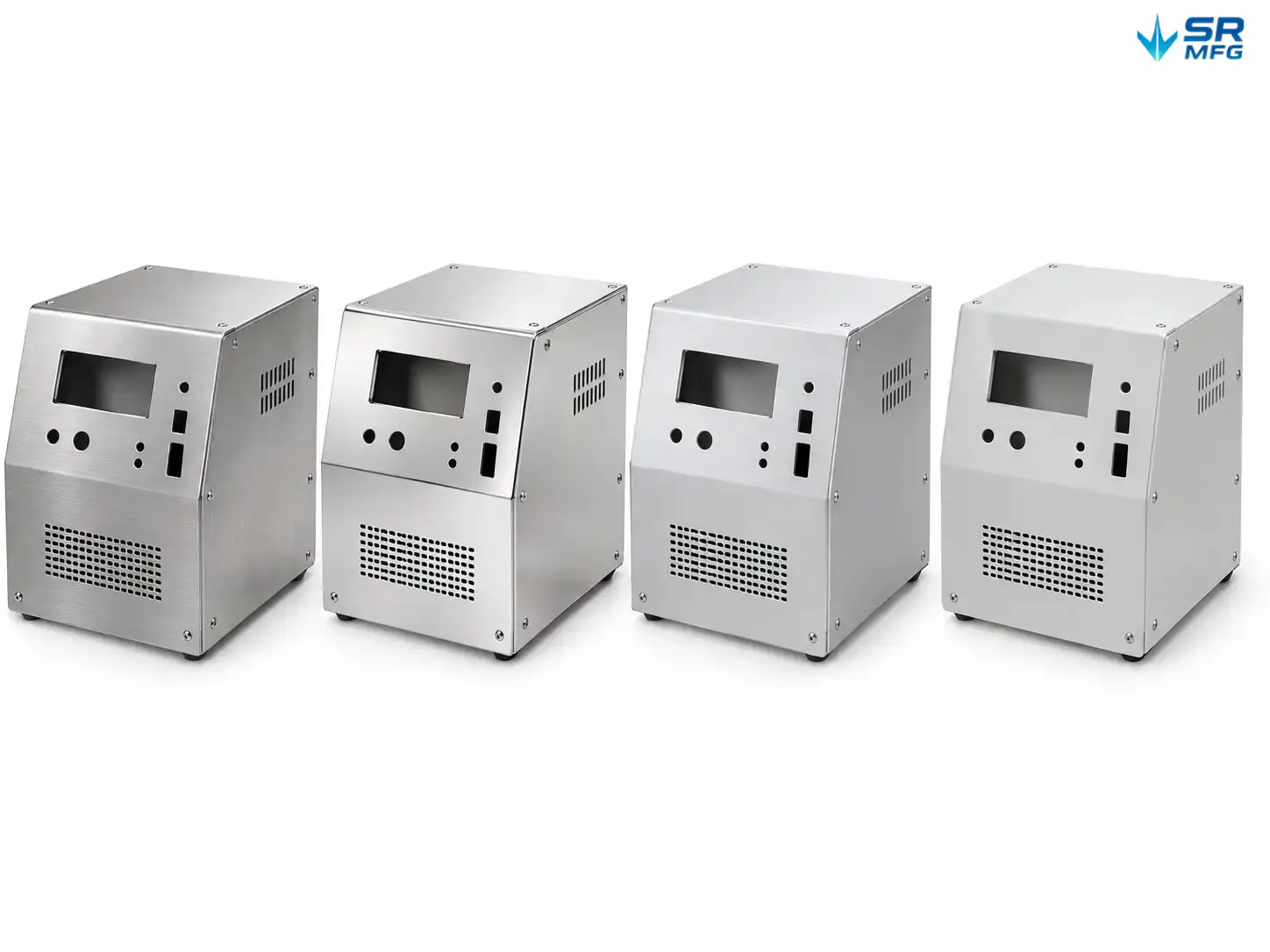
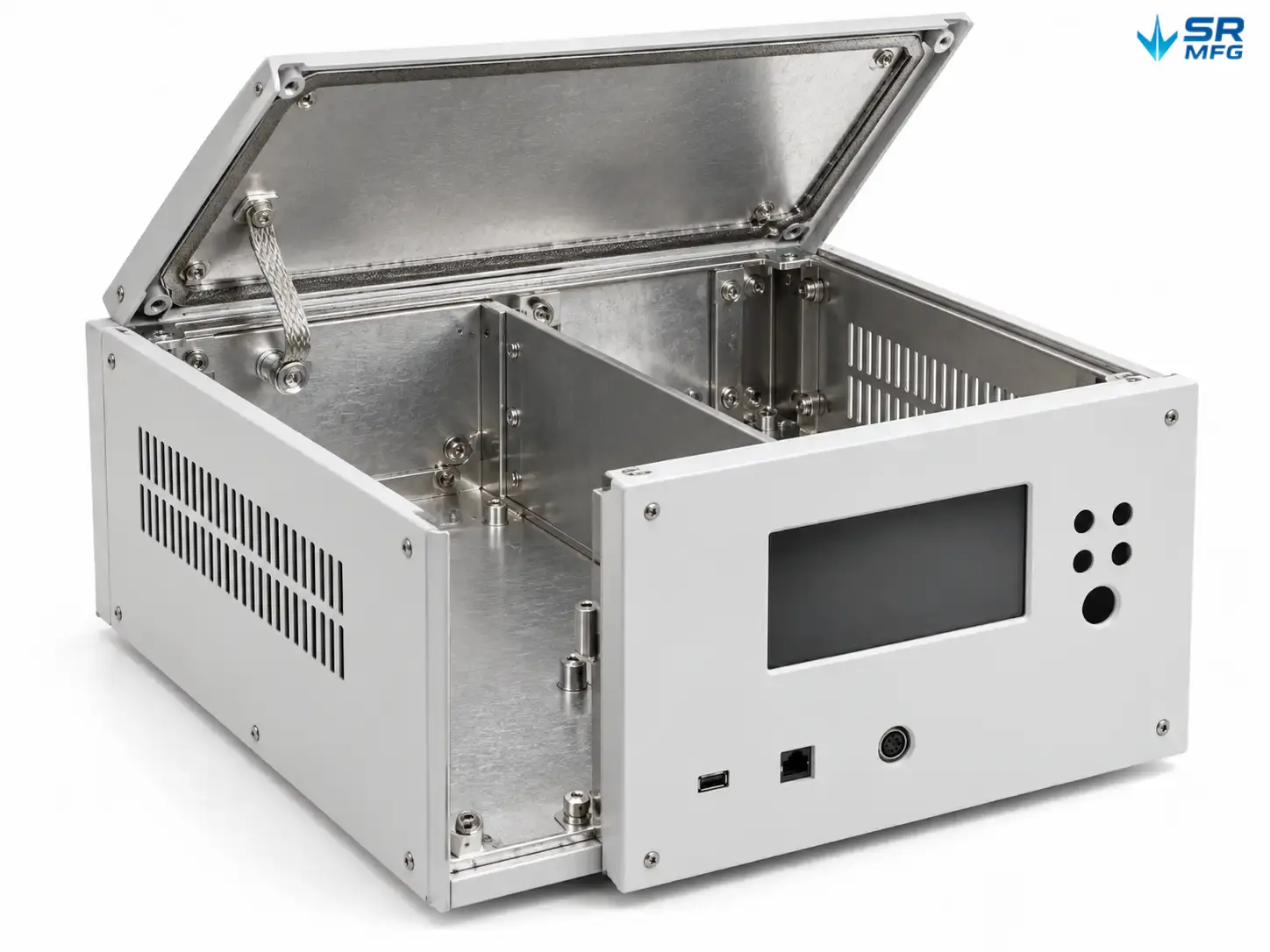
Laboratory Instrument Housings
Custom-built laboratory instrument enclosures are available in stainless steel, aluminum alloy, or cold-rolled steel. We support IP54–IP68 protection ratings and precision fabrication tolerances down to ±0.05 mm. Free DFM review and quotation response within 24 hours. Manufactured under an ISO 9001-certified quality management system.
- 6 material options: SS304, SS316L, aluminum 5052/6061, cold-rolled steel, and galvanized steel
- IP54–IP68 protection with silicone, EPDM, FKM, or other gasket options
- Fully customizable dimensions, cutouts, internal layouts, and surface finishes
- EMI/RFI shielding available from 20 to 100+ dB
- Wall-mounted, benchtop, floor-standing, and portable configurations available
- Prototype lead time: 5–10 business days
- Production lead time: 1–3 weeks
Product Details
| Specification | Parameter | Notes |
|---|---|---|
| Dimensions | Fully customizable, from handheld housings to floor-standing cabinets | Length × width × height can all be customized |
| Dimensional Tolerance | ±0.05 mm precision, ±0.1 mm standard | Manufactured according to drawing requirements |
| Sheet Thickness | 1.0–3.0 mm | Selected according to enclosure size and load requirements |
| Material Grades | SS304, SS316L, AL5052, AL6061, SPCC, SGCC | Material certificates available |
| IP Rating | IP54–IP68, IEC 60529 | Sealing test reports available |
| Operating Temperature | -60°C to +200°C | Depends on gasket material selection |
| EMI/RFI Attenuation | 20–100+ dB | Frequency-dependent and determined during DFM review |
| Surface Roughness | Ra 0.4–3.2 μm | Depends on the selected surface finish |
| Gasket Materials | Silicone, EPDM, FKM, neoprene, conductive silicone | Selected according to chemical exposure and operating temperature |
| Welding Methods | TIG, MIG, spot welding | Continuous TIG welding used for IP-sealed joints |
| Prototype Lead Time | 5–10 business days | After drawing approval |
| Production Lead Time | 1–3 weeks | Depends on quantity and complexity |
| Prototype MOQ | 1 piece | No minimum quantity for initial prototypes |
| Production MOQ | 5 pieces | Varies depending on design and material |
| Quality System | ISO 9001:2015 | Certified manufacturing facility |
| Inspection Equipment | CMM, surface roughness tester, IP test chamber | Complete dimensional and surface-quality verification |
Custom Laboratory Instrument Enclosure Solutions
Laboratory instruments require enclosures that can protect sensitive equipment from dust, moisture, chemicals, and electromagnetic interference.
Our precision sheet metal enclosures are designed for analytical instruments, medical diagnostic equipment, control systems, and portable test equipment used in research, pharmaceutical, and industrial laboratory environments.
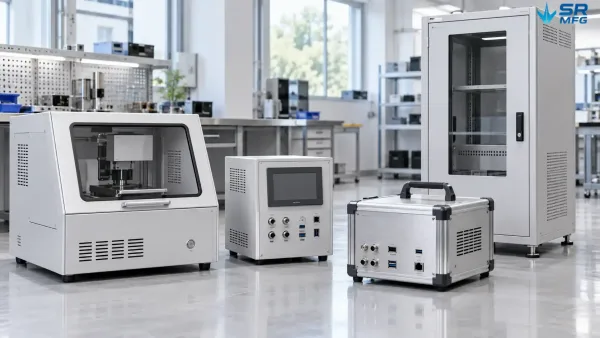
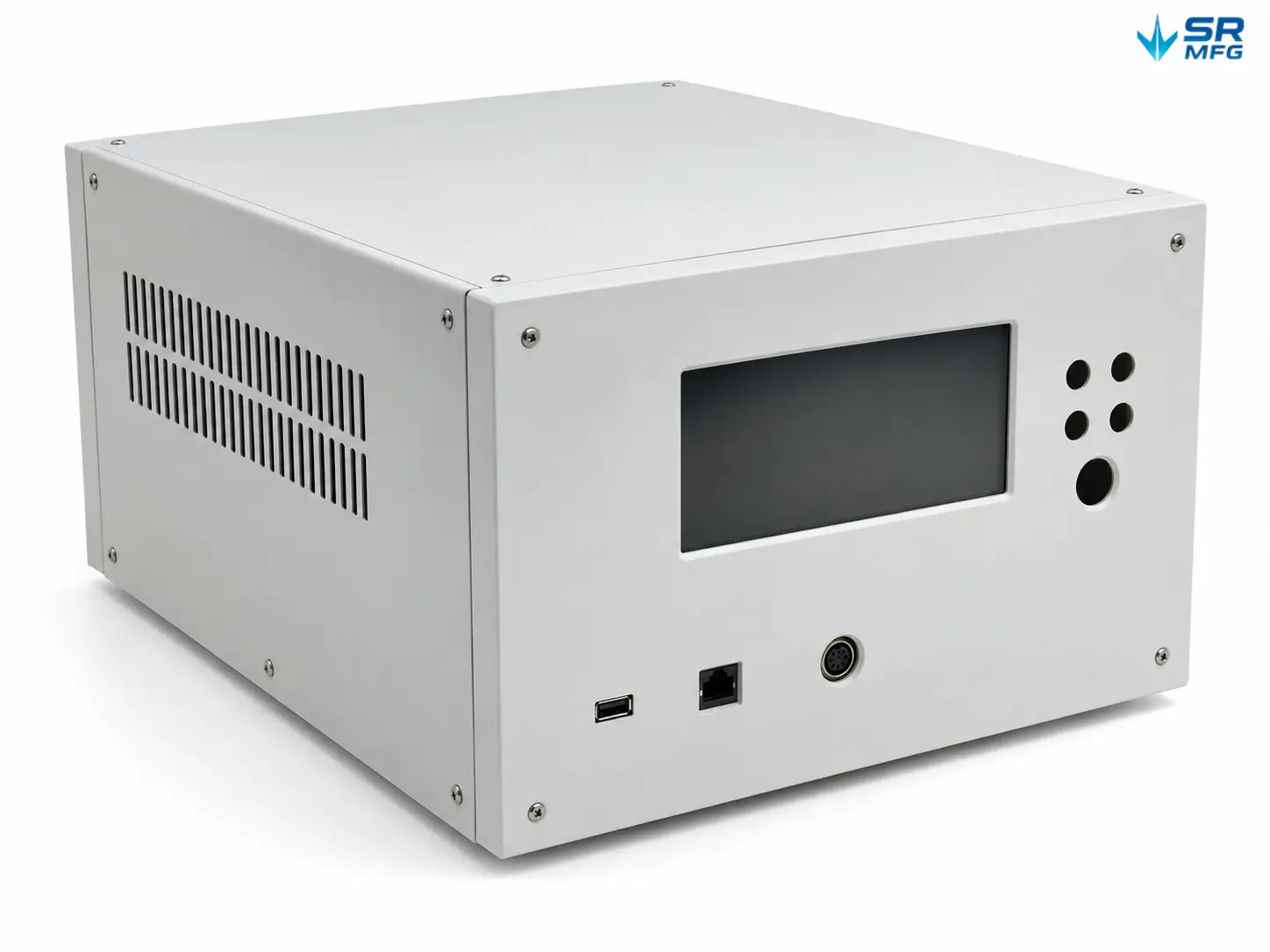
Custom sheet metal enclosure configurations for analytical instruments, laboratory control systems, diagnostic equipment, and portable test devices.
Every enclosure is manufactured to your specifications, from overall dimensions and cutout layouts to internal mounting structures and surface finishes.
We support projects ranging from single prototypes to volume production, with no minimum order quantity for initial samples.
Material Selection for Laboratory Environments
Choosing the right material directly affects enclosure performance throughout its service life, including corrosion resistance, weight, cleanability, durability, and cost.
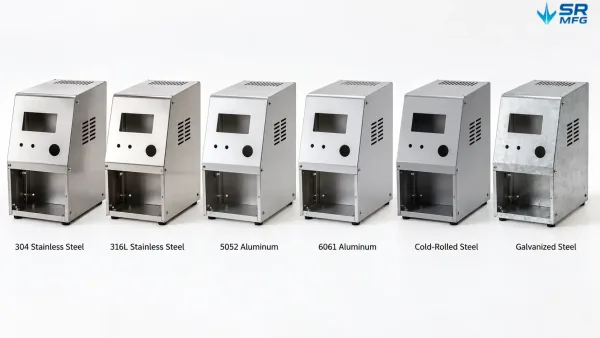
Comparison of common sheet metal materials used for laboratory instrument enclosures, including stainless steel, aluminum, cold-rolled steel, and galvanized steel.
| Material | Best Suited For | Key Properties | Typical Applications |
|---|---|---|---|
| 304 Stainless Steel | Standard laboratory environments | Resistant to alcohol, isopropyl alcohol, and mild cleaning agents; compatible with powder coating, electropolishing, and antimicrobial coatings | Environments requiring routine wipe-down disinfection without aggressive chemical exposure |
| 316L Stainless Steel | Wet chemistry laboratories, pharmaceutical cleanrooms, coastal facilities | Higher resistance to chlorides, acids, and concentrated disinfectants such as sodium hypochlorite and hydrogen peroxide; electropolished 316L can provide a mirror-like, low-particle-retention surface | Environments with frequent chemical exposure |
| 5052 Aluminum | Portable instruments, wall-mounted analyzers, handheld devices | Lightweight with excellent formability; anodizing creates a hard, wear-resistant surface with minimal additional weight | Weight-sensitive applications |
| 6061 Aluminum | Installations requiring higher structural strength while remaining lightweight | Higher structural strength than 5052 and can be heat-treated for increased hardness | Enclosures supporting heavier internal equipment |
| Cold-Rolled Steel (SPCC) | Fixed installations such as benchtop analyzers, control consoles, and stationary measuring equipment | Excellent balance of strength, cost, and manufacturability; powder coating provides reliable general corrosion protection | Applications with limited chemical exposure and no strict weight requirement |
| Galvanized Steel (SGCC) | General laboratories with moderate environmental exposure | Zinc coating provides basic corrosion resistance at relatively low material cost | Temperature-controlled laboratories using standard cleaning agents |
Cost Considerations:
- 316L stainless steel typically costs approximately 30–50% more than 304, making it most suitable where enhanced chemical corrosion resistance is required.
- Aluminum raw material generally costs 15–25% more than cold-rolled steel, but its lower weight can help reduce international shipping costs.
- For enclosures that do not require high-level corrosion resistance, powder-coated cold-rolled steel is usually the most cost-effective option.
- Surface finishing typically accounts for approximately 15–30% of total enclosure cost. Electropolishing costs more than powder coating but can reduce post-installation cleaning requirements in cleanroom environments.
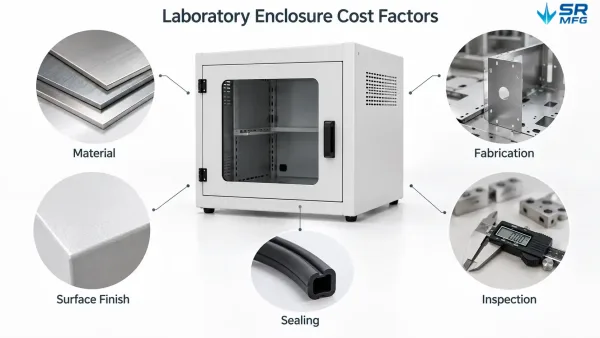
Main cost drivers for custom laboratory enclosures, including material, fabrication, surface finishing, sealing, and inspection.
During the DFM review, our engineers will recommend the most cost-effective combination of material and surface treatment for your application.
Protection and Sealing Solutions
Laboratory environments present specific challenges, including chemical splashes, humidity changes, cleaning and disinfection procedures, and airborne particles.
Our enclosures use precision sealing systems to provide reliable environmental protection.
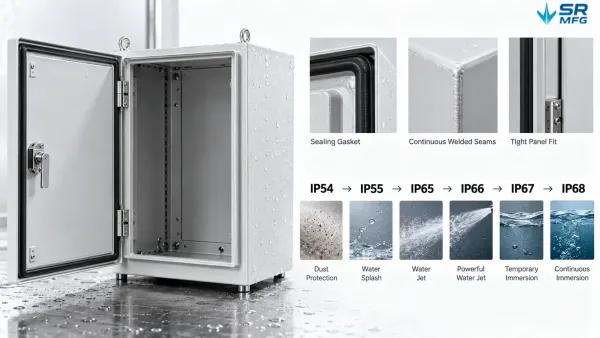
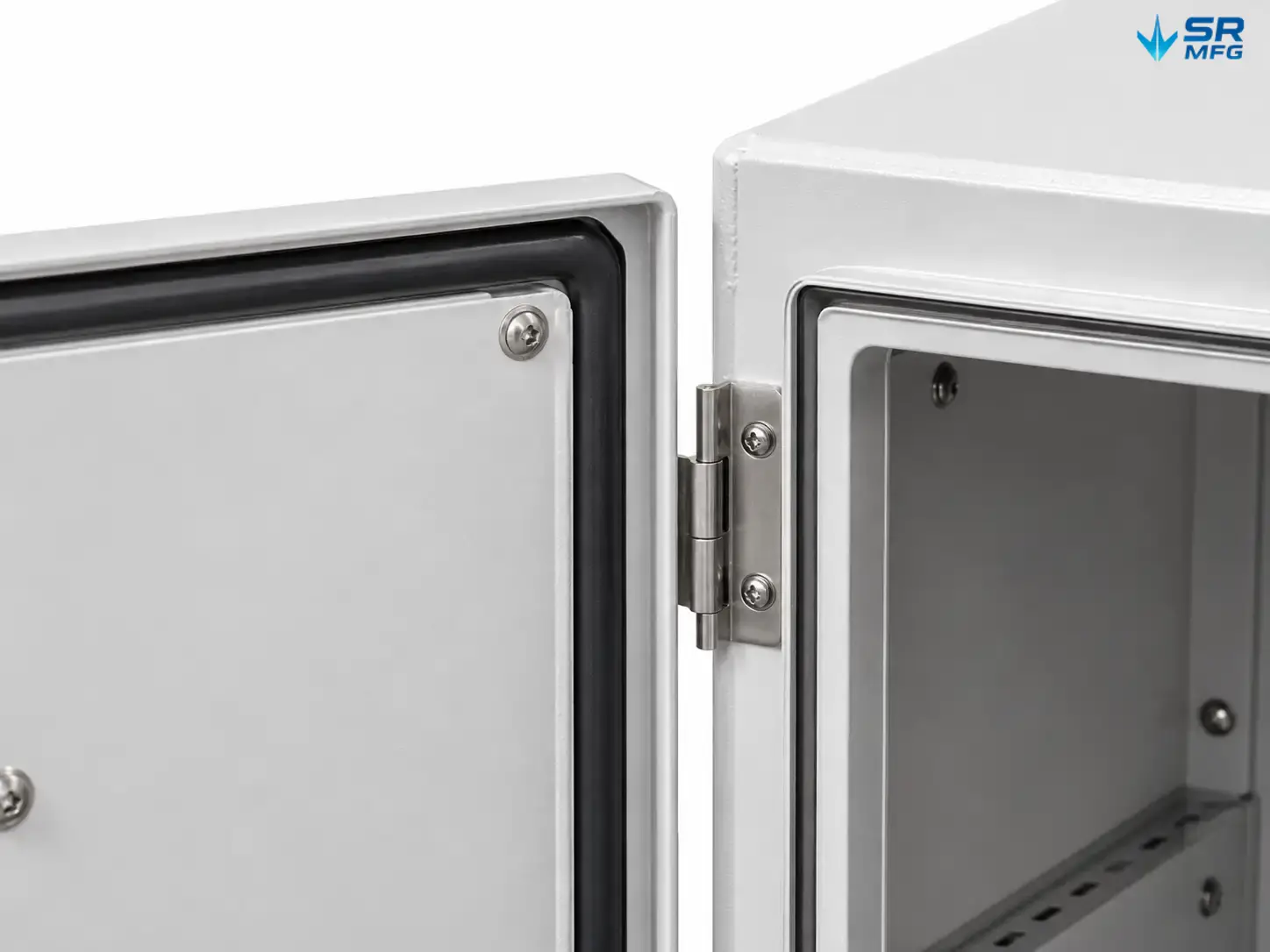
Environmental protection levels from IP54 to IP68 for laboratory equipment enclosures.
IP Protection Ratings
| Rating | Dust Protection | Water Protection | Typical Application |
|---|---|---|---|
| IP54 | Protected against dust ingress | Protected against water splashes | General laboratory environments |
| IP55 | Protected against dust ingress | Protected against water jets | Humid environments and washdown areas |
| IP65 | Dust-tight | Protected against water jets | Pharmaceutical and chemical laboratories |
| IP66 | Dust-tight | Protected against powerful water jets | Heavy washdown environments |
| IP67 | Dust-tight | Protected against temporary immersion | Outdoor installations and flood-prone areas |
| IP68 | Dust-tight | Protected against continuous immersion | Submersible applications |
Gasket Material Options
| Gasket Material | Temperature Range | Best Suited For |
|---|---|---|
| Silicone | -60°C to +200°C | Most laboratory environments requiring good flexibility across a wide temperature range |
| EPDM | -40°C to +120°C | Outdoor or UV-exposed applications requiring good weather resistance |
| FKM (Viton) | -20°C to +200°C | Aggressive chemical environments requiring excellent chemical resistance |
| Neoprene | -30°C to +100°C | General industrial environments requiring balanced overall performance |
| Conductive Silicone | -55°C to +175°C | Applications requiring both IP sealing and EMI shielding across enclosure seams |
Each enclosure is tested for proper gasket compression to verify sealing performance.
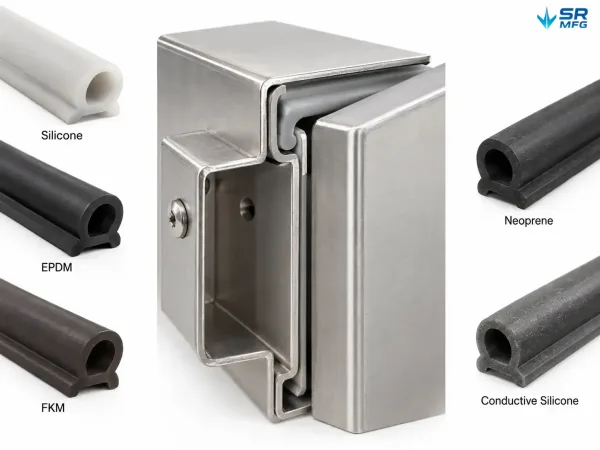
Common gasket materials used for laboratory enclosures based on temperature, chemical resistance, weather exposure, and EMI requirements.
Test reports can be provided upon request.
Complete Customization Capabilities
Standard catalog enclosures often cannot fully accommodate specialized laboratory instruments.
We manufacture every enclosure to your exact specifications, so your equipment does not have to be redesigned around an off-the-shelf housing.
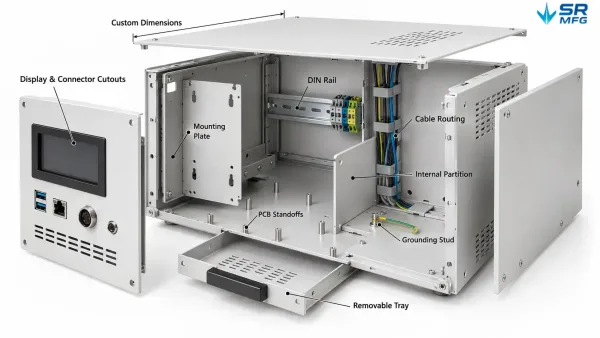
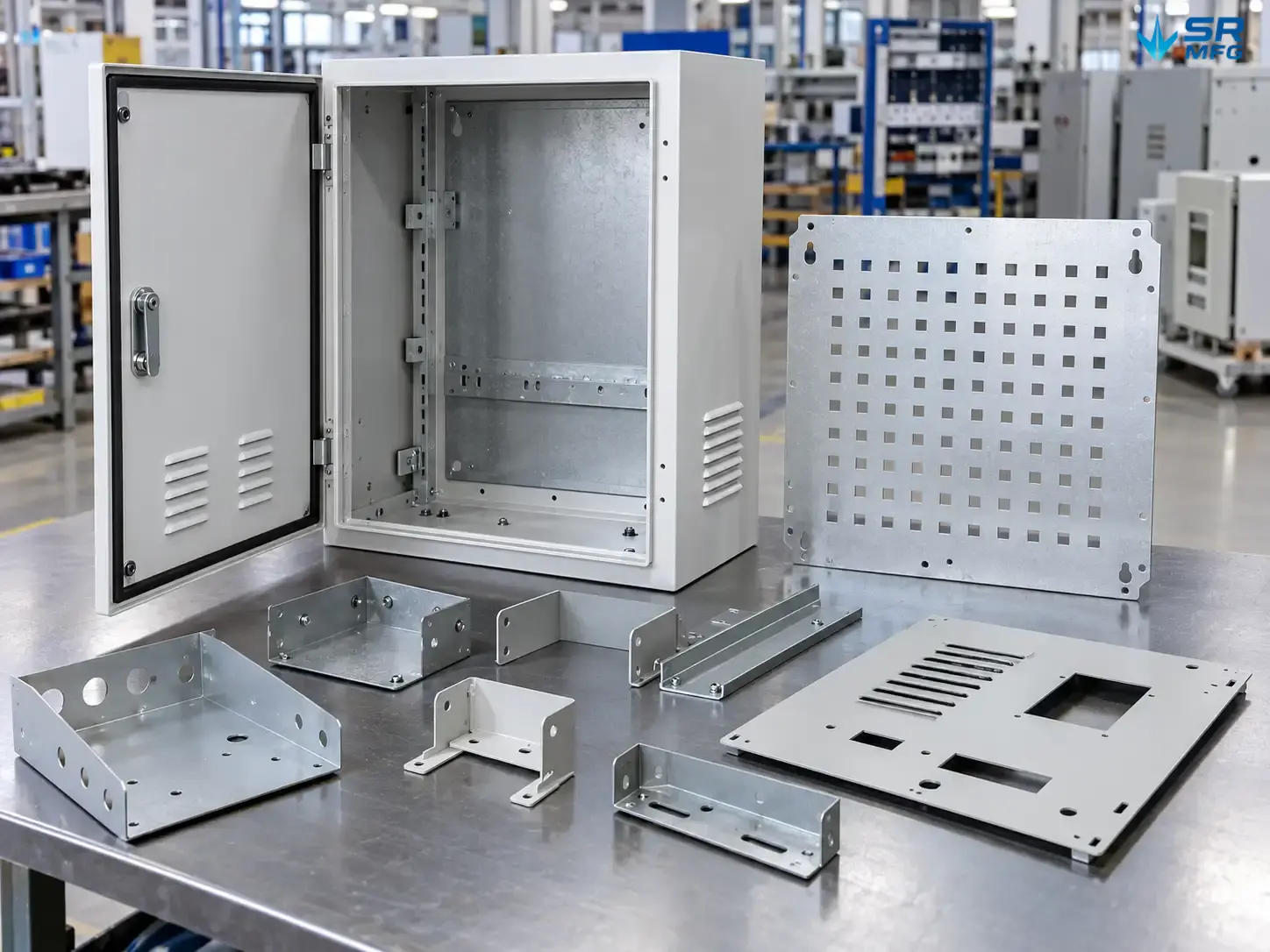
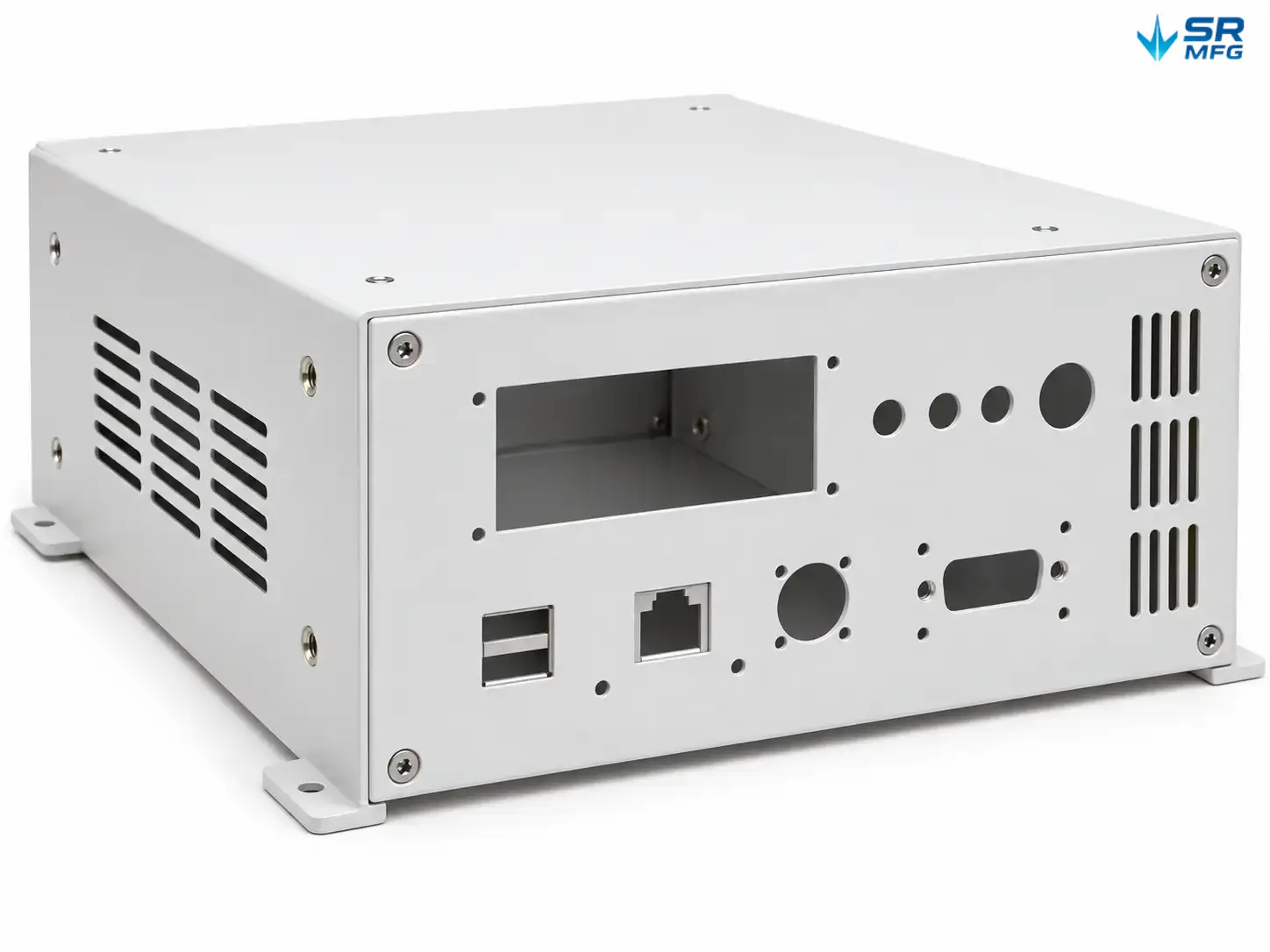
Custom enclosure design options including dimensions, connector cutouts, mounting plates, DIN rails, cable routing, and internal partitions.
Custom Dimensions
- Fully customizable length × width × height
- Sizes ranging from compact handheld housings to large floor-standing cabinets
- Oversized enclosures can be manufactured in sections and assembled on site using bolted construction
- Manufacturing feasibility is verified during the DFM review
Custom Cutouts
- Display windows for LCD, OLED, touchscreen, and e-paper displays
- Cutouts for push buttons, rotary encoders, toggle switches, and potentiometers
- Cable and connector openings for D-sub, circular, rectangular, USB, Ethernet, and power connectors
- Sensor openings for optical, ultrasonic, environmental-monitoring, and fiber-optic sensors
- Ventilation slots, fan mounting holes, and HEPA filter frames
- Through holes, blind holes, tapped holes, and countersunk holes
Custom Internal Layouts
- Custom mounting plates with application-specific hole patterns
- DIN rail locations for standard electrical and control components
- Cable routing channels and cable-tie mounting points
- Grounding points and grounding studs
- PCB standoffs and mounting brackets
- Internal partitions for thermal isolation and EMI shielding
- Sliding or removable trays for equipment requiring frequent maintenance
Surface Finish Options
| Surface Finish | Applicable Materials | Description |
|---|---|---|
| Powder Coating | All metals | Full RAL color range available; typical thickness 60–80 μm; textures include sand texture, fine texture, matte, and semi-gloss |
| Anodizing | Aluminum only | Type II decorative anodizing and Type III hard anodizing; natural, black, gold, blue, and red finishes available |
| Electropolishing | Stainless steel only | Mirror-grade finish with Ra ≤ 0.4 μm; removes microscopic surface defects and contaminants |
| Brushing | Stainless steel, aluminum | Directional surface texture; typical roughness Ra 0.8–1.6 μm |
| Passivation | Stainless steel | Chemical passivation enhances the protective chromium oxide layer for improved corrosion resistance |
| Zinc Plating | Cold-rolled steel | Zinc coating provides basic corrosion protection and can be combined with powder coating for additional durability |
| Antimicrobial Coating | All metals, applied over powder-coated or anodized surfaces | Silver-ion or copper-ion additives help inhibit bacterial growth on frequently touched surfaces |
| Laser Marking | All metals | Permanent identification for serial numbers, logos, safety labels, and regulatory markings |
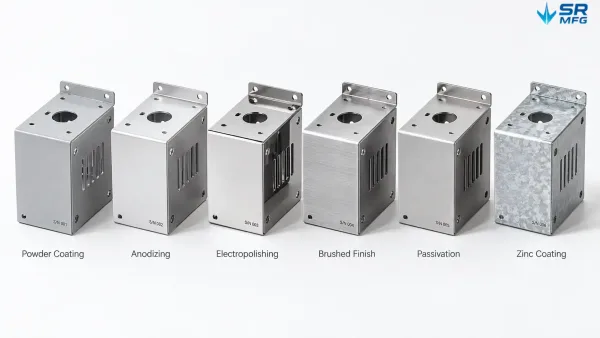
Comparison of common surface finishes for laboratory equipment enclosures, including powder coating, anodizing, electropolishing, brushing, passivation, and zinc coating.
EMI/RFI Shielding Levels
| Shielding Level | Method | Typical Attenuation |
|---|---|---|
| Standard | Shielding provided by the metal enclosure itself | 20–40 dB |
| Enhanced | Conductive seam gaskets + internal shielding coating | 40–80 dB |
| Fully Shielded | Conductive gaskets + shielding coating + shielded compartments + optimized grounding | 60–100+ dB |
Actual shielding performance depends on frequency range, opening design, connector interfaces, and gasket compression.
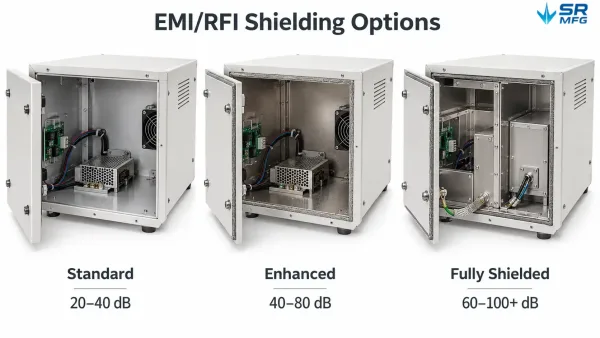
Standard, enhanced, and fully shielded enclosure configurations using conductive gaskets, internal shielding, grounding, and compartmentalization.
Our engineers will determine the appropriate shielding configuration during the DFM review based on your EMC requirements.
Configurations for Different Applications
Different laboratory instruments require different enclosure configurations.
The following examples show typical design approaches for common applications.
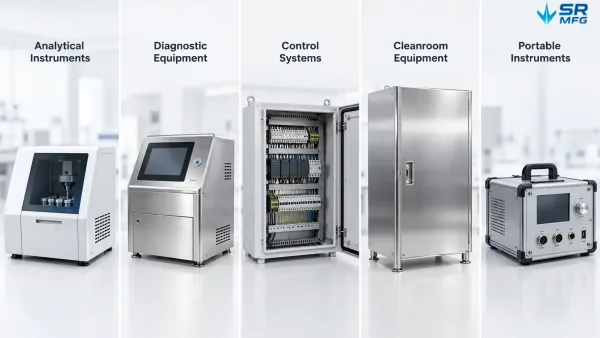
Laboratory enclosure configurations for analytical instruments, diagnostic equipment, control systems, cleanroom equipment, and portable field instruments.
Analytical Instruments
Examples include chromatographs, spectrometers, and blood analyzers.
- ±0.1 mm fabrication accuracy to support optical alignment
- Enhanced EMI shielding to protect measurement accuracy
- Removable mounting plates for easier instrument calibration
- Precision-mounted display windows for clear monitoring and data readout
Medical Diagnostic Equipment
Examples include CT, MRI, ultrasound, and point-of-care testing equipment.
- 316L or 304 stainless steel with electropolished or antimicrobial finishes
- IP65 or higher protection to prevent cleaning and disinfecting fluids from entering the enclosure
- Compatible with cleaning procedures using sodium hypochlorite and hydrogen peroxide
- Designed to support relevant medical-equipment enclosure requirements
Laboratory Control Systems
Examples include data acquisition systems, data loggers, and PLC enclosures.
- DIN rail mounting for standard electrical components
- Cable routing channels for organized wiring
- IP54–IP65 protection against dust and occasional moisture
- Powder-coated steel or aluminum construction for cost-effective protection
Cleanroom Equipment
Examples include pass boxes, laminar flow units, and workstation enclosures.
- 316L stainless steel with electropolished internal surfaces, Ra ≤ 0.4 μm
- Airtight sealing with no exposed internal fasteners
- Smooth surfaces designed to minimize particle accumulation
- Compatible with standard cleanroom cleaning procedures
Portable Field Instruments
Examples include handheld analyzers and field sampling equipment.
- 5052 or 6061 aluminum with anodized finishes for reduced weight
- Impact-resistant construction for improved transport durability
- IP65–IP67 protection for outdoor use
- Integrated carrying handles or portable structural features
These configurations are intended as initial design recommendations rather than fixed packages.
During the DFM review, our engineers evaluate your equipment weight, thermal requirements, electromagnetic environment, cleaning requirements, and operating conditions before recommending application-specific design adjustments.
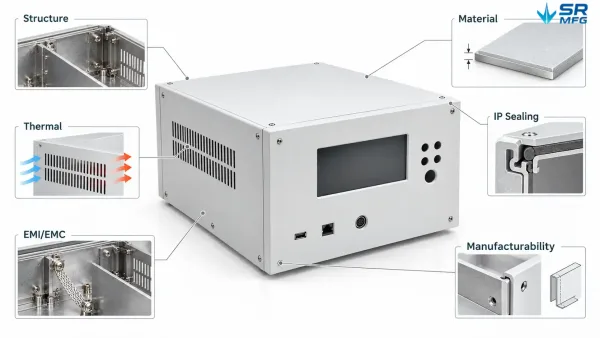
DFM review covering enclosure structure, materials, thermal requirements, sealing, EMI shielding, and manufacturability before production.
FAQs
Not Sure Which Material or IP Rating You Need?
Contact our engineering team for a free consultation.
We can help you select the most suitable enclosure configuration based on your instrument requirements, laboratory environment, operating conditions, and project budget.