Home -> Solutions & Industries -> High-Volume Sheet Metal Manufacturing

High-Volume Sheet Metal Manufacturing Services.

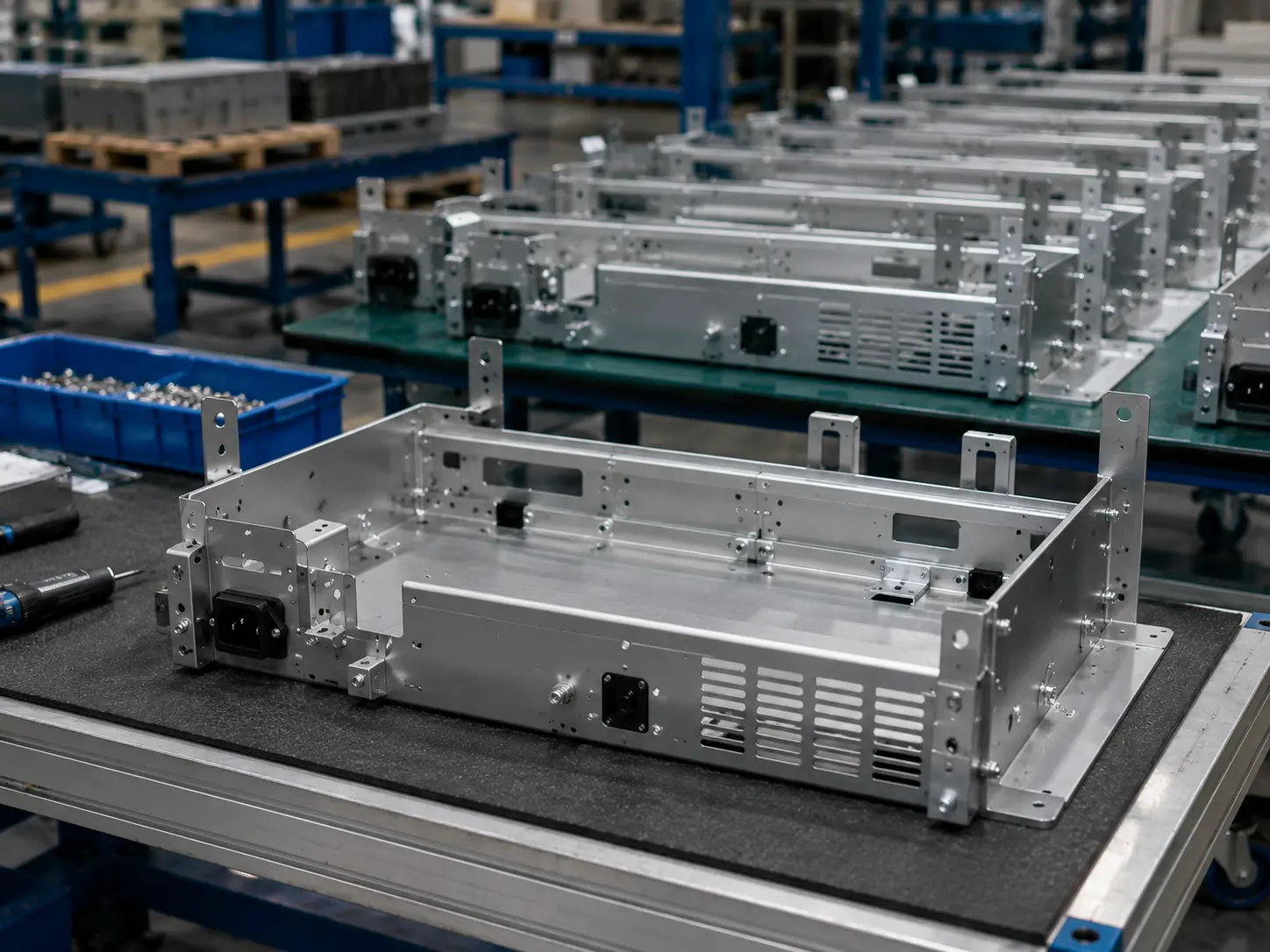
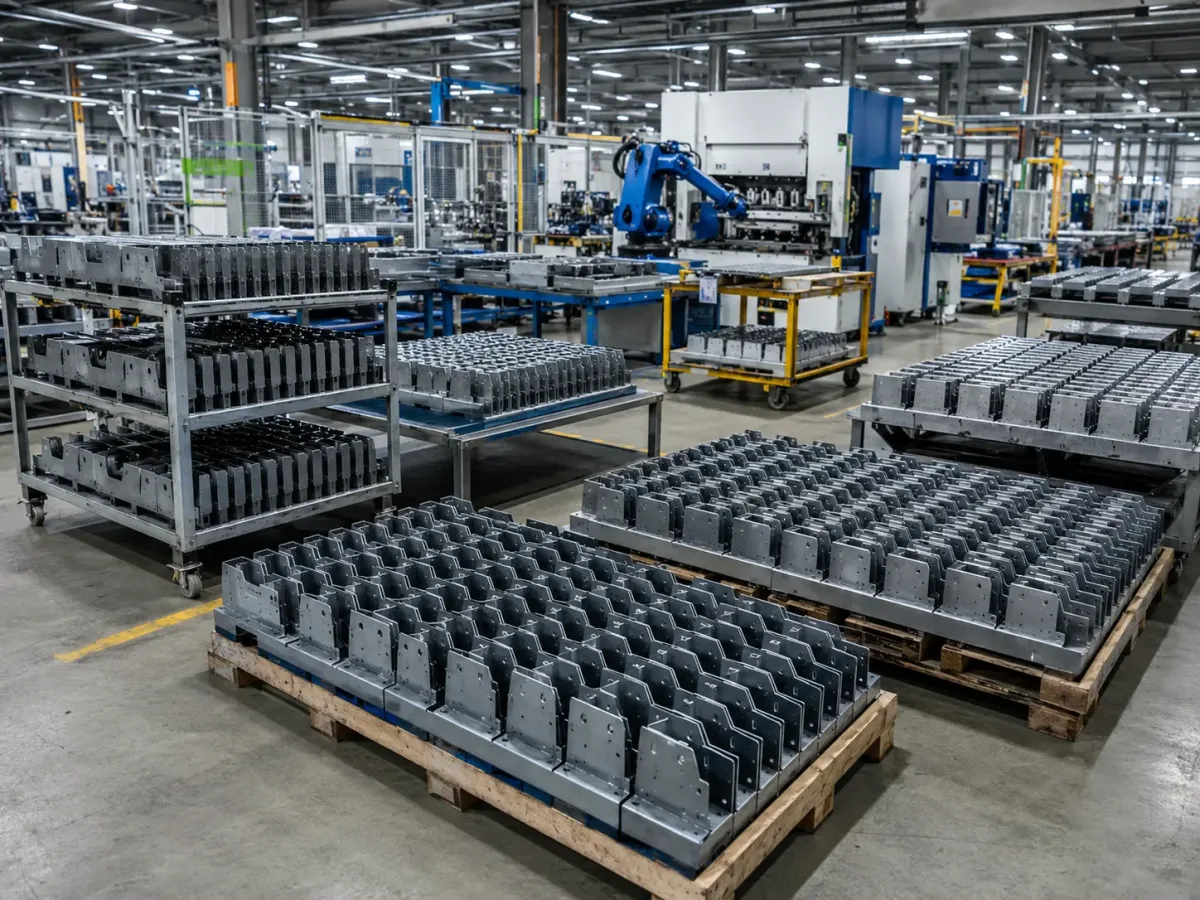
With 10+ years of hands-on sheet metal fabrication experience, SR MFG supports parts and assemblies that require long-term, repeatable supply—backed by scalable production for volume manufacturing.
  • 1

    Standard Capacity:100,000+ parts per month (capacity can be aligned by part type, material thickness, and process mix).

  • 2

    Capacity Planning:We support rolling forecasts and production scheduling, helping you scale output steadily to match quarterly and annual demand cycles.

  • 3

    Peak Flexibility:For seasonal fluctuations, we can add shifts and rebalance workstation layouts to meet peak demand.

What Is High-Volume Sheet Metal Manufacturing?
Metal Bending

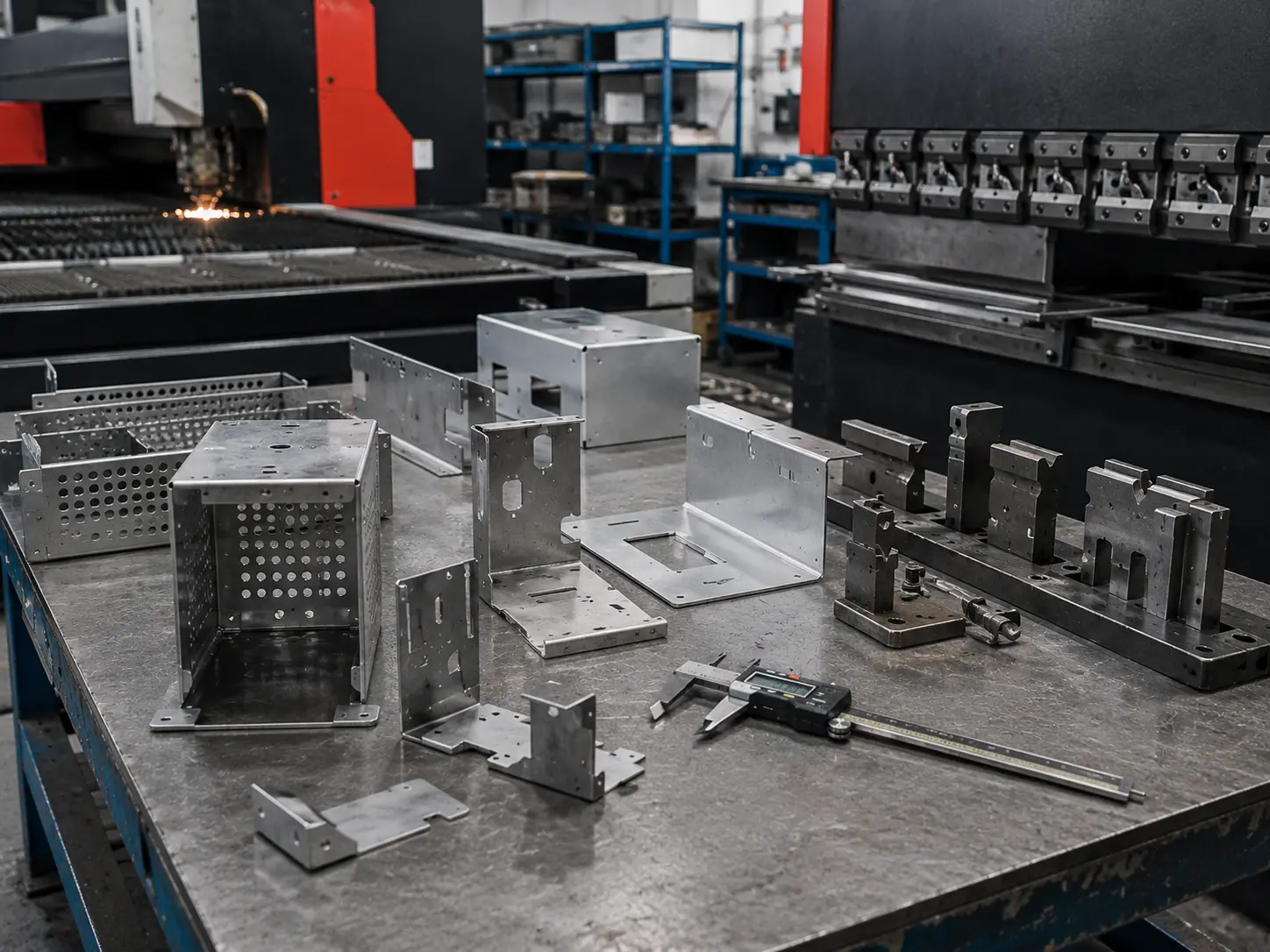
High-volume sheet metal manufacturing typically refers to continuous, standardized, large-scale production of thin-gauge metal—often using ~6 mm as a practical dividing line between sheet and plate, depending on the application.

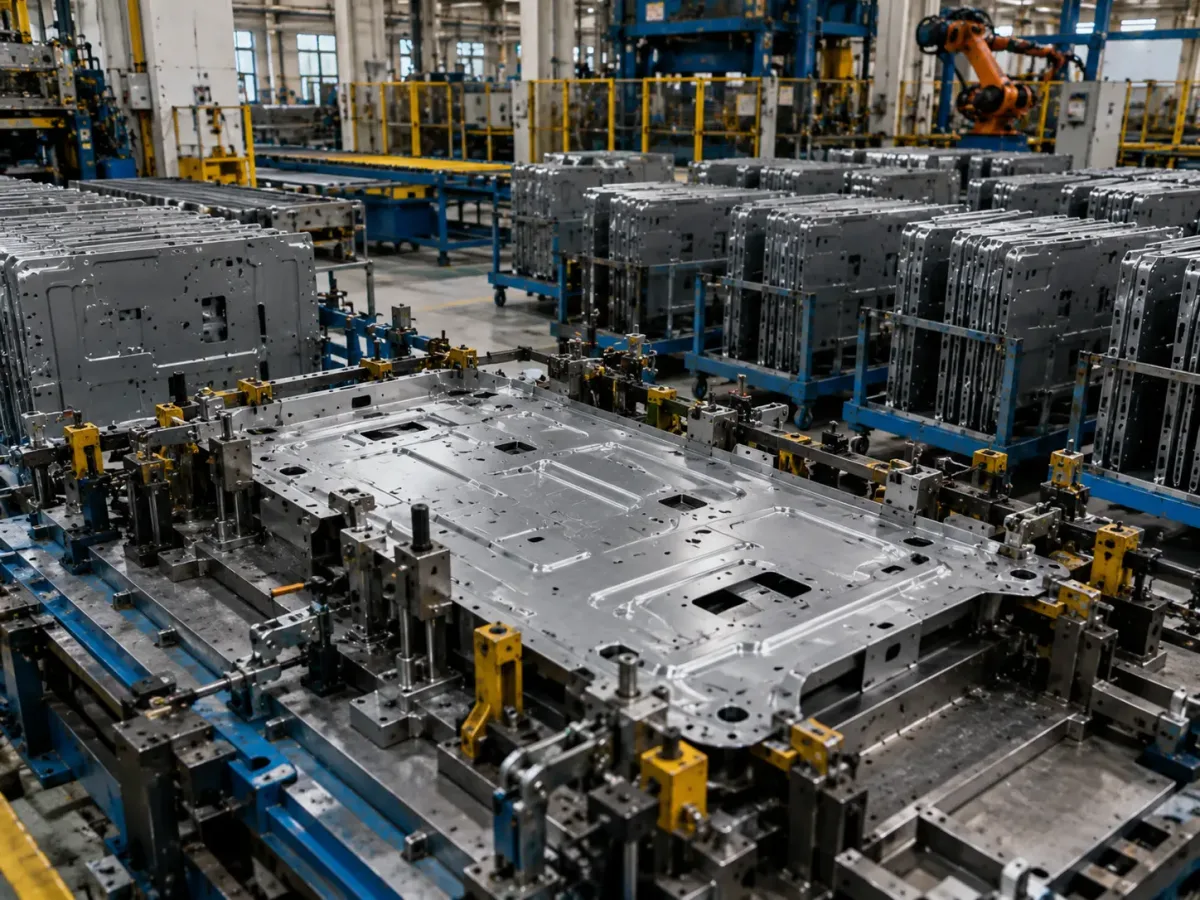
Once the drawing revision is stable and changes are well controlled, production usually shifts toward a more line-based, automation-driven approach—using dedicated fixtures, takt-time operations, and, where it makes sense, die-based processes. The core goals in high-volume programs are higher throughput, lower unit cost (by spreading upfront investment across more parts), and more consistent results from batch to batch.

What Types of Projects Require High-Volume Sheet Metal Manufacturing?

The key isn’t just “more parts”—it’s bringing the program to a repeatable cadence and consistent output. When demand and revisions are stable, you can use automation, dedicated fixtures/tooling, and standardized operations to continuously produce large quantities of identical—or highly similar—parts and assemblies, with a production pace aligned to demand (often managed around takt time).
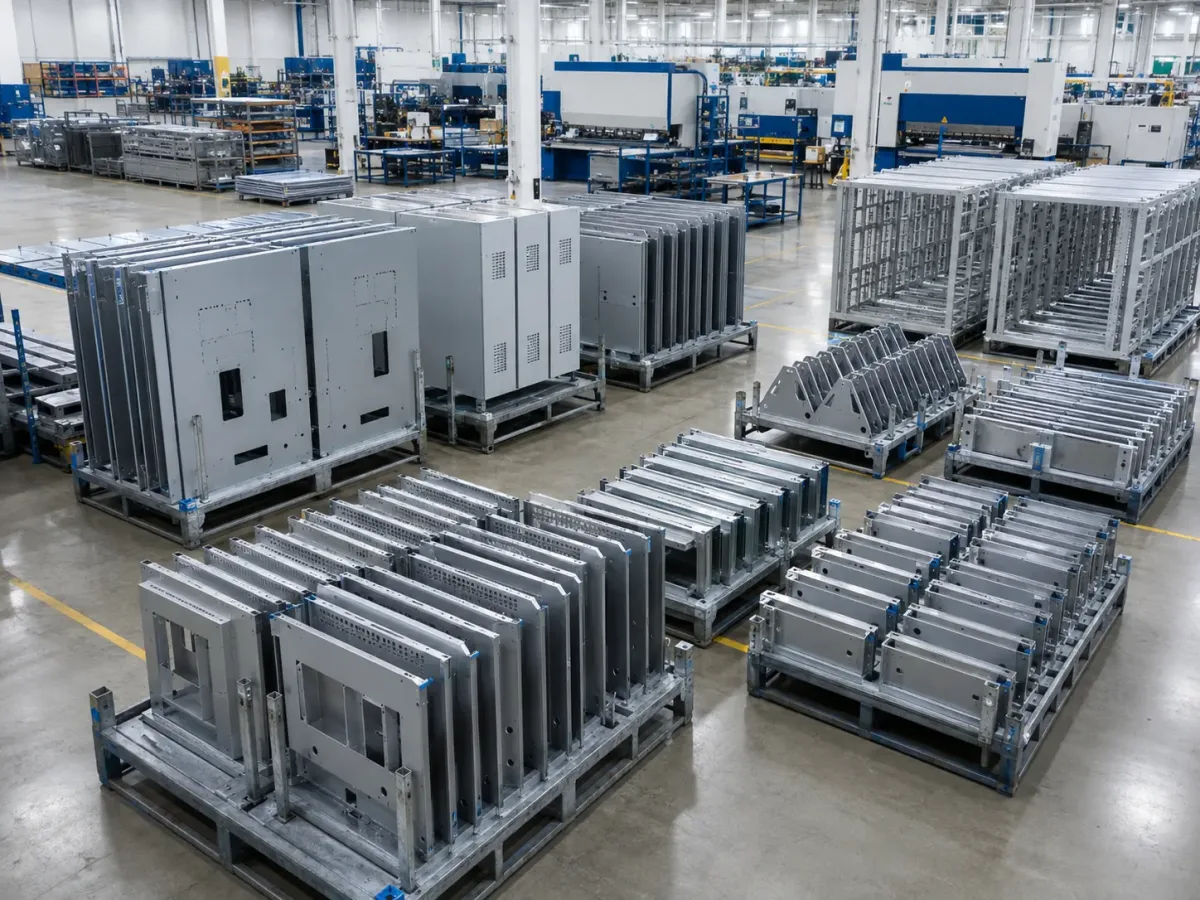
Automotive Industry

Common project types that are a strong fit for high-volume sheet metal

structural brackets, skid plates, battery-related trays and protective parts

→ Often a good match for stamping (including progressive dies) to boost throughput and repeatability.

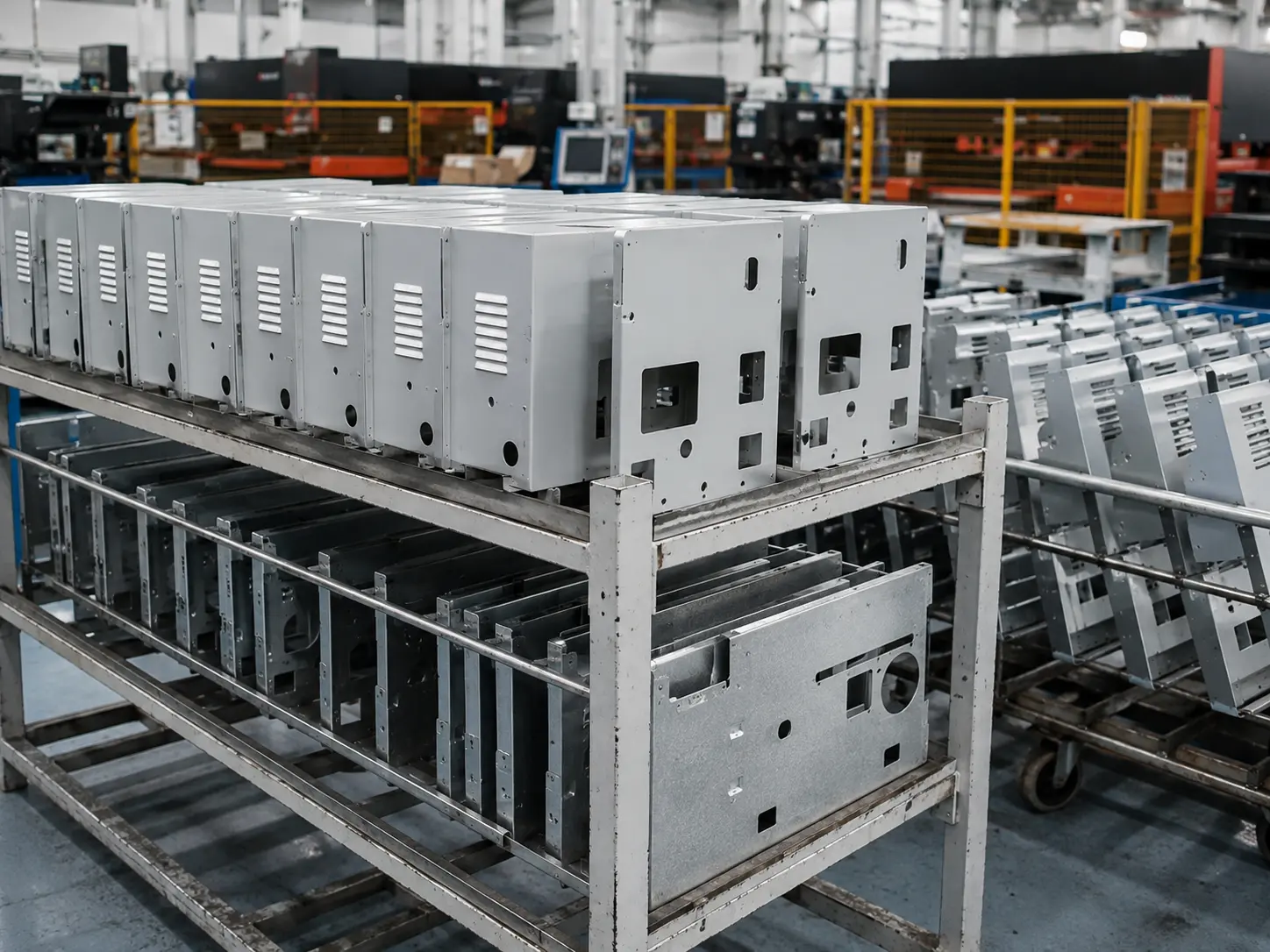
covers, side panels, brackets
→ Once the design is finalized, parts are repeatedly supplied—well suited to line-based forming and assembly.

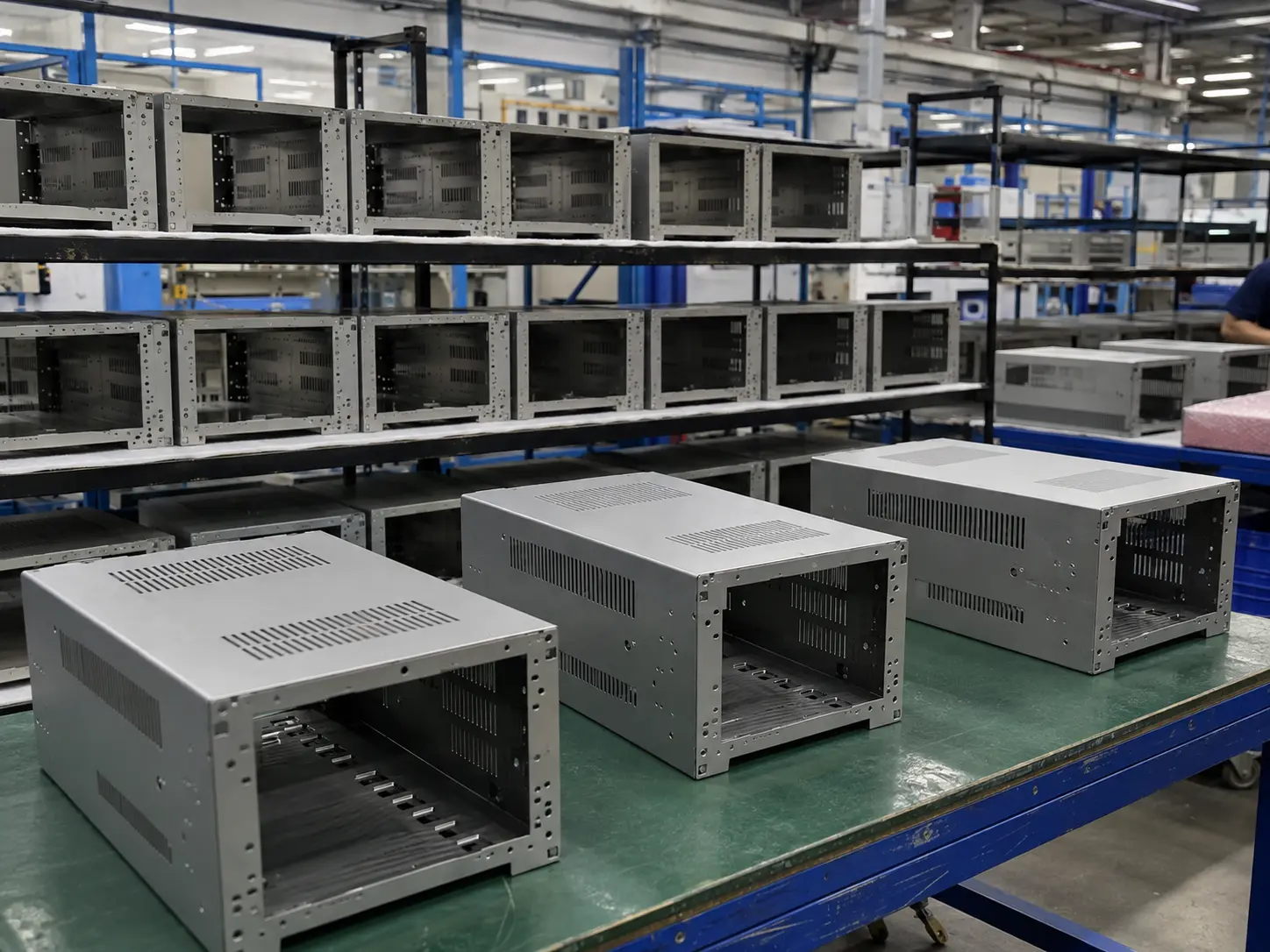
enclosures and cabinets, panels, card brackets, EMC/EMI shielding parts
→ High standardization, with frequent focus on thermal performance, shielding, and assembly consistency.

duct/flange-related parts, unit housings, electrical enclosures
→ Product families are highly standardized and repeatable, making them well suited to structured, repeat-run production.

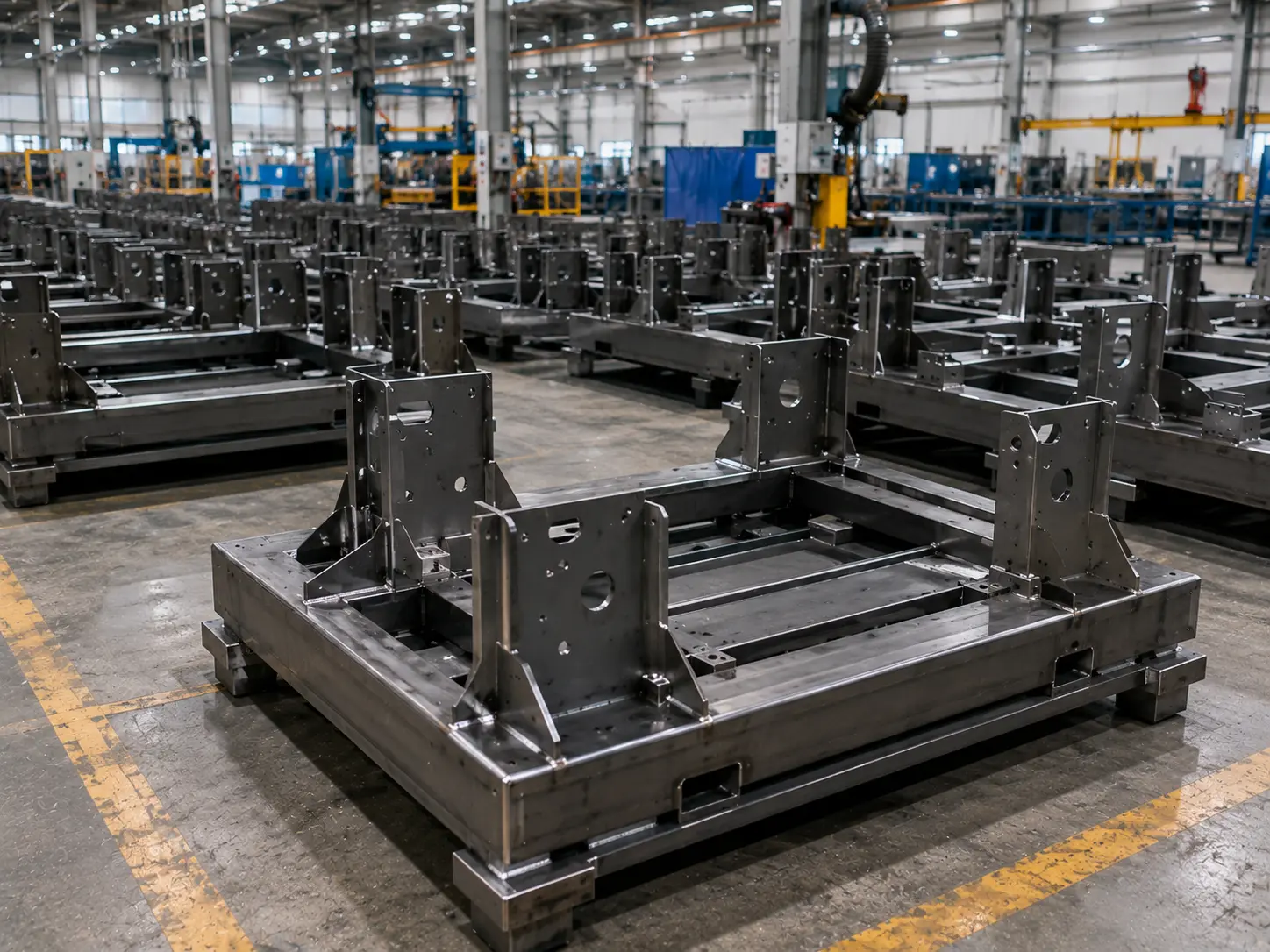
control cabinet housings, machine guards, mounting plates/brackets
→ The priority is interface consistency and stable long-term supply.

enclosures, trays, brackets
→ When product lifecycles are long and revisions are controlled, volume production becomes a strong fit.

How to Tell If Your Project Fits a High-Volume Model

(The more you match, the better the fit.)

  • 1

    Drawings repeat heavily and you need long-term rolling supply

  • 2

    Revisions are stable and engineering changes are infrequent

  • 3

    You’re unit-cost sensitive and willing to trade tooling/fixtures for lower long-run cost (scale benefits)

  • 4

    You require high interchangeability and assembly-to-assembly consistency

  • 5

    You need a steadier cadence with fewer changeovers—well suited to line-based organization
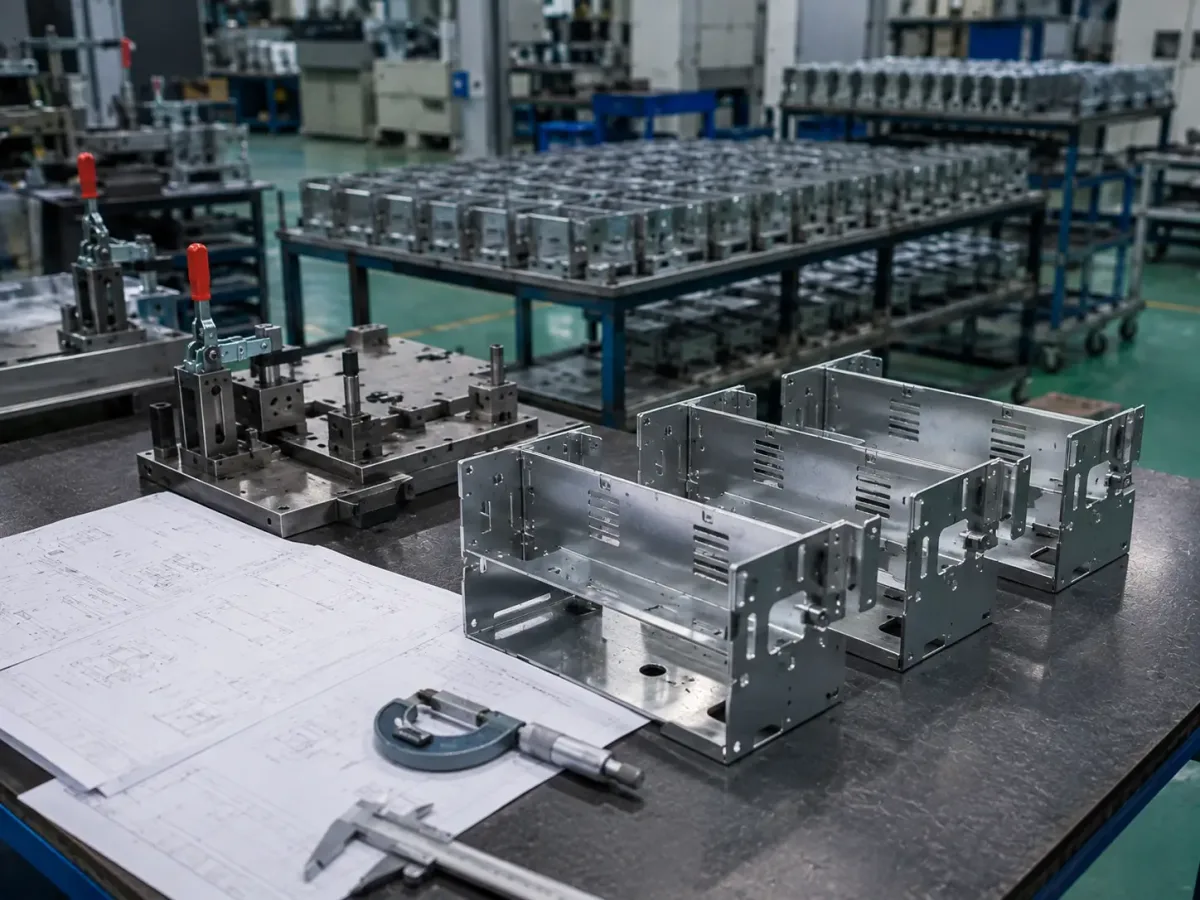
Telecommunications Industry
Automotive Industry

Why These Projects Fit High-Volume Sheet Metal

Because scaling isn’t about “stacking quantity”—it’s about eliminating uncertainty upfront:

Freeze revisions → define CTQs (Critical-to-Quality characteristics) → lock key datums with fixtures/tooling/dies → standardize operations to a repeatable cadence (takt)—so as volumes ramp, you consistently achieve better throughput and lower unit cost.

How do you choose the right production process route?

We’ll recommend a manufacturing route based on your annual volume, CTQs (critical-to-quality characteristics), and revision-change frequency.

During active revision cycles

Prioritize a flexible route (laser cutting/CNC turret punching + press-brake forming) to shorten validation loops.

During ramp-up

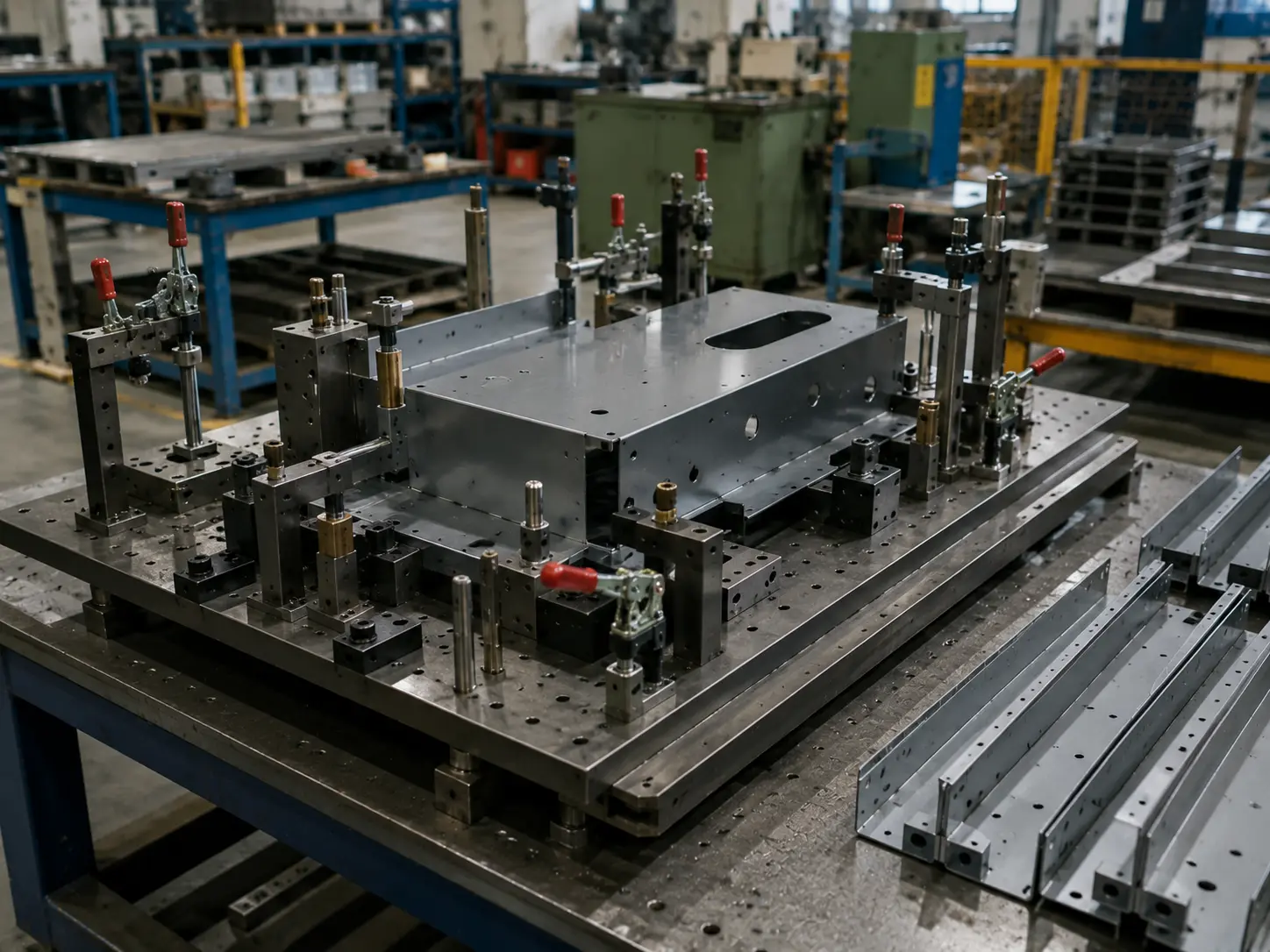
Introduce dedicated fixtures and work cells to lock in takt time and consistency early.

Once the design is frozen and demand is stable

Evaluate high-throughput routes such as stamping (progressive or transfer dies), roll forming, or deep drawing—integrating multiple operations into a continuous flow to reduce unit cost.

Production route Typical process mix Best-fit production stage Upfront investment (dies/fixtures) Unit cost profile Key design / process constraints
Flexible route Laser / CNC turret punch + bending + general-purpose welding/assembly Low to mid volume; frequent revisions Low Unit cost rises quickly as operation count increases Hole-to-bend rules, tolerance stack-up, weld distortion; cosmetic consistency often needs fixture support
Semi-tooled route CNC turret punch (incl. forming) / laser + dedicated fixtures + cell-based assembly Mid to higher volume; stable structure Medium More stable cadence; costs can be driven down over time CTQs need to be frozen earlier; fixture strategy sets the ceiling for repeatability
Stamping route Blanking/forming dies + (progressive/transfer dies) + secondary bending/tapping/self-clinching High volume; long-term stable design High Lowest unit cost; fastest throughput Changes are expensive and slow; DFM must be solid up front (radii, flanges, hole locations, springback, etc.)
Roll forming route Roll forming + punching / cutoff Long, straight, constant-profile sections in high volume (rails, channels, profile housings, etc.) High Excellent unit economics; very high capacity Once the cross-section is set, changes are difficult; first-article validation needs to be thorough
Deep drawing route Deep drawing / forming + trimming / piercing Bowl-/cup-/housing-type parts High Efficient for deep cavities; strong throughput Material formability matters; wrinkling/cracking risk; allow time for die tryout and tuning

Total cost model:
Total cost = Upfront investment (dies/fixtures) + Unit cost × Annual volume

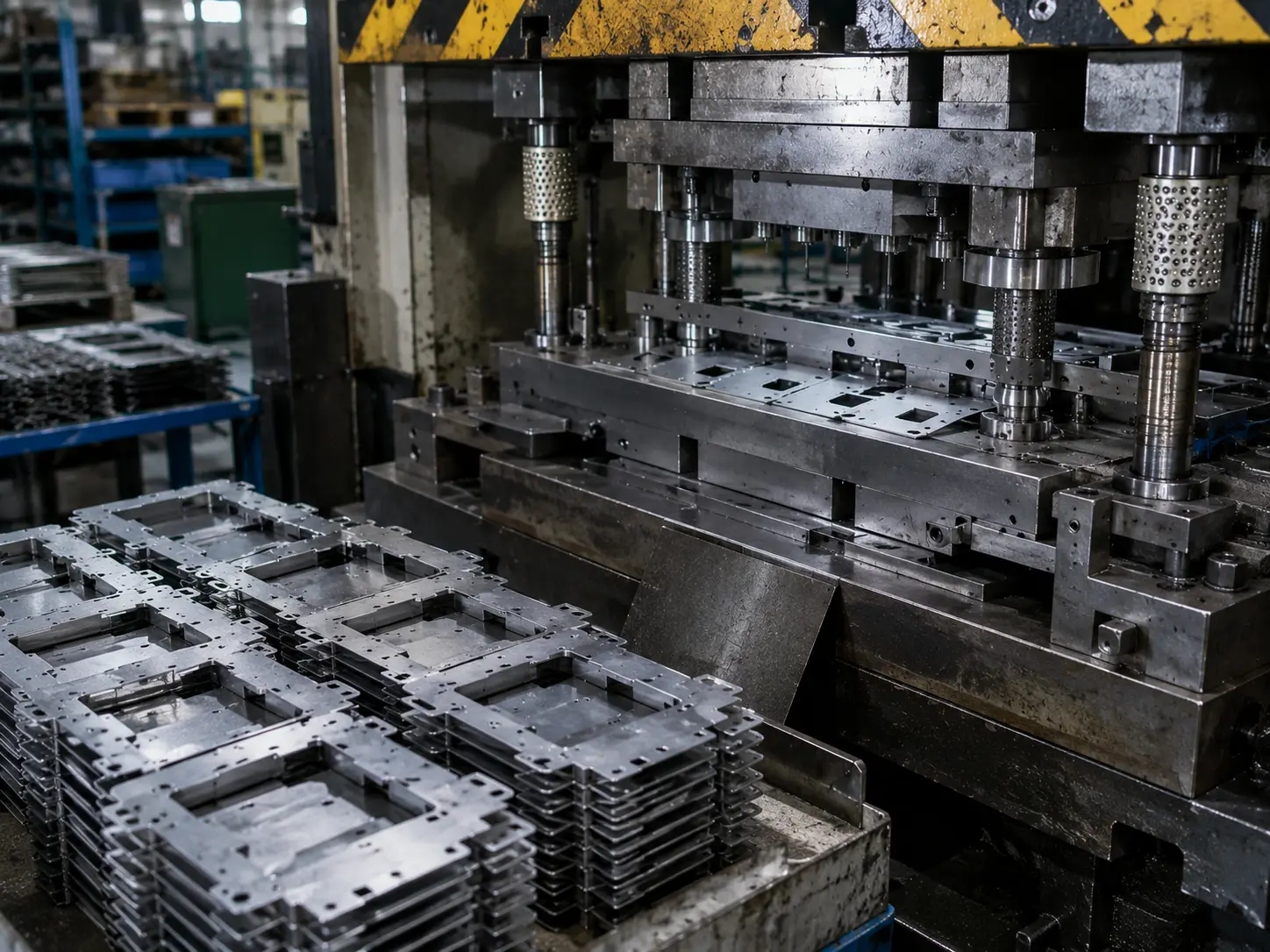
Tooling and Dies

In high-volume sheet metal programs, the real value of tooling and dies is that they turn a manufacturing process into a stable, predictable production cadence. They’re not just a way to amortize upfront cost—proper tooling also reduces reliance on highly skilled hands, keeps critical features consistently in spec, and lowers the risk of rework caused by human variation.

Die Types and Where They Fit Best

Die type Typical process Best for parts / features Key advantages What must be locked down upfront
Single-operation die (blanking / piercing / bending) One press cycle completes one step Simpler parts where operations can be separated Lower initial investment; easy to “tool up” gradually Hole patterns, datums, and material thickness must be stable
Forming die Flanging / drawing-forming / restriking Features that require repeatable shape and appearance More stable cosmetics and dimensions Corner radii, springback, and flat-pattern logic need to be frozen
Progressive die Continuous feed with multiple stations High-volume small to mid-size parts Extremely high throughput; strongest potential for lowest unit cost Changes are expensive—design and DFM must be right the first time
Transfer die Part-to-part transfer (automation/transfer) Larger parts or multi-step forming Handles complex forming with steady cadence Requires a robust feeding and locating strategy
Deep drawing die (when applicable) Deep drawing Cup-/shell-type parts Efficient for deep-cavity forming Material formability and the wrinkle/crack process window must be validated

Tolerances & Critical-to-Quality Features (CTQs)

CO₂ Laser Cutting Machines

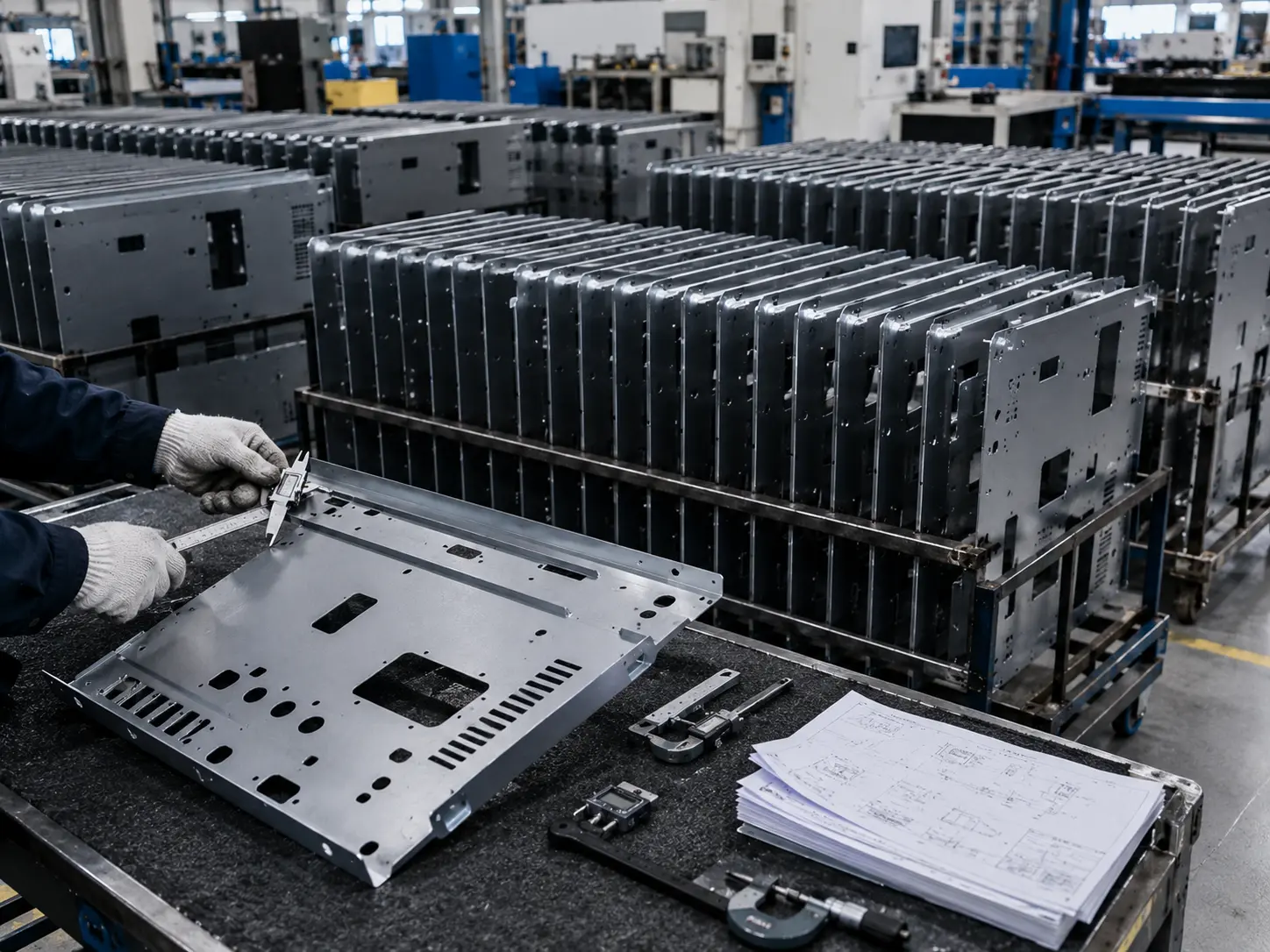
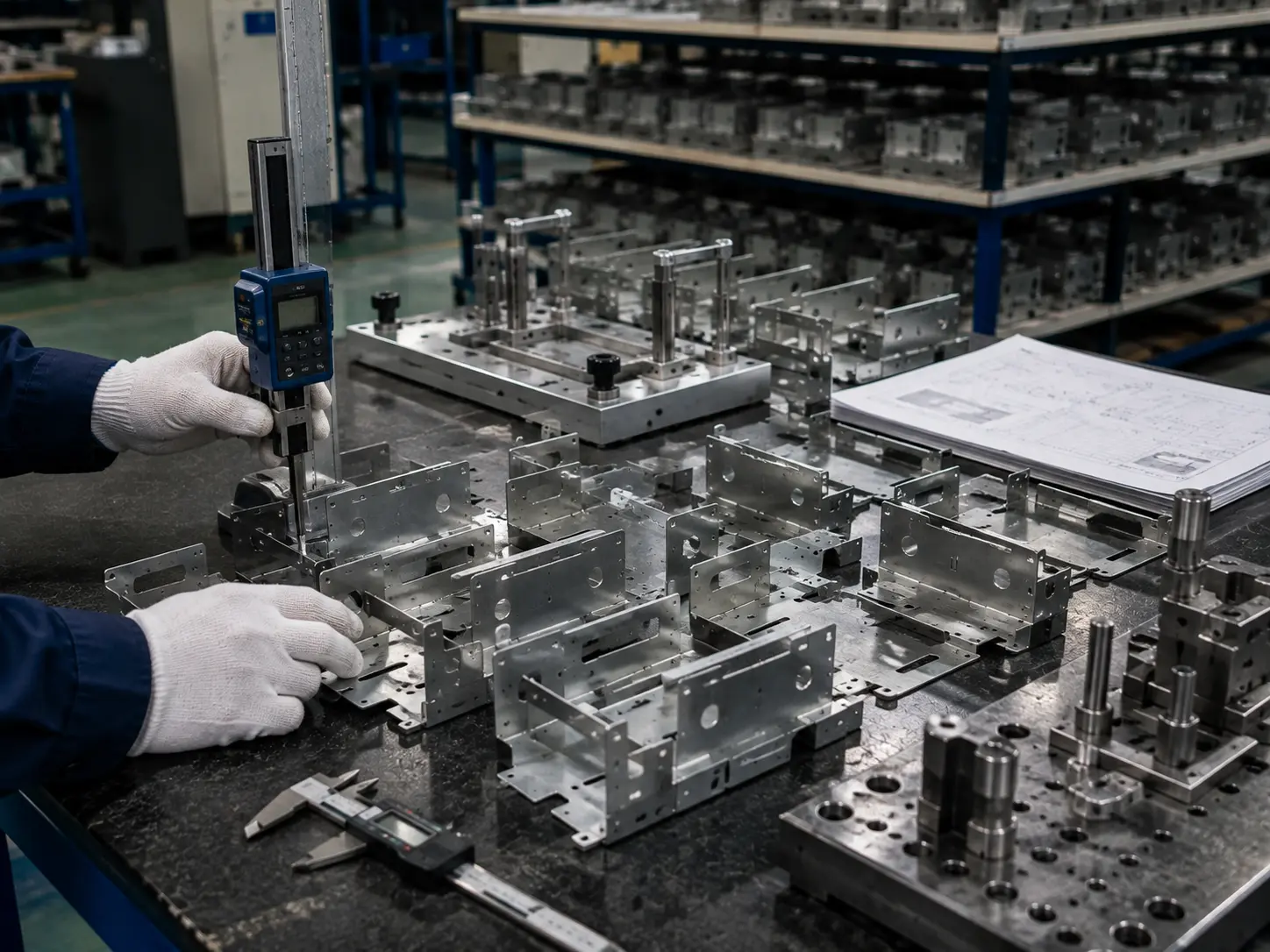
In high-volume sheet metal production, we build quality control around clear priorities. With CTQs—critical dimensions, cosmetic surfaces, and functional interfaces—as the backbone, we align tolerance bands, datums, and measurement methods during DFM and tooling/process planning to prevent tolerance stack-up from turning into assembly variation as volumes ramp.

Our Typical Tolerance Capability

We work to widely used GD&T frameworks (ISO / ASME) and consistently perform well within the typical ranges below (actual results depend on material, thickness, and process).

Feature type Typical reference tolerance Notes
Flat cutting features ±0.2 mm Common capability reference for laser/cutting features.
Bend angle ±1.0° A widely used production benchmark for bend angles.
Bend to edge / flange length ±0.254 mm (0.010″) A practical “anchor” for communicating flange-length control.
Edge to bend ±0.381 mm (0.015″) Common reference for bend-line placement from an edge.
Across-bend dimension ±0.762 mm (0.030″) Typical across-bend reference; longer stacks need a realistic window.
Overall edge-to-edge on formed part ±0.762 mm (0.030″) One common baseline for overall formed dimensions.

Note: Finishing affects fit and dimensions
Powder coating, plating, anodizing, and other secondary processes can change part dimensions and fit. For features like clearance holes, insertion gaps, threads, and grounding/shielding surfaces, it’s best to specify post-finish requirements, masking areas, and allowance strategy directly in the drawing notes.

CTQ Checklist & Drawing Callout Tips

CTQ type Typical features Recommended drawing callouts What we review
Assembly locating hole patterns Hole location, pitch, hole-to-datum surfaces Use consistent datums; call out hole location with position tolerance / datum references (GD&T approach) Relationship between hole patterns and bend datums; hole-to-bend sensitivity
Hole-to-bend Hole edge to bend line / flange Mark as CTQ and define the measurement method (which datum, measured after forming) Springback and bend-radius variation effects; adjust hole strategy if needed
Across-bend dimension chain Overall width/height across one or multiple bends Set only functional dimensions as CTQ; use general tolerances for non-functional dims Stack-up risk across multiple bends; whether fixtures/datum strategy needs optimization
Flatness / warpage Mounting, sealing, mating surfaces Clearly identify the functional surface (CTQ); specify flatness if needed Impact of thickness, perforation ratio, welding, and stress relief on distortion
Perpendicularity / parallelism Cabinet frames, critical bracket faces Define datums and orientation relationships for assembly faces Bend sequence and whether fixture locating can hold relationships consistently
Cosmetic surfaces A-surface scratches, grain direction, color sensitivity Define A/B surfaces and acceptable defect examples; specify grain/texture direction Handling/stacking risks before/after finishing; hanging points and masking strategy
Inserts / self-clinching hardware PEM studs/nuts, rivet nuts Specify hardware model, datum-based location, and installation direction Installation height consistency, interference risk, and tool/assembly access

Cost Breakdown and a Practical Cost-Down Path

In production programs, unit price isn’t driven by any single operation. It’s shaped by material, cycle time and labor, secondary ops / cosmetic rework, finishing requirements, and fixtures/die investment. Our approach is to break the cost structure down first, then propose a phased cost-down roadmap you can actually execute. DFM (Design for Manufacturability) is a key lever for reducing cost and rework when applied early.

High-Volume Sheet Metal Manufacturing FAQs 

High volume isn’t just a number—it’s when a program has moved into long-term, repeat supply: the same part runs on a rolling basis, the production cadence is repeatable, and upfront setup/tooling can be amortized over the product’s life. In many industries, hundreds to thousands of repeat parts is a common high-volume context—typically with less flexibility but lower unit cost as volume scales.

We usually recommend starting a fixtures/tooling evaluation when you hit one or more of these triggers:

  • Demand shifts into a stable rolling forecast (not a one-off order), and the product life is long enough to justify upfront investment.

  • CTQs (critical-to-quality features) are clearly defined and revision changes slow down—so key datums and key operations can be “locked in” with fixtures or dies.

  • Unit cost is highly sensitive to cycle time, and it becomes worthwhile to integrate multiple operations into a higher-throughput flow (e.g., stamping several features in one press stroke).

We’ll evaluate whether a tooling-based route makes sense based on annual volume, lifecycle, design freeze level, CTQs, and takt/cycle-time targets—rather than forcing a single “threshold number.”

At its core, the “break-even” comes down to whether one-time investment (tooling/fixtures/setup) can be amortized by lifecycle volume—and whether unit labor/cycle time/secondary ops can be materially reduced through process integration. High-volume routes often have higher setup/tooling cost, but lower unit cost—and they’re typically less flexible.

We usually look at five variables:

  • Amortization math: tooling/fixture investment ÷ forecast volume (over the product lifecycle)

  • Process integration: progressive/transfer setups can integrate piercing/forming, cutting cycle time and labor (but reducing flexibility)

  • Changeover efficiency (SMED): reducing changeover from “tens of minutes” toward “minutes” directly impacts OEE and multi-model capability

  • Material yield & scrap structure: nesting/layout and scrap patterns can swing material cost significantly

  • CTQs & tolerance chains: the more sensitive features you have (hole-to-bend, multi-bend stack-ups, assembly datums), the more value there is in “hardening” key relationships with fixtures/dies—or defining a more realistic tolerance window

Yes—we can give an initial route recommendation and a budgetary quote range from 3D (STEP/IGES, etc.). But for an executable production quote and repeatability alignment, we strongly recommend adding a 2D/PDF so tolerances, datums, cosmetic requirements, and process notes are unambiguous.

At minimum, please provide:

  • Material: spec/standard + thickness + surface condition

  • Tolerance scheme: general tolerances (e.g., ISO 2768) + CTQs called out separately (hole patterns, hole-to-bend, functional faces)

  • Processes & post-processing: welding / inserts / self-clinching hardware / finishing + masking areas

  • Volumes & ramp plan: first build quantity + annual rolling forecast + split-shipment cadence (this drives the process route and tooling strategy)

We recommend aligning on cosmetic grading + standardized acceptance rules:

Cosmetic surface grading

  • A: frequently seen / touched

  • B: visible

  • C: non-visible

Texture / grain direction

  • Specify brushed/grain direction clearly and keep it consistent with viewing and assembly orientation.

Color alignment

  • Use RAL / Pantone / a physical color chip, and agree on viewing conditions (light source, distance, angle). If your system requires tighter control, define an instrumented metric such as ΔE as the acceptance basis.

We prefer CTQs to be defined with datums + a clear measurement method, and flagged as CTQ in the 2D drawing for centralized control.

Recommended callouts:

  • Locating hole patterns: use a datum scheme and define positional relationships (GD&T-style) instead of stacking linear dimensions.

  • Hole-to-bend / across-bend dimensions: state which datum face/edge the measurement is taken from after forming, and distinguish single-bend vs. multi-bend chains (multi-bend stacks compound more easily).

Quick “communication anchors” (for early alignment, subject to review):

  • Bend angle often uses ±1°, cutting features often ±0.2 mm (tighter requires review).

  • Across a single bend: ±0.3 mm; across multiple bends: ±0.5 mm (review-dependent).

It depends on your current route:

Flexible route (laser/turret + bending)

  • Changes are typically handled via program updates—ideal during active iteration before the design is frozen.

Tooling-based route (single-op dies / progressive / transfer)

  • Changes may require die modification and re-tryout, which is more expensive and slower. In practice, we recommend:

    • Freeze assembly hole patterns, datum holes, and key formed features before committing to hard tooling/progressive dies.

    • For “likely-to-change” features, consider modular design areas, or a hybrid approach (stamping + secondary ops) to balance cost and takt time.

    • If frequent changes are expected, stay on laser+bending longer, or use stamping with secondary machining for the moving features.

Yes. To prevent rework and assembly variation at volume, we typically need:

  • Hardware/insert list: part numbers, material/finish, quantity, install side, hole requirements, and install direction

  • Assembly information: assembly drawing/exploded view, key clearances, torque requirements, and acceptance criteria (pull-out/spin-out, if applicable)

  • If blind rivets are involved, we can align to the applicable ISO standard (for example, ISO 15977 covers open-end blind rivets with a break-pull mandrel)

We propose alternatives in this priority order: same function → manufacturable → controlled risk:

  • Closest-grade substitutions within the same family (protecting key needs like corrosion resistance, conductivity, magnetism)

  • Standardized thickness/width to improve availability and nesting yield

  • If needed, thickness/structure compensation (local flanges, ribs) to maintain strength and interfaces

  • After substitution, we recommend a small validation build to confirm forming/springback, finishing compatibility, and assembly performance.

In one line: finishes add build—critical fits should be masked or designed with allowance.

  • Powder coating: typical film build is about 2–5 mil (50–125 μm), which can noticeably affect holes, slip fits, and snap features

  • Anodizing: as a conversion coating, it has dimensional growth both inward and outward (not purely “added on top” like plating)

Recommendation: call out in your 2D notes:

  • finish areas

  • masking areas

  • post-finish requirements for critical fits (holes/threads/grounding surfaces/EMI shielding interfaces)

Yes—and it’s a common, low-risk path for high-volume programs:

  • Phase 1 (validation): laser/turret + bending + only necessary fixtures to validate assembly and CTQs

  • Phase 2 (ramp): key fixtures + cell-based organization to lock takt time and consistency

  • Phase 3 (stable high output): once the design is frozen and demand is stable, evaluate single-op / progressive / transfer dies

This staged-investment approach reflects the basic reality of high-volume manufacturing: setup costs are higher, but can be amortized over a long, stable lifecycle—without betting on hard tooling before the design is truly frozen.