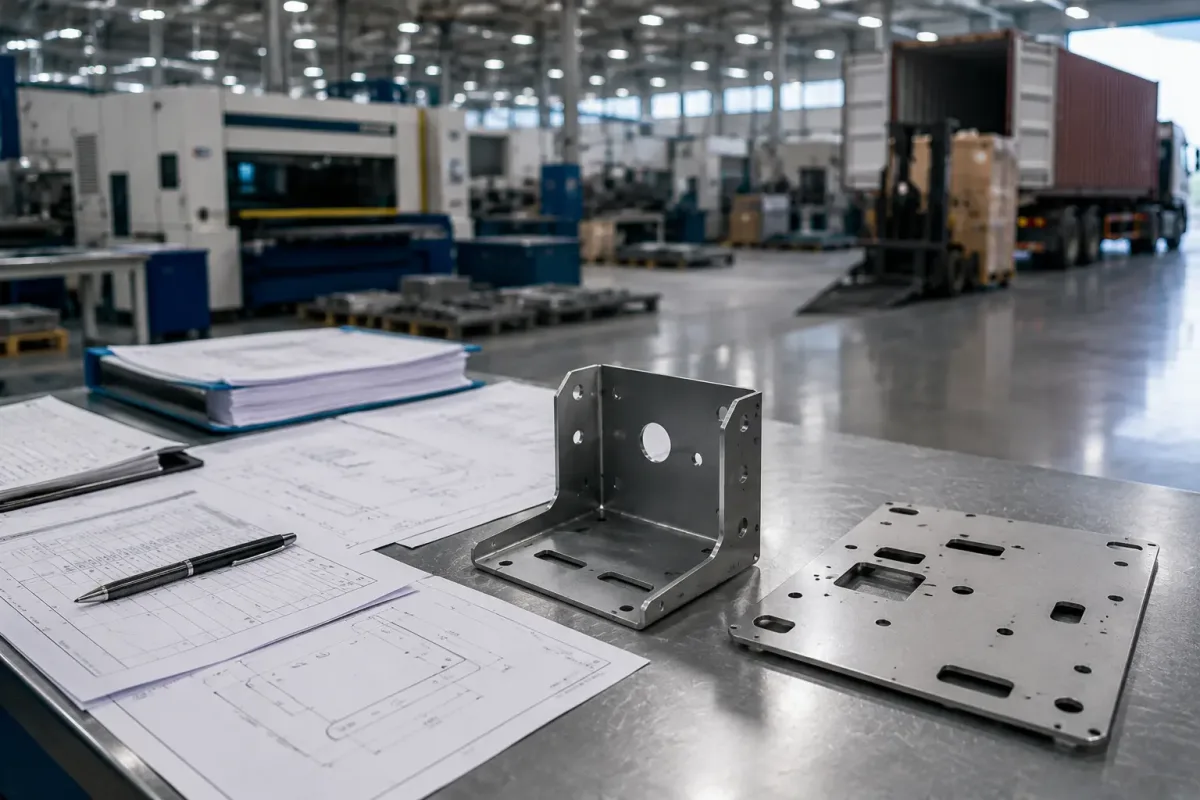
Quick-Turn
Sheet Metal Prototyping Services
From concept to functional prototype in days, not weeks.
Low MOQ. DFM support. Production-grade quality you can trust.
Prototype Lead Time
Low Minimum Order
Tight Tolerances
Expert Engineering
What Is Quick-Turn Sheet Metal Prototyping?
Quick-turn sheet metal prototyping is a product-development approach where you use a streamlined, end-to-end sheet metal fabrication process to produce multiple prototype iterations in a short time for testing and evaluation.
For projects where flatness, alignment/fit-up (e.g., flatness and parallelism), and cosmetic appearance matter, quick-turn prototypes are especially useful for early-stage validation and decision-making.
In many cases, sheet metal prototypes can be delivered in a few days, depending on material availability, design complexity, and whether finishing is required; quick-turn services commonly quote 2–5 days for expedited prototypes, and some projects can be even faster.
Compared with high-volume processes like stamping, rapid sheet metal prototyping often avoids complex, expensive hard tooling, which keeps upfront investment more manageable and makes parallel iteration much easier.
That said, a single prototype isn’t necessarily cheaper per unit than production parts. As quantities increase, unit costs typically drop because fixed costs are spread over more units and manufacturing becomes more efficient—one of the classic “economies of scale” effects.
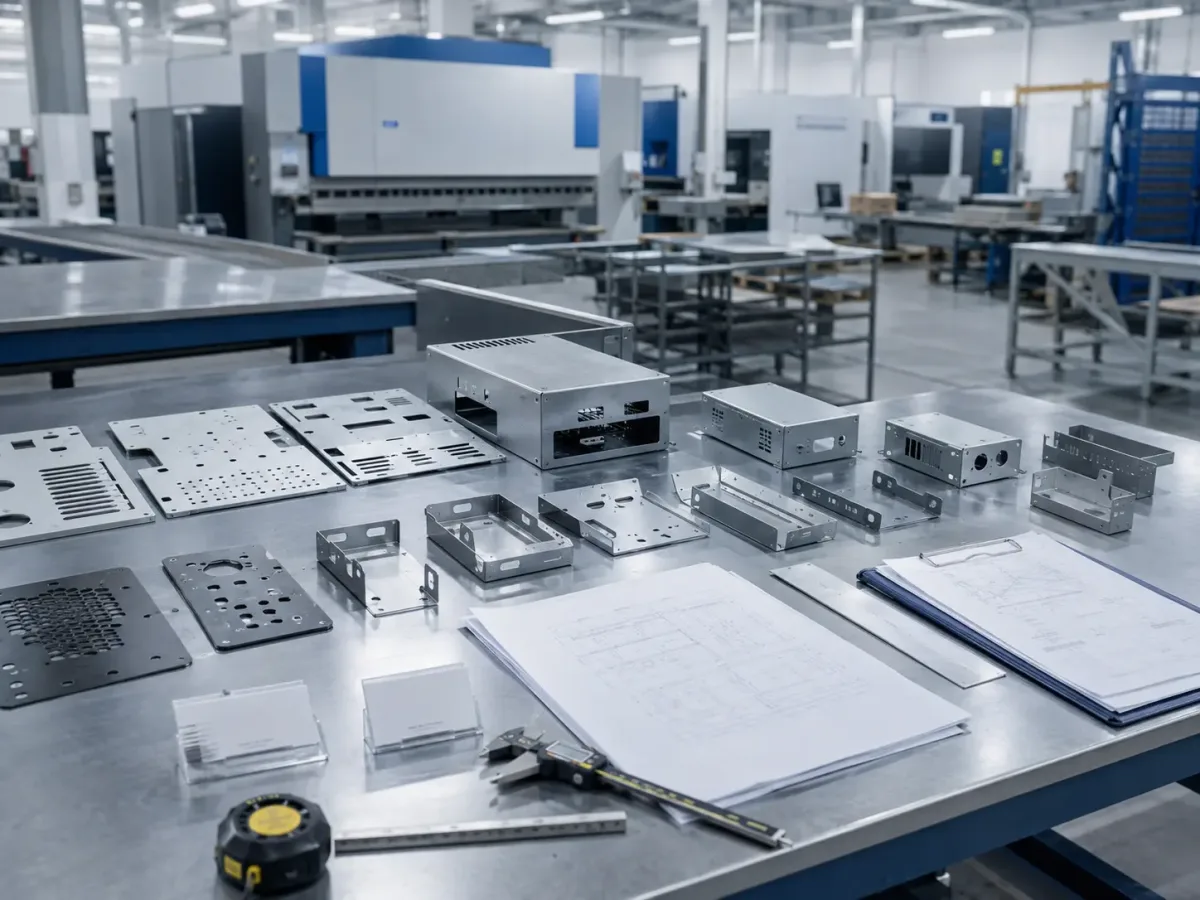
Quick-Turn Prototyping vs. Production: A 360° Comparison of Cost, Pace, Documentation, and Acceptance
| Aspect | Quick-Turn Prototyping | Production |
|---|---|---|
| Primary goal | Validate design feasibility and iterate fast | Deliver consistently and optimize total cost |
| Typical volume | 1–100 pcs | Repeatable, steady batches (often 500/1,000+) |
| Unit cost | Higher (limited scale benefits; less setup/tooling cost to amortize) | Lower (economies of scale, optimized cycle time, amortized tooling) |
| Lead time | Typically measured in days (depends on material, finishing, assembly; some suppliers can turn prototypes in 2–5 days) | Depends on whether dedicated tooling/special fixtures are required—if so, lead times may shift to weeks; rapid tooling is often around a few weeks |
| Design changes | Flexible, lower change cost | If tooling/dies are involved, changes are typically more expensive |
| Quality focus | Validation-driven (CTQs can be inspected tightly and reported as needed) | Consistency, reliability, and traceability (to meet customer quality targets) |
| Documentation | Leaner documentation, but revisions are tracked throughout iterations | Formally released docs with strict revision control (PPAP as required) |
Sheet Metal Prototyping vs. 3D Printing vs. CNC Machining
Note: “3D printing” here refers to plastics/resins. Metal 3D printing is a separate category.
| Attribute | Sheet Metal Prototyping | 3D Printing (Plastic) | CNC Machining (Metal) |
|---|---|---|---|
| Material realism | ✅ Often uses the final sheet material | ❌ Usually plastic/resin | ✅ Final material |
| Mechanical performance | ✅ Close to production structural behavior | ⚠️ Often lower; depends on material/process | ✅ High strength and stability |
| Surface finish | ✅ Can be finished to near production appearance | ⚠️ Typically needs post-processing | ✅ High surface quality (process/post-processing dependent) |
| Cost (per unit) | 💰 Medium | 💰 Low | 💰💰 Higher (especially for complex parts) |
| Best for | Enclosures, brackets, chassis/cabinets, panel fit & assembly validation | Concept models; fast form/appearance checks | Precision parts, mating surfaces, complex 3D geometry |
| Lead time | ⚡ Typically 3–7 days (depending on finishing/assembly) | ⚡ Typically 1–3 days | 🕐 Typically 5–10 days (depending on complexity) |
Lead times vary by geometry, material availability, and finishing requirements; many quick-turn services describe sheet metal prototypes delivered “in days,” CNC orders starting in as little as a few business days, and 3D-printed parts delivered within a similar short window.
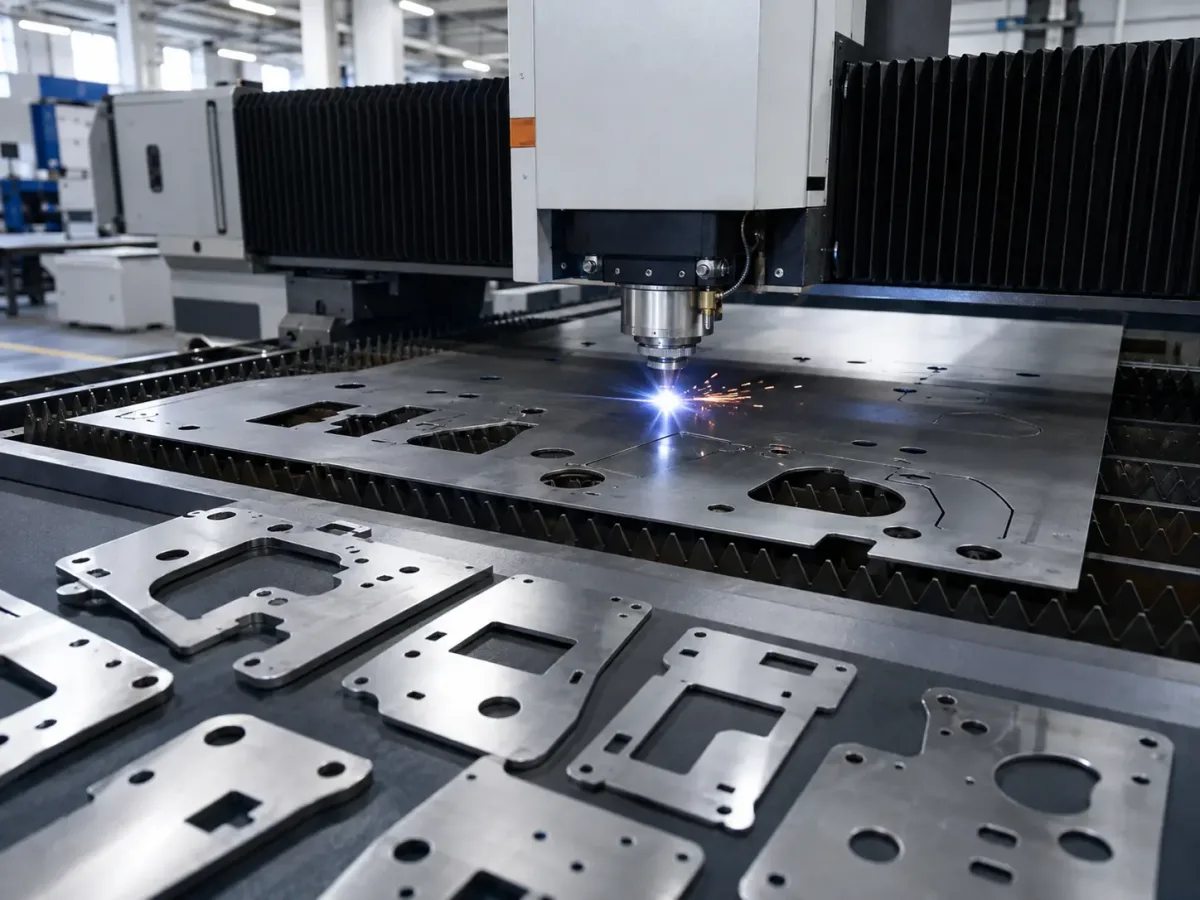
Laser Cutting Rapid Prototyping
Laser cutting uses a high-energy laser beam to perform non-contact thermal cutting along CAD-defined contours on a wide range of metals. It significantly shortens the time from design to finished part and supports fast revisions—without the need for hard tooling, keeping upfront costs under control. Because prototypes can be made from production-grade sheet, performance is much closer to final parts. Laser cutting also handles complex profiles, cutouts, and hole patterns with ease, making it a core method for quick-turn sheet metal prototyping.
It’s ideal for 2D flat parts, precision-profile components, and fast delivery of small batches (1–100 pcs). During early validation, we can cut prototypes quickly and support multi-version iterations—helping you complete DFM review, check assembly interferences, verify hole alignment, and confirm cosmetic trends before production. We can also add bending, welding, fastener installation, finishing, and assembly as needed, along with critical-dimension inspections and revision recommendations to shorten development cycles and reduce trial-and-error costs. (DFM: Design for Manufacturability.)
Typical cutting tolerance (2D dimensions): ±0.10–0.25 mm
Minimum feature size: 0.5 mm hole diameter; 0.1 mm gap
Standard prototype lead time: as fast as 1 day
Best for: EVT builds / engineering samples / fit-check validation / pre-approval samples / pre-pilot verification
Optional add-ons: Bending | Welding | Rivet nuts / Self-clinching hardware | Powder coating / Plating / Anodizing | Silkscreen / Laser marking
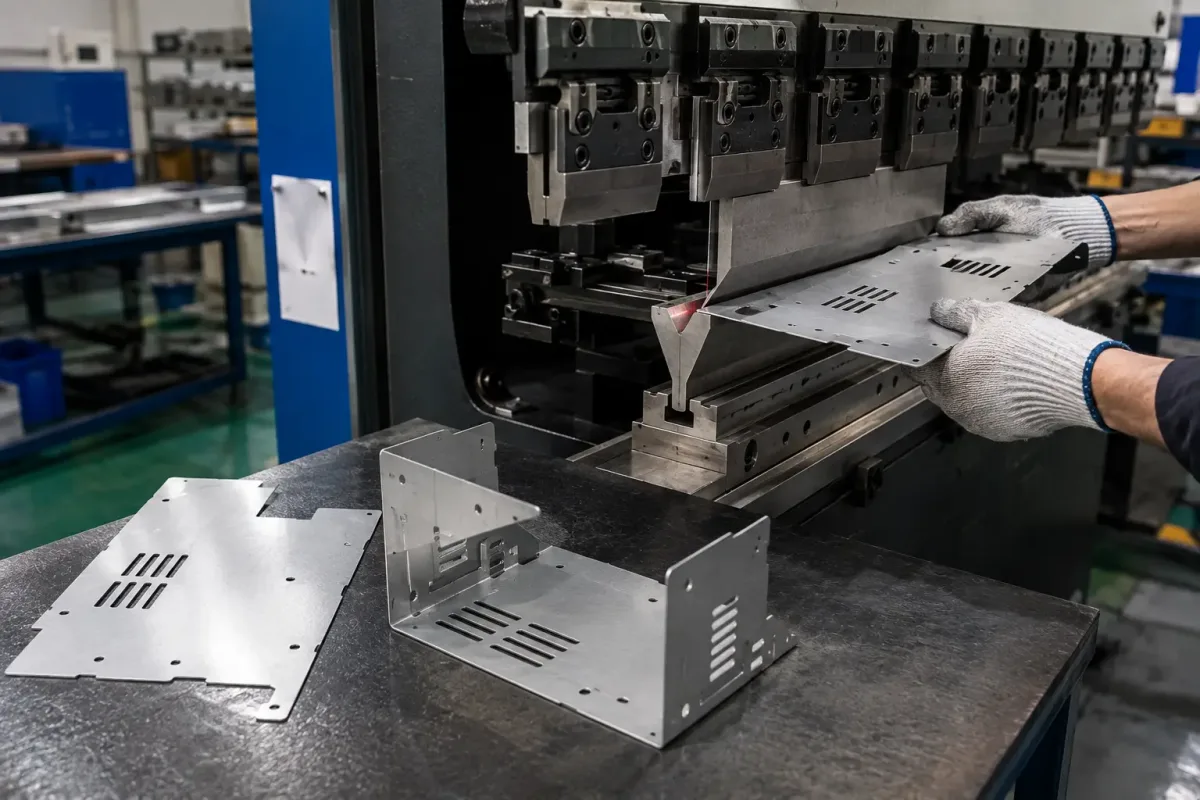
Metal Bending Rapid Prototyping
Metal bending prototypes are formed on a press brake using tooling to plastically deform cut sheet metal into the required angles and shapes. This is the key step that turns a 2D sheet into a 3D part. It’s ideal for low-volume trial runs and pre-production validation—evaluating strength after bending, springback, surface quality, and assembly fit (e.g., chassis brackets, instrument housings).
This service is designed for the R&D and revision stages of sheet-metal structural parts. SR MFG supports multi-version, small-batch rapid iteration. To reduce rework, we perform a bending process review before release—aligning on bend radius, flat pattern dimensions, hole-to-bend distances, springback compensation, and assembly clearances—so prototypes are closer to production-ready.
Minimum bend angle: ≥30° (to be reviewed based on thickness and die opening)
Maximum bend angle: ≤180° (U-shapes/deep channels require special process evaluation)
Standard prototype lead time: 1–14 days (varies by bend count, complexity, and kitting)
Best for: EVT builds / fit-check validation / structural revisions / pre-pilot verification
Optional add-ons: Laser cutting | Self-clinching nuts/studs | Spot welding / TIG | Deburring | Powder coating / Plating | Silkscreen / Marking
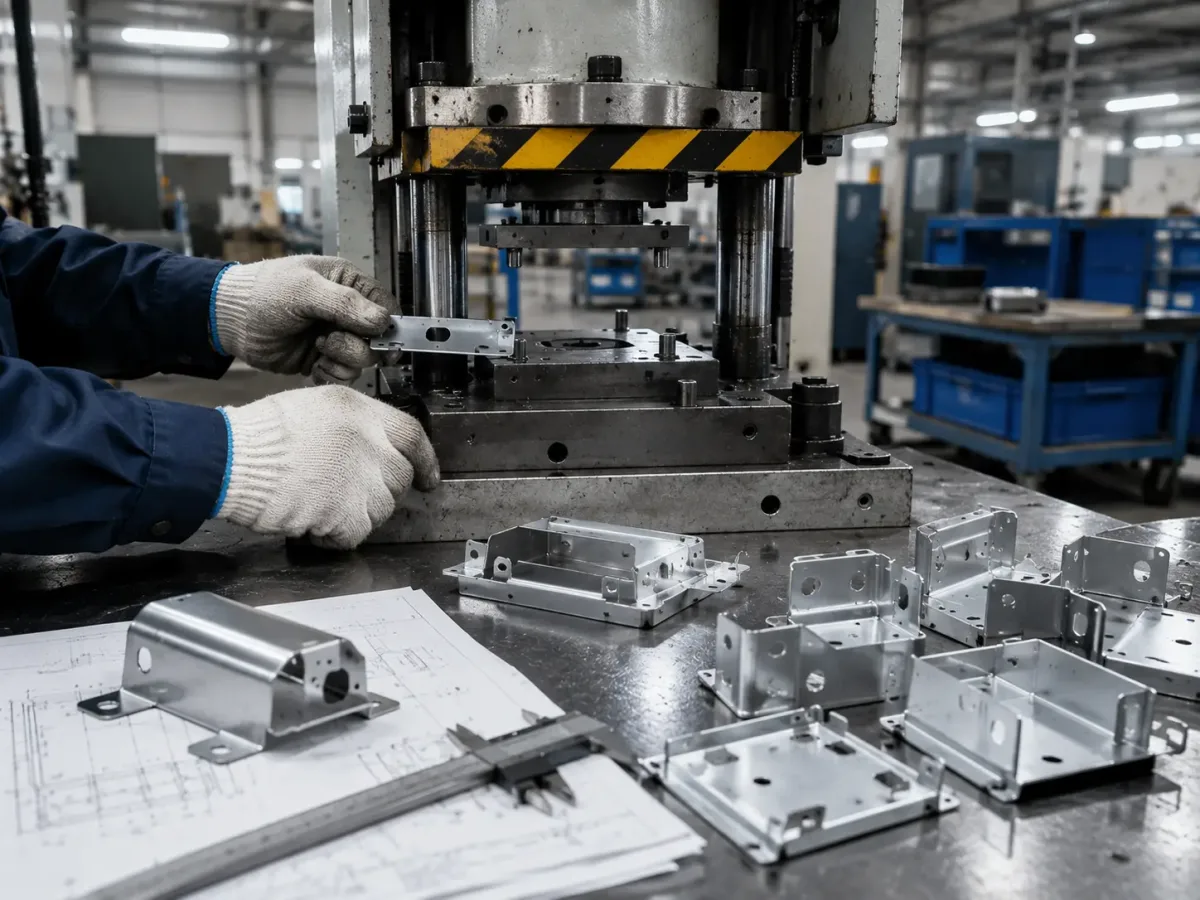
Metal Stamping Rapid Prototyping
Metal stamping rapid prototyping combines blanking, bending, drawing, and forming with quick-turn manufacturing to convert sheet metal into physical prototypes—either as single pieces or small batches. It’s fast, iteration-friendly, and supports materials such as stainless steel, carbon steel, and aluminum. It also scales well into production, offering strong cost efficiency once volumes increase.
With SR MFG, you’re not just getting “parts”—you’re getting a smoother validation path. We start with a manufacturability review to surface common issues early (hole positions, flange forming, burr direction, etc.), then trial with soft tooling or simplified tooling for quick builds. Materials are matched to project needs, and key dimensions can be recorded to speed up assembly and functional validation—reducing drawing revisions and rework so timelines stay predictable and budgets stay controlled.
Angle tolerance: ±0.5°–1° (based on part geometry and tooling review)
High precision (with fixtures/gauges): tolerances can be evaluated down to ±0.01–0.05 mm
Standard prototype lead time: 1–2 days (soft/simple tooling); production die stamping typically 2–4 weeks
Best for: EVT / engineering samples | structural validation | pre-approval samples | pre-pilot verification
Optional add-ons: Blanking | Bending | Deburring | Tapping | Self-clinching | Welding | Powder coating / Plating
Welding Rapid Prototyping
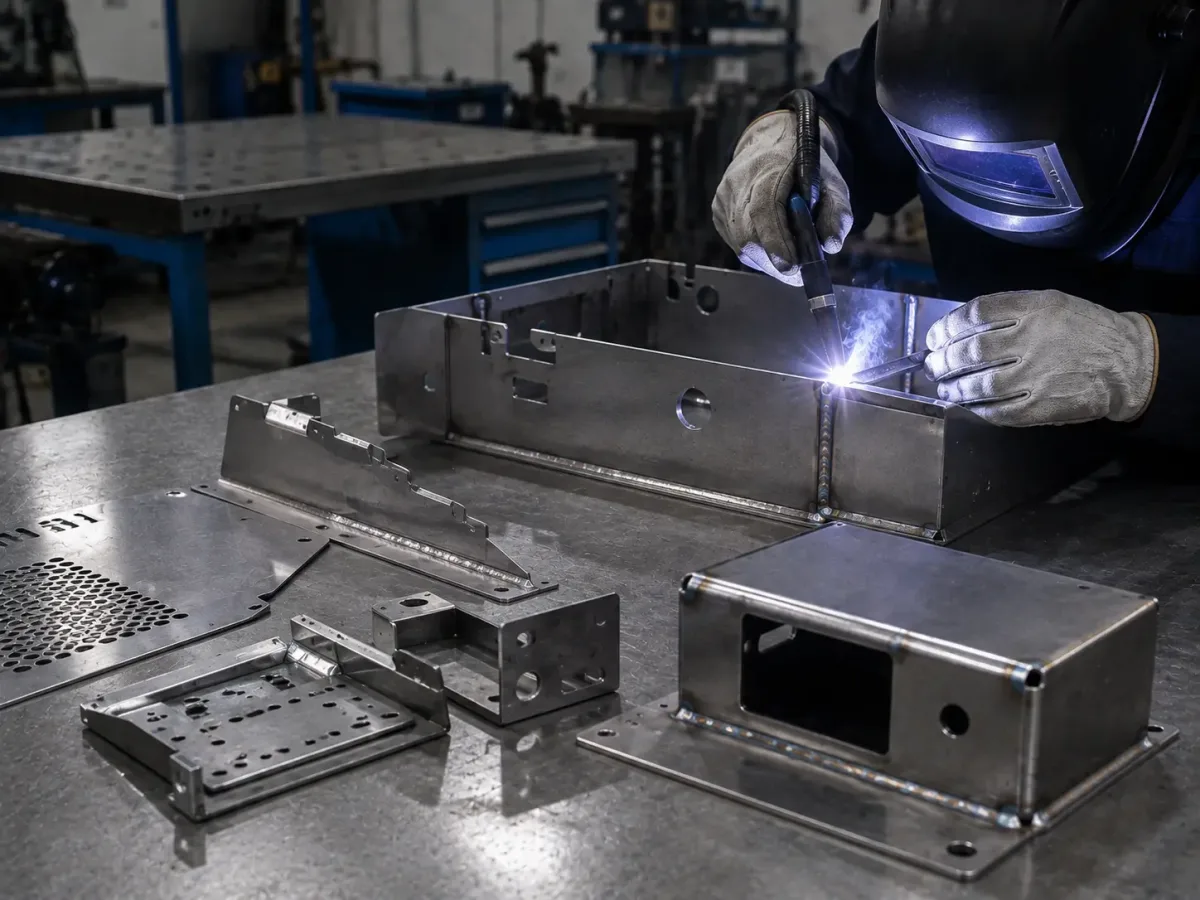
Welding rapid prototyping combines fast welding with a quick-turn prototyping workflow to join and form parts quickly for structural validation and process trials. It verifies joint mechanical performance while ensuring structural reliability—and helps identify optimal welding parameters through rapid iteration, reducing risk before production through a tight “design–weld–test” loop.
With SR MFG, you can turn drawings into weldments that are ready to assemble and test sooner. We select the most suitable welding method based on the structure, surface key issues early in the prototype stage, and can provide critical-dimension measurements and first-article records to speed validation and minimize rework—keeping the project stable and costs under control.
Minimum sheet thickness: TIG 0.5 mm | MIG 1.0 mm | Laser welding 0.5 mm
Minimum fillet size: generally ≥ sheet thickness | ≥2.0 mm for thin sheet
Minimum bevel angle: 30° (with land)
Hole-to-edge distance: ≥1.5× thickness (guideline; confirmed in structure review)
Standard prototype lead time: 1–4 days (varies by quantity and complexity)
Rapid Surface Finishing for Metal Prototypes
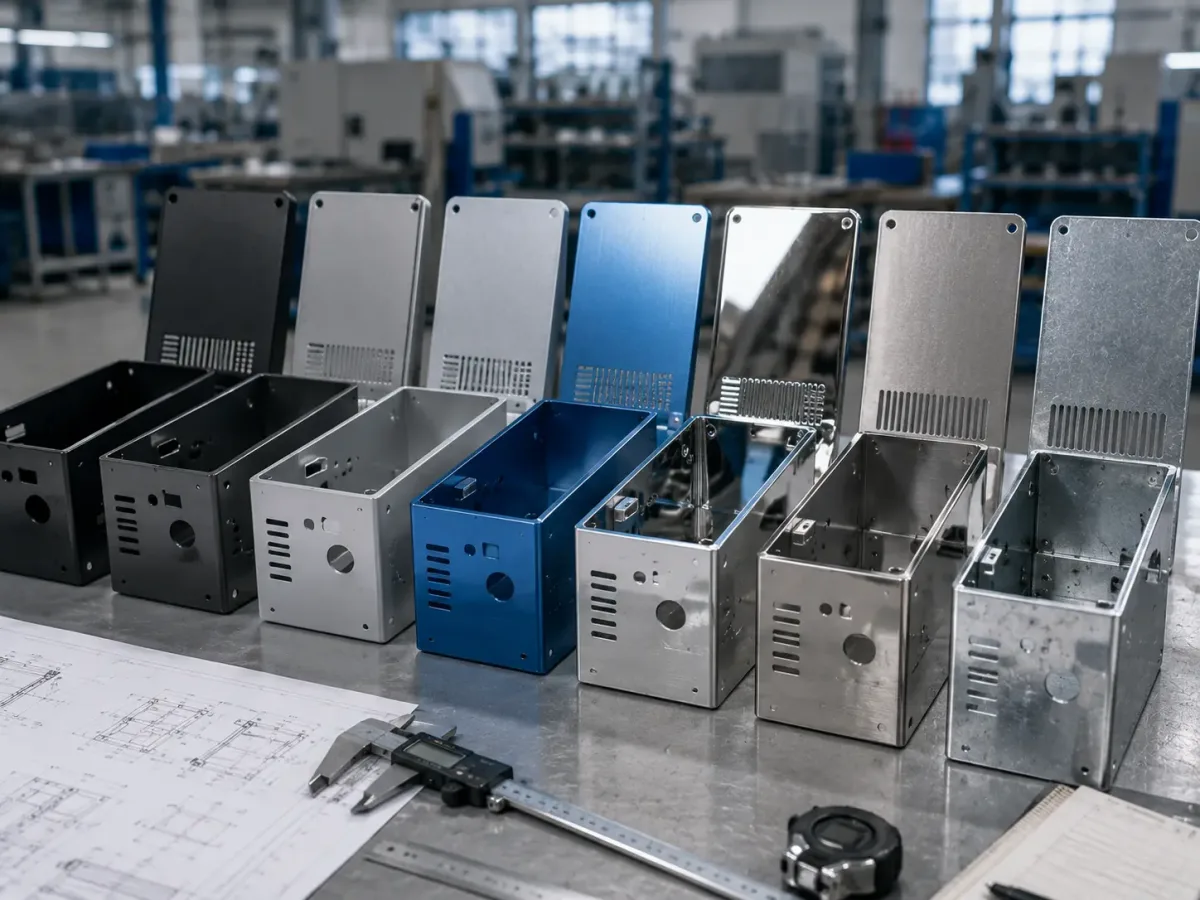
Rapid surface finishing for metal prototypes provides functional coatings, decorative finishes, and performance upgrades early in development. It helps you confirm “final-look” appearance up front while also validating performance requirements such as wear resistance, corrosion resistance, and insulation—reducing the risk of rework later due to process mismatch.
With SR MFG, you can lock down both appearance and performance during the prototype stage. We can quickly arrange powder coating, anodizing, electroplating, and more, and align color targets and acceptance criteria before processing to avoid rework. If corrosion resistance verification is required, salt spray testing can be performed per ASTM B117 and ISO 9227; test duration and pass/fail criteria should follow your product specification or a mutually agreed requirement.
For coating (powder/paint) thickness acceptance, ASTM D7091 can be referenced for non-destructive dry film thickness measurement using magnetic/eddy-current gauges.
Options: multiple colors, textures, and gloss levels
Design tip: radius sharp edges to R ≥ 0.5 mm to improve coating coverage and durability
Standard prototype lead time: 1–5 days (varies by quantity, partner capacity, and acceptance requirements)
What’s “Quick” About “Quick Prototyping,” Really?
When teams talk about quick-turn sheet metal prototyping, “fast” often gets oversimplified—people focus on just one aspect and miss the full picture. That typically leads to two common problems:
-
Some projects assume “fast” means everything can be done same-day, but lead time still depends on material availability, part complexity, finishing requirements, and more.
-
Others think “fast” simply means shipping is fast, overlooking the bigger value: rapid quoting, DFM feedback, iteration, and a tight verification loop.
Below is a practical breakdown of the most valuable “speed dimensions” in rapid prototyping:
| Dimension | Quick prototyping speed | Traditional manufacturing speed (requires tooling / dedicated fixtures) | Typical gap | Why it matters |
|---|---|---|---|---|
| Quote + DFM feedback | A few hours to within 24 hours | Several days to 1+ week | 2–5× | Lock in a manufacturable approach sooner and avoid dead ends |
| Time to first article (from approval to first part) | 2–7 days (often 2–5) | 2–8 weeks (incl. tooling + scheduling) | 4–10× | Get physical parts sooner to validate fit, assembly, and structure |
| Iteration cycle (ECO → next prototype revision) | 1–5 days | 2–6 weeks | 4–10× | Run design optimizations and A/B comparisons much faster |
| Design validation loop (issue found → fix → re-verify) | A few days to ~2 weeks | Several weeks to months | 3–8× | Surface risks earlier and reduce late-stage rework |
| Time-to-market compression | Weekly progress | Monthly progress | 2–4× | Reach pilot builds / customer validation sooner |
Note: The ranges above are typical reference windows. “Traditional manufacturing” here refers to routes that require molds, dies, or dedicated fixtures. International shipping is not included. Actual timing depends on material availability, structural complexity, finishing, and assembly requirements.
SR MFG Turnkey Project Management
From the moment we receive your drawings, SR MFG assigns a dedicated project manager to own your metal manufacturing project end to end. One single point of contact coordinates everything—quoting, engineering review (DFM), production scheduling, in-process status updates, pre-shipment inspection, and packing/shipping.
Before production starts, we identify potential risks upfront and work to eliminate them. Throughout manufacturing, you’ll receive milestone updates, and with every shipment we can provide critical-dimension inspection records and shipping documentation—so your sheet metal parts arrive on time and are ready to use, easy to assemble, and easy to inspect and sign off.